


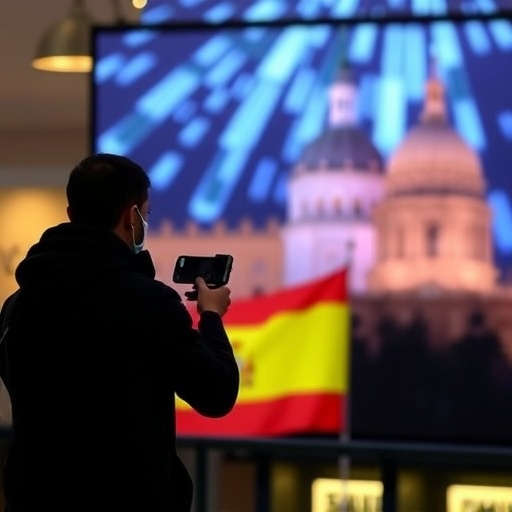
In an era characterized by rapid digital transformation and heightened political tensions, the integrity of electoral processes is increasingly threatened by the pervasive spread of digital disinformation. A recent comprehensive study conducted under the auspices of the SmartVote project—a collaborative effort involving Universidad Carlos III de Madrid (UC3M) and prominent partners in Spain and Portugal—provides a profound analysis of the multifaceted impact of disinformation on democratic elections within the Iberian Peninsula. This groundbreaking report elucidates not only societal concerns but also generational skepticism towards traditional and emergent information sources, particularly among the digitally native Generation Z.
SmartVote unites over twenty researchers from various disciplines and institutions, including UC3M, Portugal’s Observatório da Comunicação (OberCom), CENJOR, the Club Abierto de Editores (CLABE), and Universidad Politécnica de Madrid (UPM), under the leadership of Fundación Cibervoluntarios. The project’s overarching mission is to engineer advanced technological tools capable of detecting falsified content disseminated during electoral cycles, including manipulated images and videos, misleading poll results, and decontextualized narratives. This multifaceted approach seeks to mitigate the amplification effects produced by political actors who often capitalize on narratives of electoral fraud, exacerbating public mistrust and polarizing electorates.
Central to the report’s findings is an acute observation of the ideological vectors steering disinformation campaigns. It identifies far-right political parties—specifically Vox in Spain and Chega in Portugal—as primary disseminators of false content through social media channels. This phenomenon reveals a pronounced Iberian homogeneity in the disinformation landscape, characterized by parallel strategic frameworks and narrative structures employed by these parties. Researchers note that while Spain and Portugal differ in the degree of political polarization and institutional responses to disinformation, both nations experience increasing political instability, partly driven by recurrent early elections, further complicating the regulatory landscape.
The study delves deeper into the media consumption patterns that shape public perception of electoral information. A significant divergence exists between Spain and Portugal; Spaniards demonstrate a preference for social networks as their main source of electoral news, overshadowing traditional television broadcasts. Conversely, Portuguese citizens rely more heavily on television over social media for the same information. In both countries, however, print media occupies a diminished role in shaping public opinion concerning elections. Trust metrics reveal an intriguing disparity—Portuguese citizens exhibit higher confidence in news organizations (56%) than their Spanish counterparts (33%), with the trust level among young Spaniards aged 18 to 24 plummeting to an alarming 19%. Furthermore, gender differences surface in attitudes toward emerging AI-generated news, with young women showing increased reluctance to engage with such content.
The report emphasizes the intrinsic challenges posed by disinformation to the democratic fabric. Disinformation’s capacity to sway voting intentions and undermine democratic quality is unequivocal. Historical precedents, such as the Brexit referendum, exemplify the tangible effects of manipulated information in altering electoral outcomes. In response, the authors advocate for robust media literacy interventions that transcend generational boundaries. Educational strategies must extend beyond mere hoax identification, focusing instead on cultivating critical and responsible information consumption habits among students, journalists, and the wider public. This holistic approach is posited as essential for reinforcing democratic resilience in an age dominated by digital communication.
Technological innovation occupies a critical axis of the SmartVote project. The consortium has meticulously cataloged 125 global initiatives combating disinformation, noting that 52 of these deploy artificial intelligence (AI) and machine learning (ML) frameworks. Projects like AI4Trust and AI-CODE exemplify the integration of automated detection with human verification processes, aiming to elevate the veracity of disseminated information and empower media professionals. Yet, the report thoughtfully acknowledges the ethical quandaries entwined with AI deployment—including issues of transparency, freedom of expression, and privacy. These concerns underscore the necessity for conscientious governance and ethical standards in the development and application of AI-driven content moderation.
SmartVote’s triadic strategy to combat disinformation entails media literacy promotion, targeted educational activities, and the technological innovation of disinformation detection tools. Educational programs specifically target journalists, journalism students, and young adults, fostering a nuanced understanding of disinformation dynamics and electoral processes. Simultaneously, the consortium pursues the creation of sophisticated algorithms capable of identifying manipulated multimedia content and spotting deceptive electoral data. This synergy of education and technology represents a forward-thinking model for addressing the evolving threat landscape in digital political communication.
The report’s comprehensive scope is further enriched by its Iberian focus, which introduces complexities linked to diverse political cultures, regulatory environments, and social media ecosystems. Spain’s pronounced political polarization and comparatively rigorous institutional measures contrast with Portugal’s softer regulatory stance amidst increasing political instability. This regional duality presents unique challenges for designing uniformly effective counter-disinformation tactics, necessitating adaptable strategies cognizant of national particularities. The fluctuating political climates, compounded by frequent early elections, create fertile ground for disinformation proliferation, demanding vigilant and multifaceted intervention.
Intriguingly, the project’s findings suggest a generational divide not only in media trust but also in receptivity to AI-curated news. Generation Z’s pronounced skepticism signals a fundamental shift in information consumption paradigms. This demographic’s ambivalence towards both traditional news outlets and AI-generated content calls for innovative approaches that reconcile technological utility with human-centered trust dynamics. Moreover, the gendered nuances identified highlight the need for tailored educational content that respects varied information-seeking behaviors and apprehensions.
The ethical dimension addressed in the report resonates deeply within the broader discourse on AI governance. While AI algorithms demonstrate remarkable proficiency in automating content verification, their deployment invites scrutiny regarding potential censorship, biases embedded within training datasets, and the opaque nature of machine decision-making. The delicate balance between harnessing AI efficiency and upholding democratic norms necessitates transparent frameworks, ongoing oversight, and inclusive stakeholder engagement. Such principles are indispensable in legitimizing AI tools as trustworthy arbiters within charged political contexts.
Ultimately, the SmartVote initiative embodies a paradigm shift in confronting digital disinformation—melding interdisciplinary research, cutting-edge AI, and societal education. Through its expansive consortium, it exemplifies cross-border collaboration crucial for addressing transnational challenges. Its pioneering work paves the way for future endeavors that must not only detect and suppress falsehoods but also foster informed, critically engaged electorates capable of navigating the complex information landscapes of the 21st century.
Cite Scienmag News
Courtney Benton. (June 6, 2025). 70% of Citizens in Spain and Portugal Express Concern Over Digital Disinformation, Study Finds. Scienmag. https://scienmag.com/70-of-citizens-in-spain-and-portugal-express-concern-over-digital-disinformation-study-finds/
Courtney Benton. "70% of Citizens in Spain and Portugal Express Concern Over Digital Disinformation, Study Finds." Scienmag, 6 June 2025, https://scienmag.com/70-of-citizens-in-spain-and-portugal-express-concern-over-digital-disinformation-study-finds/. Accessed 3 September 2026.
Courtney Benton. "70% of Citizens in Spain and Portugal Express Concern Over Digital Disinformation, Study Finds." Scienmag. June 6, 2025. https://scienmag.com/70-of-citizens-in-spain-and-portugal-express-concern-over-digital-disinformation-study-finds/


