


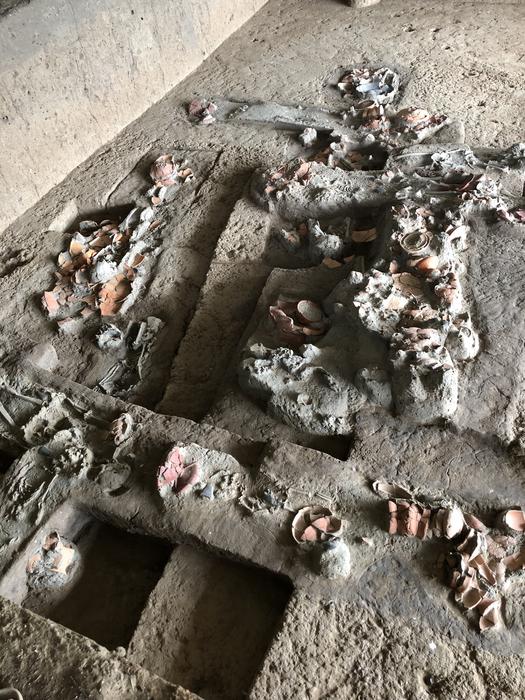
In a groundbreaking study that pushes the boundaries of archaeological science, researchers have uncovered the earliest direct biomolecular evidence of betel nut chewing in Southeast Asia, dating back some 4,000 years to the Bronze Age. This revelation emanates from the analysis of ancient dental calculus—the hardened plaque adhering to human teeth—excavated from a burial site at Nong Ratchawat in central Thailand. The research, published in the journal Frontiers in Environmental Archaeology, embodies a remarkable fusion of archaeological inquiry and biochemical methodology, illuminating a practice deeply embedded in the social and cultural fabric of ancient Southeast Asian life.
Betel nut, derived from the Areca catechu palm, has long been known for its psychoactive properties. Its compounds, predominantly arecoline and arecaidine, induce a unique tandem of physiological effects, including heightened alertness, mild euphoria, and relaxation. Although the tradition of betel nut chewing has waned in contemporary society, its historical roots penetrate millennia of cultural practices. Historically, betel quid, the chewing mixture involving betel nuts along with various other plant substances and lime paste, has been associated with social bonding, ritual significance, and even medicinal applications.
Traditionally, researchers have inferred betel nut usage through indirect archaeological indicators, such as stained skeletal remains or the presence of associated artifacts. However, this new study transcends these limitations by focusing on dental calculus as a biochemical archive. The mineralized plaque effectively preserves minute traces of consumed substances, enabling scientists to detect molecular residues of psychoactive plants even when macroscopic evidence is absent or ambiguous. This approach opens novel investigative vistas into human behavior and plant use, producing what the researchers describe as “archaeologically invisible” proof.
At the heart of this inquiry lies the site of Nong Ratchawat, where since 2003, archaeologists have excavated 156 human burials spanning the regional Bronze Age. For this analysis, the team meticulously harvested dental calculus samples from six individuals, ultimately identifying betel nut markers exclusively in the molar-derived calculus of one individual referred to as Burial 11. The biochemical investigation revealed the presence of arecoline and arecaidine, organic compounds characteristic of betel nuts but also found in other plants like coffee, tea, and tobacco, underscoring the need for rigorous controls and replication.
The experimental protocol employed by the researchers deserves particular attention. To authenticate their findings and understand the biochemical nuances of betel quid formation, the team recreated authentic betel chewing conditions in the laboratory. They ground dried betel nuts together with pink limestone paste, Piper betel leaves, and occasionally Senegalia catechu bark and tobacco, all mixed with human saliva to replicate the oral environment. This carefully controlled experimental chewing produced reference samples mirroring the complex interplay of plant chemistry and human enzymatic activity, which were pivotal for reliable molecular identification within ancient dental calculus.
One compelling aspect of the findings is the discrepancy between the biochemical evidence of betel nut consumption and the absence of typical tooth staining in Burial 11’s remains. Betel nut chewing generally causes distinctive reddish-brown to black dental discoloration, yet none was noted here. The researchers discuss several plausible explanations, including variances in consumption methods, oral hygiene practices such as teeth cleaning post-chewing, and potential post-mortem alterations affecting stain preservation over millennia. This anomaly underscores the limitations of relying solely on macroscopic observation to infer ancient behaviors.
The exclusive detection of betel nut residues in a single individual raises tantalizing questions about the social context of this practice. While Burial 11 bore stone bead grave goods, offering subtle clues about the individual’s potential social status or personal identity, current evidence does not definitively correlate betel nut chewing with ritual significance or elevated rank. Further investigation into other burials at Nong Ratchawat and similar archaeological sites is necessary to discern patterns of betel nut use, social stratification, and cultural customs.
Crucially, this research underscores the unparalleled potential of dental calculus biomolecular analysis in reconstructing aspects of ancient lifeways that have hitherto remained elusive. By extracting and interpreting microscopic chemical residues preserved over thousands of years, scientists can now peer into the intimate details of human-plant relationships, psychoactive substance use, and cultural practices otherwise invisible through standard archaeological methods. This technological leap promises to revolutionize our understanding of prehistoric human behavior.
Beyond its technical merits, the study provokes a broader reflection on the cultural dimensions of traditional plant use. Psychoactive and medicinal plants have long been marginalized or stigmatized by modern perspectives that conflate them simply with “drugs.” However, this evidence reveals that such substances were integral components of spiritual, social, and communal identity across deep time. Appreciating this continuity offers a richer, more respectful framework for current conversations about plant-based medicines and cultural heritage.
The interdisciplinary nature of the investigation, combining archaeological excavation, experimental replication, and advanced biomolecular assays, exemplifies a new frontier in environmental archaeology. By harnessing mass spectrometry and chemical profiling within a rigorous archaeological context, the researchers bridge the gap between molecular-level data and anthropological interpretation. This synergy not only authenticates ancient behavioral patterns but also contextualizes them within evolving human-plant ecologies.
Moreover, the findings invite further methodological refinement and broader application. Expanding dental calculus analyses across diverse temporal and geographic contexts may unveil a mosaic of ancient psychoactive practices previously beyond detection. The approach sets a precedent for reassessing other archaeological sites where evidence has been ambiguous or absent and encourages integrative frameworks embracing both chemical and cultural dimensions.
In sum, the detection of Bronze Age betel nut usage at Nong Ratchawat represents a milestone in archaeological science. It confirms the deep antiquity of a practice embedded in Southeast Asian heritage, captured within the microscopic matrices of dental calculus. As researchers continue to refine their tools and expand their datasets, we can anticipate a cascade of revelations about humanity’s intertwined history with psychoactive plants, revealing new narratives about health, culture, and identity from the depths of time.
News Publication Date: 31-Jul-2025
Web References: DOI: 10.3389/fearc.2025.1622935
Cite Scienmag News
Courtney Benton. (July 31, 2025). 4,000-Year-Old Teeth Reveal Earliest Evidence of Chewing Psychoactive Betel Nuts. Scienmag. https://scienmag.com/4000-year-old-teeth-reveal-earliest-evidence-of-chewing-psychoactive-betel-nuts/
Courtney Benton. "4,000-Year-Old Teeth Reveal Earliest Evidence of Chewing Psychoactive Betel Nuts." Scienmag, 31 July 2025, https://scienmag.com/4000-year-old-teeth-reveal-earliest-evidence-of-chewing-psychoactive-betel-nuts/. Accessed 3 September 2026.
Courtney Benton. "4,000-Year-Old Teeth Reveal Earliest Evidence of Chewing Psychoactive Betel Nuts." Scienmag. July 31, 2025. https://scienmag.com/4000-year-old-teeth-reveal-earliest-evidence-of-chewing-psychoactive-betel-nuts/


