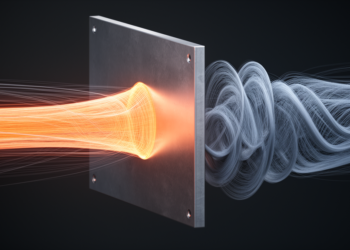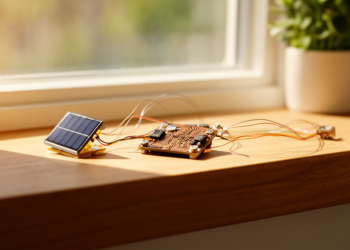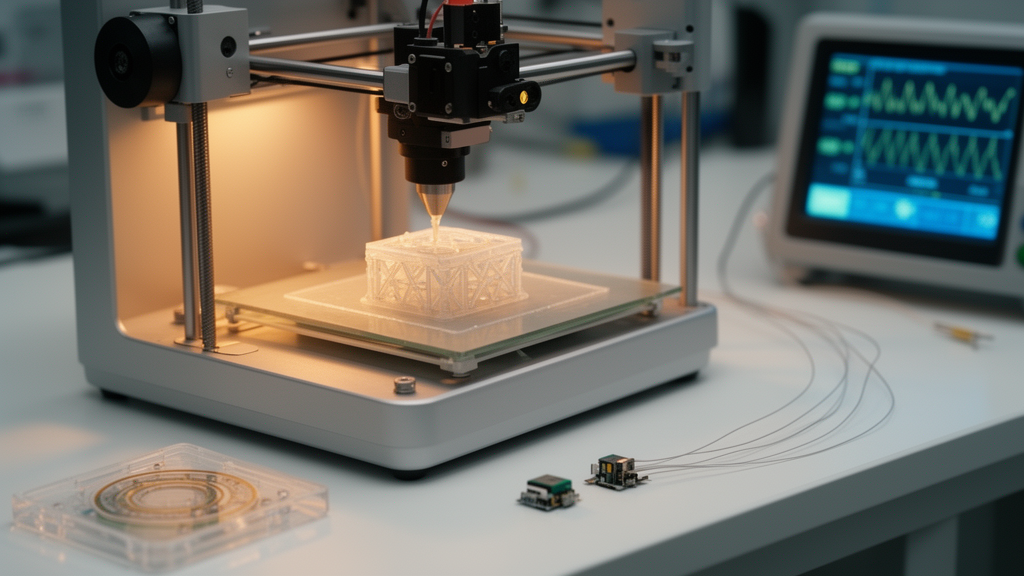
Imagine printing an entire laboratory on a chip: not just the sensor, but the sample chamber, the fluid channels, the electrical contacts, and the housing that holds it all together, emerging from a single machine in one continuous run. Their central argument is that additive manufacturing is no longer merely a way to make sensor casings. It is becoming a way to consolidate sample preparation, fluid handling, sensing elements, and structural components into a single fabrication workflow, minimizing manual assembly, reducing sample volume, and enabling rapid, on-site, or wearable analysis.
The authors define “all-in-one” devices by functional integration rather than by how much of the device is actually printed. Fully 3D-printed systems are those whose primary architecture is fabricated entirely by additive manufacturing, requiring only minimal post-processing or surface functionalization. Hybrid systems, by contrast, combine printed frameworks with externally fabricated components such as paper substrates, pumps, filters, or auxiliary mechanical modules. This distinction matters, the researchers argue, because it separates the question of what a device can do from the question of how it was made, and it allows the field to be analyzed systematically rather than anecdotally.
The perspective examines the three dominant additive manufacturing technologies and their trade-offs. Stereolithography (SLA) and digital light processing (DLP) use ultraviolet light to cure liquid photopolymers layer by layer or in entire layers at once, yielding high precision and smooth surfaces that suit thin microfluidics and fine electrochemical features. Fused deposition modeling (FDM) extrudes thermoplastic filaments, offering cost-effectiveness and material versatility, and crucially allows conductive and non-conductive materials to be co-printed, so sensing elements, fluidic systems, housings, and electrical contacts can emerge together. But FDM generally offers lower resolution, with typical printing resolution of 100 to 400 micrometers compared with less than 50 micrometers for SLA, and printed devices may need post-processing to improve sealing. SLA and DLP, meanwhile, demand more expensive equipment and often rely on proprietary resins with limited material compatibility.
In biomedical applications, the authors highlight 3D-printed microfluidic devices that integrate solid-phase extraction and on-chip fluorescent labeling of preterm birth risk biomarkers, allowing a complete panel of nine biomarkers to be analyzed in a single microfluidic format. In the food and agricultural sphere, a 3D-printed device called FieldNA enables portable DNA extraction from complex matrices such as extra virgin olive oil, using gravity-driven flow to eliminate the need for centrifuges, pumps, or external power; the complete workflow, including lysis and low-reagent purification, finishes in roughly 20 minutes, with DNA yields and purity comparable to conventional laboratory methods and full compatibility with PCR and HRM analyses. A related FDM-based approach for citrus leaves combines a paper-disk extraction unit, a knurled lysis chamber, and a blade-and-clutch assembly, recovering DNA and RNA in 12 minutes, ready for PCR.
Environmental applications are following the same trajectory. One 3D-printed device for on-site extraction and preconcentration of non-steroidal anti-inflammatory drugs from wastewater uses a pump-compatible container and an SPE resin-coated support in octahedral and truncated-pyramid geometries to maximize surface area, retaining analytes while filtering solids. Another platform goes further, integrating sample collection, remediation, and sensing for the drug diclofenac in water: three sliding modules handle filtration, mixing with recycled cellulose acetate microspheres functionalized with activated carbon, and a built-in screen-printed electrochemical sensor that assesses remediation efficacy immediately. After a 120-second contact and manual shaking, the treated solution is analyzed directly, and the platform achieves 53 percent remediation efficiency, providing rapid, in situ monitoring of emerging contaminants.
Fully 3D-printed point-of-care devices are also maturing. A multi-analyte electrochemical platform printed from ABS detects three COVID-19 biomarkers, the nucleocapsid protein, the spike receptor-binding domain, and anti-RBD IgG antibodies, using graphene-oxide-modified working electrodes and an Ag/AgCl reference, with calibration curves reaching limits of detection down to the picogram-per-milliliter level and validation in saliva and serum from infected patients. A fully printed sensing well with a modular click-in electrode configuration detects target miRNA via hybridization with a methylene blue-labeled DNA probe, achieving a detection limit of 1 picomolar even in diluted commercial serum. In the field, a trident-shaped electrochemical sensor made from low-cost conductive and insulating filaments inserts directly into fresh produce for pre-treatment-free, rapid measurement of ascorbic acid, with electrode pins clicking into the printed frame for reproducible alignment. Beyond electrochemistry, low-cost smartphone adaptors with 16 preloaded microwells enable bioluminescent toxicity assays within 30 minutes, using engineered human embryonic kidney cells as sentinel reporters.
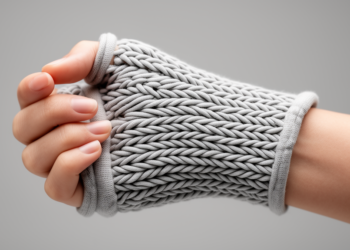
Wearables represent perhaps the most demanding frontier, because devices must flex, stretch, and stay electrically stable under constant movement while resting on human skin for days. A wearable electrochemical ring for non-enzymatic glucose monitoring in sweat integrates three carbon-based electrodes modified with electrodeposited gold within a flexible structure, demonstrating accurate detection within physiological ranges and direct smartphone connectivity. A microneedle-based electrochemical sensor with sputtered gold electrodes on a microneedle array showed micromolar-level detection of uric acid, validated in simulated interstitial fluid, ex vivo porcine skin, and preliminary human tests. A 3D-printed biobracelet paired with a smartwatch uses six carbon-black/PLA electrodes for simultaneous chronoamperometric detection of glucose, alcohol, and lactate, plus voltammetry of uric acid and caffeine, with preliminary on-body tests confirming feasibility. A microneedle intradermal temperature sensor built from the conductive polymer PEDOT:PSS covers 15 to 60 degrees Celsius with high sensitivity, and a hydrogel-based flexible sensor supports real-time myoelectric biofeedback for rehabilitation therapy.
The perspective is candid about the field’s limits. Most reported systems remain at proof-of-concept stage, with limited standardization in fabrication protocols, electrode modification strategies, and validation matrices, and only a minority of devices have been tested in clinically relevant or real-world samples under standardized conditions. FDM-printed biosensors face intrinsic constraints: low conductivity in bulk filaments restricts charge transfer, printing resolution limits microfluidic accuracy, high extrusion temperatures of 180 to 220 degrees Celsius can degrade sensitive biomolecules, and rough surfaces with inconsistent nanoparticle dispersion may reduce reproducibility. Conventional FDM also cannot reliably produce features below 50 micrometers, though emerging two-photon polymerization enables sub-micrometer precision. The authors point to hybrid SLA-FDM printing, low-temperature filaments below 150 degrees Celsius, AI-assisted optimization of printing parameters, and standardized protocols as routes forward.
Sustainability threads through the roadmap. In-house filament preparation, often by recycling laboratory plastic waste such as used PLA or PETG bottles shredded into flakes and extruded into standard 1.75-millimeter filaments, can reduce material costs by 50 to 80 percent while allowing the incorporation of conductive fillers including carbon black, carbon nanotubes, gold nanoflakes, graphite, and Prussian Blue. Chemometrics and design-of-experiment approaches are emerging as optimization tools, though their use in 3D-printed sensors has so far focused mainly on sample classification rather than full device optimization. Publication trends compiled by the authors show the share of fully 3D-printed sensor papers rising from roughly 23 percent of total 3D-printed sensor publications in 2015 to about 30 percent in 2026, based on preliminary data available as of March 2026. The authors conclude that all-in-one 3D-printed devices offer a versatile, sustainable, and cost-effective path toward next-generation sensing, but that translation is limited by challenges in standardization, reproducibility, and regulatory validation, and most current systems are not yet mature analytical technologies.
Subject of Research: All-in-one 3D-printed biosensing devices and their applications
Article Title: 3D-printed architectures for (bio)sensing
Article References: Kalligosfyri, P. M., Iula, G., Nota, G., Persico, G., Primiceri, D., & Cinti, S. (2026). 3D-printed architectures for (bio)sensing. Biosensors and Biomolecular Electronics, 1(1), Article 4. https://doi.org/10.1186/s44510-026-00004-5
Image Credits: AI Generated
DOI: 10.1186/s44510-026-00004-5
Keywords: 3D printing, biosensors, additive manufacturing, electrochemical sensors, point-of-care diagnostics, wearables, microfluidics, FDM, SLA, sustainability, IoT, chemometrics
Cite Scienmag News
Denise Maddox. (October 28, 2026). 3D Printing Is Quietly Rebuilding the Entire Sensor, From Sample to Signal. Scienmag. https://scienmag.com/3d-printing-is-quietly-rebuilding-the-entire-sensor-from-sample-to-signal/
Denise Maddox. "3D Printing Is Quietly Rebuilding the Entire Sensor, From Sample to Signal." Scienmag, 28 October 2026, https://scienmag.com/3d-printing-is-quietly-rebuilding-the-entire-sensor-from-sample-to-signal/. Accessed 29 October 2026.
Denise Maddox. "3D Printing Is Quietly Rebuilding the Entire Sensor, From Sample to Signal." Scienmag. October 28, 2026. https://scienmag.com/3d-printing-is-quietly-rebuilding-the-entire-sensor-from-sample-to-signal/