


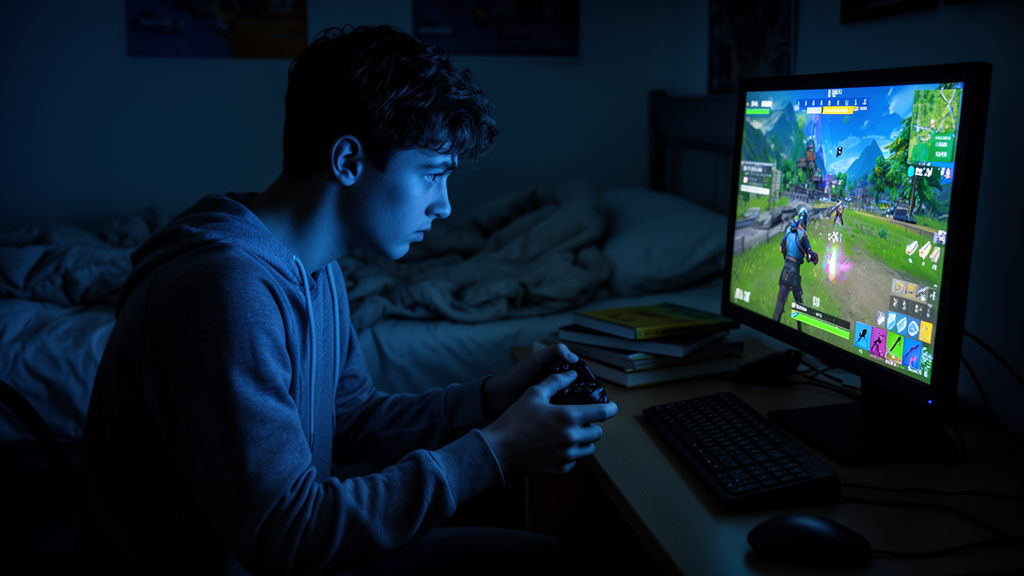
Online gaming has become one of the most pervasive leisure activities among young adults worldwide, and for university students it often serves as both a social outlet and a source of stress relief. But a new cross-sectional study published in BMC Public Health suggests that the amount of time students spend playing one of the world’s most popular battle royale games, PUBG, may be quietly shaping their mental health in measurable ways. The research, led by Ali Hassan of the University of Sargodha in Pakistan together with colleagues from institutions in Pakistan and Saudi Arabia, examined how gaming duration and accumulated playing experience relate to depression, anxiety, stress, and post-traumatic stress symptoms among university students.
The team surveyed 542 university students who actively played PUBG, recruiting participants through convenience sampling and collecting data with self-administered questionnaires. To capture psychological well-being, the researchers used three widely validated clinical instruments: the Patient Health Questionnaire-9, known as PHQ-9, for depressive symptoms; the PTSD Checklist for DSM-5, or PCL-5, for post-traumatic stress symptoms; and the Depression, Anxiety and Stress Scale, DASS-21, which separately quantifies depression, anxiety, and stress. The demographic profile of the sample was strikingly skewed, with 84.7 percent of participants being male, reflecting the demographics of the competitive gaming community from which the sample was drawn.
The prevalence figures the study reported are sobering. Moderate psychological symptoms were the most frequently observed category across the board: 50.6 percent of participants fell into the moderate depression band on the DASS-21, 62.9 percent showed moderate anxiety, and 47.0 percent reported moderate stress. Perhaps most striking was the finding on post-traumatic stress symptoms. Using the PCL-5, the researchers identified probable PTSD in 95 participants, or 17.5 percent of the sample, while 447 participants, or 82.5 percent, were classified as having no probable PTSD. The difference between these two groups was statistically robust, with a chi-square statistic of 228.61 and a p-value below 0.001, indicating that the split was highly unlikely to have arisen by chance.
To move beyond simple prevalence counts, the researchers applied a battery of statistical tests, including chi-square tests for categorical associations, Kendall tau correlations for ordinal relationships, and multinomial logistic regression to model the odds of experiencing different severity levels of each symptom category. Multinomial logistic regression is particularly well suited to this kind of analysis because mental health screening tools typically sort respondents into ordinal bands, such as none, mild, moderate, and severe, rather than producing a single binary outcome. By modeling the adjusted odds ratio, or AOR, for each predictor, the team could estimate how demographic characteristics and gaming behaviors independently shifted the likelihood of falling into a given symptom band.
The regression results revealed a nuanced picture in which not all gaming-related variables pointed in the same direction. Years of PUBG experience was significantly associated with moderate stress, but in an unexpected direction: each additional year of playing experience corresponded to lower odds of moderate stress, with an adjusted odds ratio of 0.810 and a 95 percent confidence interval spanning 0.669 to 0.980, at a p-value of 0.031. One possible interpretation, which the authors frame cautiously, is that long-term players may have developed coping mechanisms or habituated to the competitive pressures of the game, although the cross-sectional design prevents any causal conclusion. Meanwhile, daily playing time told a different story. Students who played five to six hours per day had significantly higher odds of mild stress, with an adjusted odds ratio of 2.213 and a confidence interval of 1.090 to 4.494, at a p-value of 0.028, suggesting that heavy daily sessions are associated with elevated stress even among experienced players.
The most consequential finding concerned post-traumatic stress symptoms. Greater PUBG playing experience, measured in years, was significantly associated with increased odds of probable PTSD, with each additional year corresponding to a 25.3 percent increase in the odds, reflected in an adjusted odds ratio of 1.253 with a 95 percent confidence interval of 1.019 to 1.542 and a p-value of 0.032. This dose-response-like pattern, in which accumulated exposure to the game correlates with progressively higher PTSD risk, is the kind of signal that public health researchers watch closely. It is worth emphasizing that the study measured symptoms consistent with PTSD using a screening checklist rather than delivering clinical diagnoses, and that the cross-sectional design means the direction of the relationship remains ambiguous: students with pre-existing trauma symptoms may also be drawn to immersive, high-intensity gaming environments.
Two protective factors stood out against this risk gradient. Students who reported good academic performance had significantly decreased odds of probable PTSD, with an adjusted odds ratio of 0.300 and a confidence interval of 0.134 to 0.673, at a p-value of 0.003, meaning their odds were roughly 70 percent lower than those of peers without good academic performance. Similarly, students who played PUBG for less than two hours per day had significantly decreased odds of probable PTSD, with an adjusted odds ratio of 0.225 and a confidence interval of 0.084 to 0.603, also at a p-value of 0.003. Taken together, these findings suggest that moderate engagement combined with strong academic functioning may buffer against the psychological risks that appear to accumulate with longer gaming careers and heavier daily sessions.
To complement the classical statistical analysis, the researchers employed an explainable machine learning approach based on the XGBoost algorithm, a gradient-boosted decision tree ensemble known for its performance on tabular data. Rather than treating the model as an opaque black box, the team applied SHAP, or SHapley Additive exPlanations, a technique rooted in cooperative game theory that assigns each feature a contribution value for every individual prediction. This allowed the researchers to rank demographic and gaming-related predictors by their relative importance in driving symptom severity across the four outcomes. The SHAP analysis converged with the regression findings, identifying years of PUBG playing and average daily playing time as the most influential factors associated with symptom severity, which strengthens confidence that these two variables genuinely matter rather than emerging as statistical artifacts.
The authors conclude that PUBG gaming experience and average daily playing time are important factors associated with the health of university students, and they frame gaming behavior as a legitimate public health concern rather than a purely individual lifestyle choice. Their recommendations center on prevention: promoting healthy digital habits, enabling early identification of psychological distress, building digital health literacy among students, and coordinating interventions across families, schools, and healthcare systems. The study was approved by the Research Ethical Review Board for Arts, Humanities, Social and Management Sciences Committee at the University of Sargodha under approval number ERB/FS/480226, and all participants provided written informed consent, with the work supported by Princess Nourah bint Abdulrahman University Researchers Supporting Project number PNURSP2026R441 in Riyadh, Saudi Arabia.
The researchers are careful to acknowledge the limits of their design. Convenience sampling limits how broadly the findings can be generalized, the male-dominated sample may not reflect the experiences of female gamers, and self-administered questionnaires are vulnerable to reporting bias. Most importantly, the cross-sectional structure cannot establish whether gaming patterns cause psychological symptoms or vice versa, which is why the authors explicitly call for longitudinal studies to establish the temporal relationship between gaming behavior and mental health outcomes and to guide evidence-based public health policy. Until such data exist, the study offers a compelling quantitative case that the hours students pour into virtual battlefields leave traces in their psychological well-being, and that universities, families, and clinicians would do well to pay attention before those traces deepen.
Subject of Research: Association between PUBG gaming duration and depression, anxiety, stress, and PTSD symptoms among university students
Article Title: Gaming duration and psychological well-being among university students: implications for public health prevention using a cross-sectional study with a modelling approach
Article References: Hassan, A., Nawaz, M. B., Daniyal, M., Al Mutair, A., Alharbi, H. F., & Al Mutairi, A. (2026). Gaming duration and psychological well-being among university students: implications for public health prevention using a cross-sectional study with a modelling approach. BMC Public Health. https://doi.org/10.1186/s12889-026-29580-7
Image Credits: AI Generated
DOI: 10.1186/s12889-026-29580-7
Keywords: PUBG, university students, mental health, PTSD, depression, anxiety, stress, cross-sectional study, machine learning, XGBoost, SHAP, public health
Cite Scienmag News
Glenn Wilkins. (October 16, 2026). Years of PUBG Play Linked to Rising PTSD Risk in University Students, Study Finds. Scienmag. https://scienmag.com/years-of-pubg-play-linked-to-rising-ptsd-risk-in-university-students-study-finds/
Glenn Wilkins. "Years of PUBG Play Linked to Rising PTSD Risk in University Students, Study Finds." Scienmag, 16 October 2026, https://scienmag.com/years-of-pubg-play-linked-to-rising-ptsd-risk-in-university-students-study-finds/. Accessed 16 October 2026.
Glenn Wilkins. "Years of PUBG Play Linked to Rising PTSD Risk in University Students, Study Finds." Scienmag. October 16, 2026. https://scienmag.com/years-of-pubg-play-linked-to-rising-ptsd-risk-in-university-students-study-finds/


