

Tuesday, July 14, 2026
Science
No Result
View All Result
  • Login
  • HOME
  • SCIENCE NEWS
  • CONTACT US
  • HOME
  • SCIENCE NEWS
  • CONTACT US
No Result
View All Result
Scienmag
No Result
View All Result
Home Science News Bussines

WVU partners with Pitt and Carnegie Mellon to boost energy security with $320M

July 14, 2026
in Bussines
Reading Time: 2 mins read
0
WVU partners with Pitt and Carnegie Mellon to boost energy security with $320M

WVU partners with Pitt and Carnegie Mellon to boost energy security with $320M

65
SHARES
587
VIEWS
Share on FacebookShare on Twitter
ADVERTISEMENT

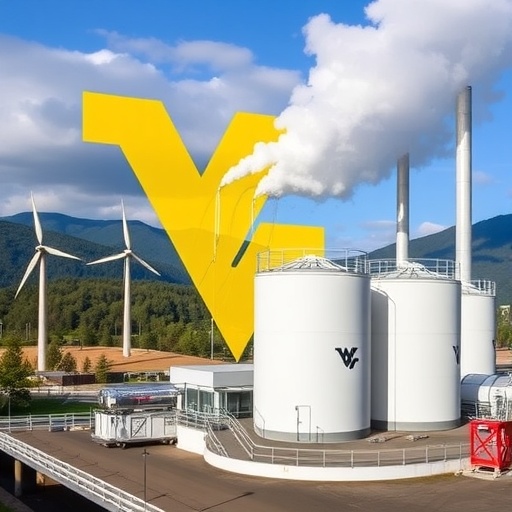
The Resilient Energy Technology and Infrastructure (RETI) Consortium, led by West Virginia University (WVU) with partners from the University of Pittsburgh and Carnegie Mellon University, has been selected to build a next-generation industrial energy innovation hub in Appalachia. Funded through the U.S. National Science Foundation’s (NSF) Regional Innovation Engines program, the initiative is designed to accelerate energy resilience where industry, research, and workforce development converge.

After a competitive two-year process, NSF announced the RETI Engine as one of 12 U.S. Regional Innovation Engines award recipients on July 14. The program’s model emphasizes regional coalitions that can translate research breakthroughs into scalable technologies with real economic impact.

RETI will receive a total of $321 million in combined public and private support. Over the next decade, NSF will provide up to $160 million, while an additional $161 million will come from RETI’s industry, workforce, philanthropy, state government, and community partners.

The effort is aimed at an increasingly strained power system. Demand is surging due to artificial intelligence growth, data-center expansion, and reshoring of U.S. manufacturing—conditions that challenge grid capacity and reliability. RETI’s strategy responds with technical development focused on how energy systems are managed, stored, secured, and deployed.

A central goal is to advance grid management technologies and energy storage solutions, alongside cybersecurity innovations for operational resilience. The consortium plans to develop hardware, software, and AI methods to help operators predict stress, mitigate failures, and maintain secure control across energy infrastructure.

RETI also targets commercialization pathways for energy technologies and deep-tech entrepreneurship. By strengthening links between laboratories and emerging companies, the consortium intends to reduce the distance from experimental prototypes to deployable industrial systems.

Carnegie Mellon’s leadership highlights priorities in advanced manufacturing and AI, as well as cybersecurity and energy technology. The consortium’s approach aligns industrial competitiveness with technical readiness for next-generation production needs.

The projected outcomes include 21,000 jobs, 150 startups, and more than $1 billion in regional economic growth. NSF Engine leadership frames the work as an effort to reinforce U.S. energy security while building innovation infrastructure for the long term.

Located at the WVU Innovation Corporation site in Morgantown with a branch office at Pittsburgh’s Energy Innovation Center, RETI is positioned to scale cross-border collaboration between Pennsylvania and West Virginia. The NSF Engines program, initiated by NSF’s Technology, Innovation and Partnerships initiative, seeks to replicate this regional ecosystem strategy nationwide.

Subject of Research: Energy resilience; grid management and cybersecurity; industrial energy innovation
Article Title: NSF Selects RETI Consortium to Build Industrial Energy Innovation Hub in Appalachia
News Publication Date: July 14
Web References: https://reticonsortium.org/ ; https://www.nsf.gov/tip/latest ; https://innovation.wvu.edu/
References: Resilient Energy Technology and Infrastructure (RETI) Consortium; U.S. National Science Foundation Regional Innovation Engines program
Image Credits: WVU Photo
Keywords: energy infrastructure, grid resilience, energy storage, cybersecurity, artificial intelligence, advanced manufacturing, economic development, entrepreneurship, NSF Engines, industrial competitiveness

Tags: advanced energy systems developmentand Carnegie MellonAppalachian energy resiliencecollaboration between WVUEnergy innovationenergy security fundingenergy storage and management technologyinfrastructure modernization in Appalachianext-generation industrial energy hubNSF Regional Innovation EnginesPittpublic-private energy sector partnershipregional economic impact of energy researchworkforce development in energy sector
Share26Tweet16
Previous Post

NSF Names Rochester, New York as National Laser Innovation Hub

Next Post

China’s Climate Targets Could Transform the Global Palm Oil Industry

Related Posts

Study Examines How Electronic Trading Is Reshaping the Retail Investing Market
Bussines

Study Examines How Electronic Trading Is Reshaping the Retail Investing Market

July 14, 2026
Modern Slavery Is Managed Like a Business Choice, Not an Accident
Bussines

Modern Slavery Is Managed Like a Business Choice, Not an Accident

July 14, 2026
PRIME-6G Aims to Revolutionize Connected Factory Technology
Bussines

PRIME-6G Aims to Revolutionize Connected Factory Technology

July 14, 2026
Study Links Rural-Urban Mortality Gap to Stress and Infrastructure Issues
Bussines

Study Links Rural-Urban Mortality Gap to Stress and Infrastructure Issues

July 13, 2026
Dementia Costs Exceed €221 Billion Annually in Wealthy European Nations
Bussines

Dementia Costs Exceed €221 Billion Annually in Wealthy European Nations

July 13, 2026
Scientists and Citizens More Effective Than Government in Driving Action, Study Shows
Bussines

Scientists and Citizens More Effective Than Government in Driving Action, Study Shows

July 13, 2026
Next Post
China’s Climate Targets Could Transform the Global Palm Oil Industry

China’s Climate Targets Could Transform the Global Palm Oil Industry

  • Mothers who receive childcare support from maternal grandparents show more

    Mothers who receive childcare support from maternal grandparents show more parental warmth, finds NTU Singapore study

    27656 shares
    Share 11059 Tweet 6912
  • University of Seville Breaks 120-Year-Old Mystery, Revises a Key Einstein Concept

    1061 shares
    Share 424 Tweet 265
  • Bee body mass, pathogens and local climate influence heat tolerance

    682 shares
    Share 273 Tweet 171
  • Researchers record first-ever images and data of a shark experiencing a boat strike

    546 shares
    Share 218 Tweet 137
  • Groundbreaking Clinical Trial Reveals Lubiprostone Enhances Kidney Function

    531 shares
    Share 212 Tweet 133
Science

Embark on a thrilling journey of discovery with Scienmag.com—your ultimate source for cutting-edge breakthroughs. Immerse yourself in a world where curiosity knows no limits and tomorrow’s possibilities become today’s reality!

RECENT NEWS

  • Researchers Map Moon Regolith Thickness to Support Future Exploration Missions
  • Keystone microbes stabilize nutrient cycling in vast deep-water reservoir
  • Nebraska Study Links Gut Microbe to Cancer-Fighting Immune Response
  • New process converts mixed plastic waste into hydrogen fuel without sorting

Categories

  • Agriculture
  • Anthropology
  • Archaeology
  • Athmospheric
  • Biology
  • Biotechnology
  • Blog
  • Bussines
  • Cancer
  • Chemistry
  • Climate
  • Earth Science
  • Editorial Policy
  • Marine
  • Mathematics
  • Medicine
  • Pediatry
  • Policy
  • Psychology & Psychiatry
  • Science Education
  • Social Science
  • Space
  • Technology and Engineering

Subscribe to Blog via Email

Enter your email address to subscribe to this blog and receive notifications of new posts by email.

Join 5,146 other subscribers

© 2025 Scienmag - Science Magazine

Welcome Back!

Login to your account below

Forgotten Password?

Retrieve your password

Please enter your username or email address to reset your password.

Log In
No Result
View All Result
  • HOME
  • SCIENCE NEWS
  • CONTACT US

© 2025 Scienmag - Science Magazine

Discover more from Science

Subscribe now to keep reading and get access to the full archive.

Continue reading
