


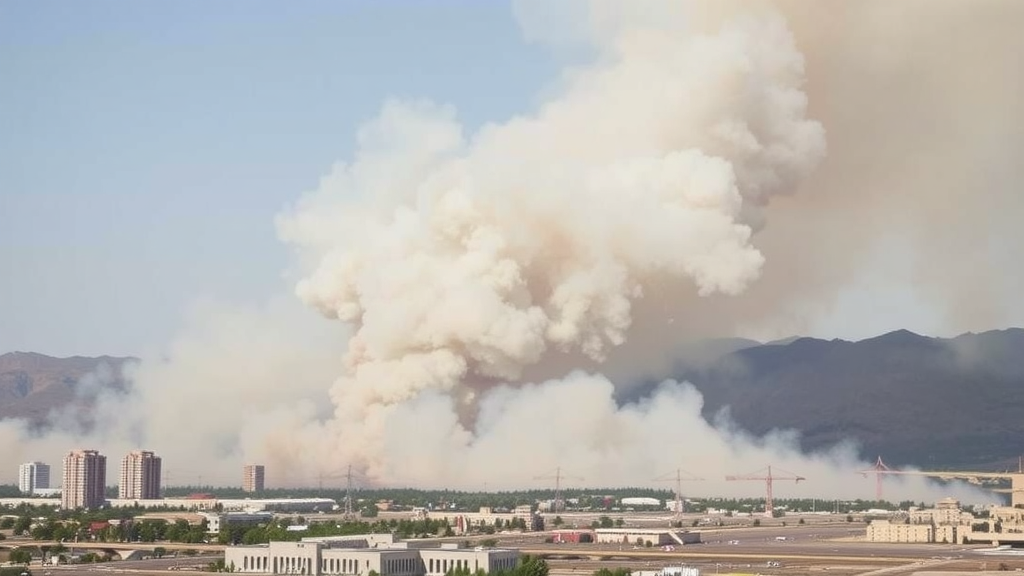
As wildfires across the American West grow larger, burn longer, and burn hotter, the smoke they produce has become one of the region’s most persistent public health threats. Millions of Americans now find themselves breathing smoke-polluted air every year, and few cities feel this burden as acutely as Reno, Nevada. Sitting downwind of California’s fire-prone landscapes, Reno spent months of 2020 and 2021 under skies thick with haze as an extraordinary barrage of fires burned across the Sierra Nevada and beyond. In California, those two years saw a ten-fold increase in fire activity compared with any comparable period in the state’s recorded history, and the smoke did not respect state lines. A new study led by scientists at the Desert Research Institute, or DRI, now offers one of the most detailed portraits yet of what that smoke actually contained, and the findings suggest that standard air quality monitoring captures only a fraction of the chemical exposure residents endured.
The research, published August 8th in the journal Atmospheric Pollution Research, took advantage of a natural experiment. The team compared air quality measurements collected during smoke-free days from August through October 2019 with measurements from smoke-affected days during the same months in 2020, when California’s fires raged almost continuously. Rather than limiting their analysis to the familiar metric of fine particulate matter, the researchers examined a broad suite of pollutants: particulate matter smaller than 2.5 micrometers, known as PM2.5; organic carbon; elemental carbon; ozone; and more than 100 toxic compounds known as polycyclic aromatic hydrocarbons, or PAHs. The results showed elevated levels of every pollutant category during smoke events, painting a picture of a city breathing a chemically complex mixture for weeks on end.
The particulate findings alone are striking. PM2.5 concentrations exceeded the standards set by the U.S. Environmental Protection Agency on 18 of the 50 smoke-affected days studied, a rate of exposure that carries clear public health implications. On the smokiest days, concentrations ran 1.1 to 2.8 times higher than the EPA’s National Air Quality standard. The most severe degradation occurred from August 19 through 22, 2020, and again from September 11 through 17, 2020, when hundreds of damaging wildfires were burning simultaneously in California. These episodes matter because previous research has already documented a strong association between elevated PM2.5 levels from wildfire smoke and increased emergency room visits for asthma at hospitals in Reno and nearby Sparks, linking the chemical measurements directly to measurable harm in the community.
Ozone, another regulated pollutant, told a more nuanced story. Wildfire smoke can contribute to ground-level ozone formation through chemical reactions between volatile organic compounds carried in the smoke and free radicals, in the presence of nitrogen oxides and sunlight. The study identified a limited increase in ozone of roughly 12 percent on smoke-affected days, and on some days ozone actually measured lower than the regional average. According to the researchers, this pattern suggests that vehicle exhaust and other urban pollution sources, rather than wildfire smoke, remain the dominant drivers of ground-level ozone in the Reno area. The finding is a useful corrective to the assumption that smoke uniformly worsens every pollutant, and it underscores how local emission sources interact with regional smoke plumes in ways that vary from city to city.
The study’s most distinctive contribution lies in its treatment of PAHs, a large family of compounds produced by incomplete combustion that can exist in smoke both as gases and as particles attached to aerosols. Unlike PM2.5, which is monitored continuously by regulatory networks, PAHs are not routinely measured, despite the fact that many of them are known to be toxic to human health. The researchers found that concentrations of particle-phase PAHs were approximately six times higher on smoke-affected days, with methyl- and dimethylnaphthalenes emerging as the most abundant compounds. The team also notes that certain classes of PAHs, particularly those with higher molecular weights, are known to be more toxic and have a greater capacity to bioaccumulate in living tissue. Beyond health effects, these compounds influence how aerosols absorb light, which means their monitoring is also important for quantifying the climate impact of smoke plumes.
Perhaps the most consequential discovery concerns where most of the PAHs were hiding. Nearly 98 percent of the PAHs identified in the study were in the gas phase, with mean gas-phase concentrations approximately 47 times higher than particle-phase concentrations. Among these gaseous compounds was naphthalene, which the U.S. EPA classifies as a hazardous air pollutant. The regulatory implications are significant: although the EPA recognizes 16 priority PAHs for air quality monitoring, only three compounds from that list appeared among the top 20 PAHs detected in this study. In other words, the occasional monitoring of 16 specified PAHs that currently defines federal practice is likely to produce an insufficient assessment of the overall toxicity present in air quality samples, particularly during smoke events when the chemical profile shifts dramatically.
That gap between what is monitored and what people actually breathe is central to why the researchers undertook the work. Vera Samburova, an atmospheric scientist at DRI and one of the study’s lead authors, explained the motivation behind the effort. The team wanted to expand knowledge of the range of toxic compounds present in smoke, she said, noting that smoky summers are difficult for everyone in Reno but pose particular challenges for sensitive groups, including children, older adults, people with preexisting health conditions, athletes, and outdoor workers. With monitoring of smoke contents limited, she observed, there is not yet a strong understanding of the full range of public health impacts, and the study can help identify which air pollutants deserve the closest scrutiny in future monitoring efforts.
The technical scope of the analysis reflects how far smoke science has evolved. By pairing conventional measurements of carbonaceous aerosols and criteria pollutants with an extensive survey of over 100 PAH compounds across both gas and particle phases, the study provides a template for the kind of comprehensive chemical characterization that standard regulatory networks rarely perform. The comparison design, anchoring smoke-affected 2020 data against a clean 2019 baseline for the same seasonal window, helps isolate the smoke signal from ordinary urban and seasonal variation. This matters for a region like northern Nevada, which is geographically positioned to receive much of the smoke generated by California’s fires, making recurring exposure episodes a structural feature of the local environment rather than a rare anomaly.
Andrey Khlystov, research professor of chemistry at DRI and a study author, framed the broader takeaway plainly. The study shows, he said, that further health studies and regular air monitoring for a range of PAHs are needed, especially in regions frequently impacted by wildfire smoke. As climate conditions continue to favor larger and more frequent fires across the West, the smoke that drifts into cities like Reno is likely to become an annual certainty rather than an occasional nuisance. The DRI team’s work, which included co-authors Chiranjivi Bhattarai of DRI and Siying Lu of DRI and the University of Nevada, Reno, suggests that protecting public health in the smoke era will require looking beyond the familiar particulate readings on air quality apps and confronting the far larger, largely invisible burden of toxic gases that ride along with the haze.
Subject of Research: The impact of wildfire smoke on urban air quality and toxic pollutant exposure in Reno, Nevada
Article Title: New study offers a detailed look at how wildfire smoke impacts Reno’s air quality
Article References: New study offers a detailed look at how wildfire smoke impacts Reno’s air quality. (n.d.). Original publication
Image Credits: AI Generated
DOI: Not provided
Keywords: wildfire smoke, air quality, Reno, PM2.5, polycyclic aromatic hydrocarbons, ozone, Desert Research Institute, Atmospheric Pollution Research, California wildfires, public health, gas-phase pollutants, air monitoring
Cite Scienmag News
Russell Cooper. (September 12, 2026). Wildfire Smoke Study Reveals Hidden Toxic Chemicals in Reno’s Air. Scienmag. https://scienmag.com/wildfire-smoke-study-reveals-hidden-toxic-chemicals-in-renos-air/
Russell Cooper. "Wildfire Smoke Study Reveals Hidden Toxic Chemicals in Reno’s Air." Scienmag, 12 September 2026, https://scienmag.com/wildfire-smoke-study-reveals-hidden-toxic-chemicals-in-renos-air/. Accessed 4 October 2026.
Russell Cooper. "Wildfire Smoke Study Reveals Hidden Toxic Chemicals in Reno’s Air." Scienmag. September 12, 2026. https://scienmag.com/wildfire-smoke-study-reveals-hidden-toxic-chemicals-in-renos-air/


