

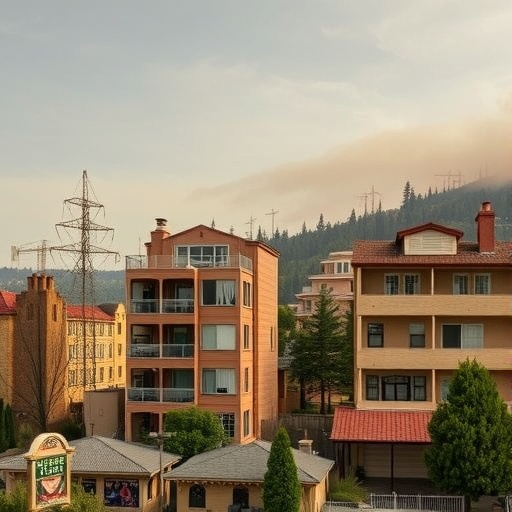
As wildfires blaze across California with increasing intensity, their impact transcends the environmental destruction visible to the naked eye, embedding deeply into the air quality and public health dynamics of the region. A pioneering study published in PLOS Climate elucidates a critical but often overlooked dimension of wildfire consequences: the exacerbation of PM2.5 exposure disparities among different racial groups. By examining data spanning from 2006 to 2018, this research reveals how wildfire smoke has undermined earlier progress made in reducing inequities associated with traditional sources of fine particulate matter pollution, known scientifically as PM2.5.
PM2.5 refers to atmospheric particulate matter with diameters less than 2.5 micrometers, small enough to penetrate the respiratory tract and enter the bloodstream, causing a plethora of health risks, including cardiovascular and respiratory diseases, and premature mortality. Historically, inequities in exposure to PM2.5 have been documented, disproportionately affecting marginalized and racially diverse communities due to proximity to pollution sources such as traffic, industrial facilities, and urban centers. Efforts over the past decades have reduced such disparities, but the new findings suggest that wildfire events—now more frequent and severe—pose a distinct and sizeable challenge that redefines the landscape of environmental justice in air pollution.
California’s notorious wildfire seasons, particularly the devastating 2018 blazes, have injected vast quantities of wildfire smoke into the atmosphere. This smoke is laden with PM2.5 particles generated by the combustion of biomass during wildfires. Unlike conventional pollution sources which tend to be geographically fixed and gradual in their emission patterns, wildfire smoke is episodic, with quick onset and widespread dispersal influenced by meteorology and fire behavior. This dynamic nature complicates the monitoring and mitigation efforts, often leaving vulnerable populations exposed to toxic air far beyond the immediate fire zones.
The study rigorously analyzed changes in ambient PM2.5 concentrations attributable to wildfire smoke and contrasted this with levels derived from anthropogenic, or human-made, pollution sources. Using sophisticated atmospheric modeling integrated with comprehensive ground-based monitoring networks, the researchers distinguished wildfire-related PM2.5 from other components. This allowed for an unprecedented assessment of how smoke from wildfires contributes uniquely to exposure disparities and how these contributions shifted over the 12-year period.
A striking conclusion from the research is that large surges in wildfire-derived PM2.5 substantially inflate overall PM2.5 exposure levels, particularly in years marked by intense fire activity. These surges effectively exaggerate the baseline exposure inequities linked to traditional sources. In other words, communities that may have seen meaningful declines in pollution levels due to regulatory achievements find themselves re-exposed or even more heavily burdened during severe wildfire periods, negating hard-earned gains in air quality equity.
More alarmingly, the findings indicate that the burden of wildfire smoke pollution does not fall evenly across the population. Racial and ethnic groups already vulnerable due to longstanding socio-economic inequalities face disproportionately higher exposure during wildfire seasons. The reasons are multifaceted: housing and neighborhood locations of these populations often coincide with areas more susceptible to air stagnation and smoke accumulation, and limited access to resources for air purification and healthcare compounds their vulnerability.
The temporal factor is also critical. Wildfire smoke events display intense spikes of PM2.5 concentration lasting days or weeks, meaning short-term exposures can reach hazardous levels that strain public health infrastructures. Chronic repetition of such episodes signals ongoing and possibly intensifying health injustices if mitigation and adaptive strategies are not urgently prioritized and tailored to these realities.
The research underscores the crucial need to redefine air pollution management and environmental justice frameworks by incorporating wildfire smoke as a distinct, variable, and increasingly predominant factor. Traditional pollution control policies, which have focused mainly on industrial emissions and vehicular exhaust, require expansion to address the episodic yet powerful impact of wildfires. This includes bolstering wildfire prevention, land management, and emergency response strategies alongside community-specific interventions.
Importantly, the study calls for enhanced surveillance and modeling capabilities to predict and track wildfire smoke exposure with high spatial and temporal resolution. Real-time data can empower public health agencies and affected communities to implement timely interventions, such as air filtration distribution and sheltering guidance, potentially saving lives during fire seasons.
Moreover, climate change projections indicate a future with more frequent and severe wildfires, exacerbated by drought, temperature increases, and shifting vegetation patterns in California and beyond. This growing threat makes the findings of this study not just a regional concern but a warning and call to action globally, especially in fire-prone zones where disadvantaged populations reside.
The research, funded by the National Institute on Aging and conducted through a collaboration involving scientists from France and the United States, presents a pivotal contribution to our understanding of ambient air pollution disparities. It bridges epidemiology, atmospheric science, and social equity, offering a comprehensive view of how environmental factors can inadvertently deepen societal divides.
There are no competing interests declared by the authors, ensuring impartiality and dedication to public welfare in this critical analysis. The study’s publication in PLOS Climate further attests to its high relevance and scientific rigor in climate and atmospheric research domains.
As California continues to grapple with its wildfire crises, this investigation provides indispensable insights. It challenges policymakers, scientists, and communities to rethink exposure reduction strategies and underscores the dire need for equitable climate adaptation policies. Only by recognizing and actively combating wildfire-driven pollution disparities can lasting health equity and environmental justice be achieved in the face of a changing climate.
Subject of Research: Ambient PM2.5 exposure disparities due to wildfire smoke in California from 2006 to 2018
Article Title: The diverging role of increasing wildfire smoke to ambient PM2.5 exposure disparity in California, 2006 to 2018
News Publication Date: 4-Feb-2026
Web References: DOI: 10.1371/journal.pclm.0000796
Keywords: PM2.5, wildfire smoke, air pollution, environmental justice, California wildfires, racial disparities, climate change, air quality management


