

Friday, July 17, 2026
Science
No Result
View All Result
  • Login
  • HOME
  • SCIENCE NEWS
  • CONTACT US
  • HOME
  • SCIENCE NEWS
  • CONTACT US
No Result
View All Result
Scienmag
No Result
View All Result
Home Science News Biology

Wild snapdragons subtly change color to attract bees

July 17, 2026
in Biology
Reading Time: 2 mins read
0
Wild snapdragons subtly change color to attract bees

Wild snapdragons subtly change color to attract bees

65
SHARES
587
VIEWS
Share on FacebookShare on Twitter
ADVERTISEMENT

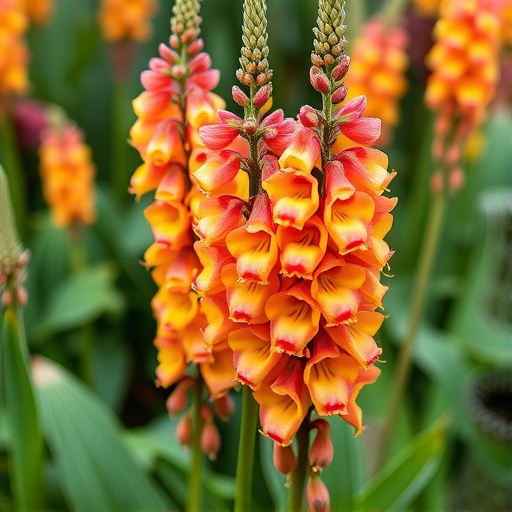
Flower color is often treated like an aesthetic detail, but new research shows it can be the product of intense evolutionary fine-tuning. In snapdragons, subtle shifts in pigment patterning determine how effectively flowers recruit bees—and that difference can influence gene survival.

Researchers from the John Innes Centre and international collaborators examined yellow flower variation in wild populations of Antirrhinum majus. Their focus was not merely on color, but on the way developmental chemistry translates genes into spatial “paint” on petals.

The study used a rare natural laboratory: a hybrid zone in the Pyrenees where two snapdragon varieties meet. One variety displays yellow petals with a magenta spot marking a bee entry point, while the other reverses the pattern—magenta petals with a yellow spot.

Because the two varieties interbreed in a narrow geographic band, the region where alleles mix remains only about 1 kilometer wide. That restriction lets scientists estimate how strongly natural selection acts on each genetic component rather than averaging effects across broad populations.

At the genetic level, the color difference is controlled by seven interacting genes. Three contribute to the production or placement of magenta pigment (“the magenta paintbrush”), while four govern the yellow component (“the yellow paintbrush”). Together, these loci regulate gradient formation, not simply on/off pigment presence.

Within the hybrid zone, mixing produces a spectrum of intermediate phenotypes, including orange and white. Yet many hybrids are less attractive to bees, so selection actively preserves the most bee-rewarding gradient configurations.

The team demonstrated that four of the paintbrush genes cooperate to shape a yellow gradient. In one variety, the gradient is steep, concentrating yellow into a spot; in the other, it is shallow, producing a broad blush.

Crucially, the study shows how small genetic effects can be nearly invisible to humans while remaining detectable to bees. Those bee-sensitive differences provide a pathway for selection to operate on multiple loci with different effect sizes.

Overall, the work offers a mechanistic explanation for how natural selection sculpts molecular gradients, with implications ranging from insect wing patterns to developmental processes in other organisms. The findings are published in Science Advances.

Subject of Research: Not applicable
Article Title: The Shaping of developmental gradients through selection on multiple loci in Antirrhinum
News Publication Date:
Web References: http://dx.doi.org/10.1126/sciadv.adx2011
References: 10.1126/sciadv.adx2011
Image Credits: Annabel Whibley

Keywords: evolutionary genetics, evolutionary ecology, molecular gradients, natural selection, hybrid zone, phenotypic variation, pollinator behavior, plant genetics, genetic mapping, developmental patterning

Tags: Antirrhinum majus color variationbee attraction in plantsdevelopmental chemistry of flower pigmentsevolutionary fine-tuning of flower traitsgene interactions controlling flower huegenetic basis of flower colornatural selection in hybrid zonespigment patterning and reproductive successplant-pollinator co-evolutionsnapdragon flower pigmentationspatial gene expression in petalswildflower color evolution
Share26Tweet16
Previous Post

Root developmental zonation persists despite changes in cell wall pH

Next Post

University of Toronto Professor Elected Fellow of the British Academy

Related Posts

Root developmental zonation persists despite changes in cell wall pH
Biology

Root developmental zonation persists despite changes in cell wall pH

July 17, 2026
Genes rapidly reactivate expression following thermal stress exposure
Biology

Genes rapidly reactivate expression following thermal stress exposure

July 17, 2026
Arabidopsis Researchers Map N1-methyladenosine mRNA Methylation
Biology

Arabidopsis Researchers Map N1-methyladenosine mRNA Methylation

July 17, 2026
Helical Flow Enables Opto-Thermoviscous Microrotation for Multiview 3D Microscopy
Biology

Helical Flow Enables Opto-Thermoviscous Microrotation for Multiview 3D Microscopy

July 17, 2026
Predictable Microbial Shifts Build Community-Wide Resilience to Environmental Stress
Biology

Predictable Microbial Shifts Build Community-Wide Resilience to Environmental Stress

July 17, 2026
Structure-Guided PCSK9 Vaccine Demonstrates Promising Preclinical Results
Biology

Structure-Guided PCSK9 Vaccine Demonstrates Promising Preclinical Results

July 17, 2026
Next Post
University of Toronto Professor Elected Fellow of the British Academy

University of Toronto Professor Elected Fellow of the British Academy

  • Mothers who receive childcare support from maternal grandparents show more

    Mothers who receive childcare support from maternal grandparents show more parental warmth, finds NTU Singapore study

    27656 shares
    Share 11059 Tweet 6912
  • University of Seville Breaks 120-Year-Old Mystery, Revises a Key Einstein Concept

    1061 shares
    Share 424 Tweet 265
  • Bee body mass, pathogens and local climate influence heat tolerance

    682 shares
    Share 273 Tweet 171
  • Researchers record first-ever images and data of a shark experiencing a boat strike

    546 shares
    Share 218 Tweet 137
  • Groundbreaking Clinical Trial Reveals Lubiprostone Enhances Kidney Function

    531 shares
    Share 212 Tweet 133
Science

Embark on a thrilling journey of discovery with Scienmag.com—your ultimate source for cutting-edge breakthroughs. Immerse yourself in a world where curiosity knows no limits and tomorrow’s possibilities become today’s reality!

RECENT NEWS

  • Noble Metal-Modified Zinc Oxide Nanoflakes Show Enhanced Gas Sensing Properties
  • Study Shows Adolescent Brain Remodeling Improves Memory Formation
  • Prefrontal intermittent theta-burst stimulation alters hemodynamic responses in major depression
  • KPNA2 overexpression worsens T4 colorectal cancer prognosis by nuclear c-Myc suppression of p21

Categories

  • Agriculture
  • Anthropology
  • Archaeology
  • Athmospheric
  • Biology
  • Biotechnology
  • Blog
  • Bussines
  • Cancer
  • Chemistry
  • Climate
  • Earth Science
  • Editorial Policy
  • Marine
  • Mathematics
  • Medicine
  • Pediatry
  • Policy
  • Psychology & Psychiatry
  • Science Education
  • Social Science
  • Space
  • Technology and Engineering

Subscribe to Blog via Email

Enter your email address to subscribe to this blog and receive notifications of new posts by email.

Join 5,146 other subscribers

© 2025 Scienmag - Science Magazine

Welcome Back!

Login to your account below

Forgotten Password?

Retrieve your password

Please enter your username or email address to reset your password.

Log In
No Result
View All Result
  • HOME
  • SCIENCE NEWS
  • CONTACT US

© 2025 Scienmag - Science Magazine

Discover more from Science

Subscribe now to keep reading and get access to the full archive.

Continue reading
