


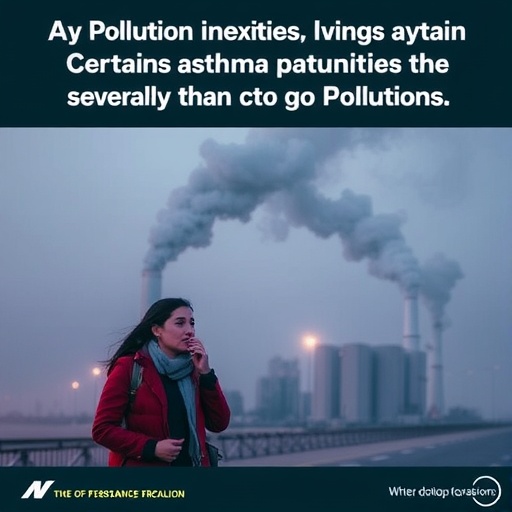
Asthma, a chronic respiratory disease afflicting millions worldwide, is notoriously sensitive to environmental triggers. Among these, air pollution ranks as a leading exacerbating factor, yet the precise molecular interplay that dictates individual susceptibility remains elusive. New research spearheaded by scientists at the University of Pittsburgh School of Public Health in collaboration with the Severe Asthma Research Program (SARP) has begun to unravel this complexity, shedding light on the genetic underpinnings that modulate how pollution impacts lung function in asthma patients.
Published in the journal eBioMedicine, the study represents one of the most extensive and integrative efforts to date, combining whole genome sequencing, air quality metrics, and transcriptomic analyses to probe the interaction between genetic variation and exposure to fine particulate matter (PM2.5). These ultrafine airborne particles, smaller than 2.5 microns, infiltrate deep into pulmonary tissues, provoking oxidative stress—a cascade of cellular damage stemming from reactive oxygen species that is central to asthma pathology.
Delving into data from nearly 1,000 adults with established asthma across the United States, the research team homed in on approximately 450 genes implicated in oxidative stress responses. Oxidative stress serves as a critical mechanistic link between environmental insults and airway inflammation. The investigators sought to clarify why some individuals experience severe lung function decline with elevated PM2.5 exposure, whereas others display resilience, despite similar environmental conditions.
A pivotal aspect of the study was the novel use of airway epithelial cells sampled directly from patients via bronchial brushings. This enabled the researchers to scrutinize gene transcription—the process by which DNA instructions are transcribed into RNA, which then orchestrates protein synthesis—offering a dynamic snapshot of molecular activity within the respiratory epithelium under pollution stress.
Their comprehensive analysis unveiled seven oxidative stress pathway genes harboring specific variants that significantly influence how respiratory tissues respond to PM2.5. Intriguingly, these genetic differences appeared to bifurcate patients into distinct response groups: some variants afford enhanced cellular protection against particulate-induced damage, while others exacerbate lung function impairment by compromising antioxidant defenses.
Among the most salient findings was the identification of variants in the genes OXSR1 and PXDN. Carriers of less common alleles in these genes exhibited markedly diminished lung function attributable to subdued RNA-mediated protective responses against oxidative injury. Conversely, a variant in the TPO gene correlated with worsened pulmonary outcomes through amplified RNA activity, suggesting a hyperactive yet maladaptive response mechanism contributing to tissue damage.
This intricate interplay between genotype and environmental exposure provides a compelling rationale for precision medicine approaches tailored to asthma management. Rather than adopting a uniform treatment paradigm, recognizing genetic susceptibility profiles could empower clinicians to forecast pollution risk impacts and customize interventions accordingly.
Moreover, the discovery heralds potential utility in public health strategies aimed at identifying and protecting vulnerable subsets of the population through targeted recommendations or enhanced monitoring during high pollution events. Ultimately, it also opens therapeutic avenues centered on modulating oxidative stress pathways to mitigate PM2.5-induced exacerbations.
The implications extend beyond immediate clinical application. By establishing a functional link between air pollution exposure, genetic variation, and transcriptional response within lung tissues, this research offers a paradigm shift in understanding asthma heterogeneity. It underscores the value of integrated multi-omic analyses in deciphering complex gene-environment interactions that dictate disease trajectory.
Looking ahead, the Pittsburg-based team intends to deepen their exploration of the identified molecular circuits and evaluate whether interventions such as antioxidant therapies or behavioral modifications can blunt pollution’s deleterious effects in genetically susceptible individuals. Such endeavors could pave the way toward innovative treatments and prevention strategies that transcend symptom palliation to target fundamental disease drivers.
While reducing air pollution levels remains paramount to safeguarding respiratory health on a population scale, these findings affirm that complementary strategies attuned to individual genetic vulnerability have the potential to considerably diminish the burden of pollution-triggered asthma exacerbations. This marriage of environmental science and genomics exemplifies the future of personalized medicine in respiratory care.
The study was conducted with contributions from a multidisciplinary consortium of researchers across prominent institutions, illustrating the collaborative effort needed to tackle public health challenges at the interface of genetics and the environment. Supported by grants from the National Institutes of Health, the work lays a robust scientific foundation for subsequent translational research and clinical innovation.
By unwrapping the complex crosstalk between hazardous environmental agents and the genome, this investigation not only enriches our understanding of asthma pathophysiology but also aligns with broader ambitions of precision public health. It offers hope that tailored interventions might soon reduce the morbidity associated with air pollution in asthma, marking a significant stride in combating this pervasive and burdensome disease.
Cite Scienmag News
Juliet Wilcox. (June 24, 2026). Why Pollution Impacts Certain Asthma Patients More Severely Than Others. Scienmag. https://scienmag.com/why-pollution-impacts-certain-asthma-patients-more-severely-than-others/
Juliet Wilcox. "Why Pollution Impacts Certain Asthma Patients More Severely Than Others." Scienmag, 24 June 2026, https://scienmag.com/why-pollution-impacts-certain-asthma-patients-more-severely-than-others/. Accessed 5 September 2026.
Juliet Wilcox. "Why Pollution Impacts Certain Asthma Patients More Severely Than Others." Scienmag. June 24, 2026. https://scienmag.com/why-pollution-impacts-certain-asthma-patients-more-severely-than-others/


