


American Indians and Alaska Natives use hospice and palliative care services at lower rates than other U.S. populations, even though these services are known to improve quality of life and reduce suffering at the end of life. A new qualitative study from the University of Oklahoma, the University of Texas Southwestern Medical Center, and the Chickasaw Nation examines why this gap persists within one tribal community, identifying barriers that range from misconceptions about hospice to deep cultural expectations about who should care for the dying. The research team conducted semi-structured interviews and focus groups with 27 participants, including health care providers, tribal leaders, and family members of people who were dying or had recently died.
The study, published in Frontiers in Public Health, focused on the Chickasaw Nation in Oklahoma. Rather than measuring service uptake statistically, the researchers sought to understand how community members and providers themselves interpret and explain the underuse of end-of-life care. The most pervasive barrier reported was a lack of knowledge about what hospice actually offers, accompanied by misconceptions about its purpose.
Many participants associated hospice with imminent death, which made families reluctant to engage with services that they felt would signal giving up. Psychological factors compounded this problem, including death anxiety and denial, both among dying individuals and among the relatives making decisions on their behalf. Cultural and generational imperatives added another layer of complexity.
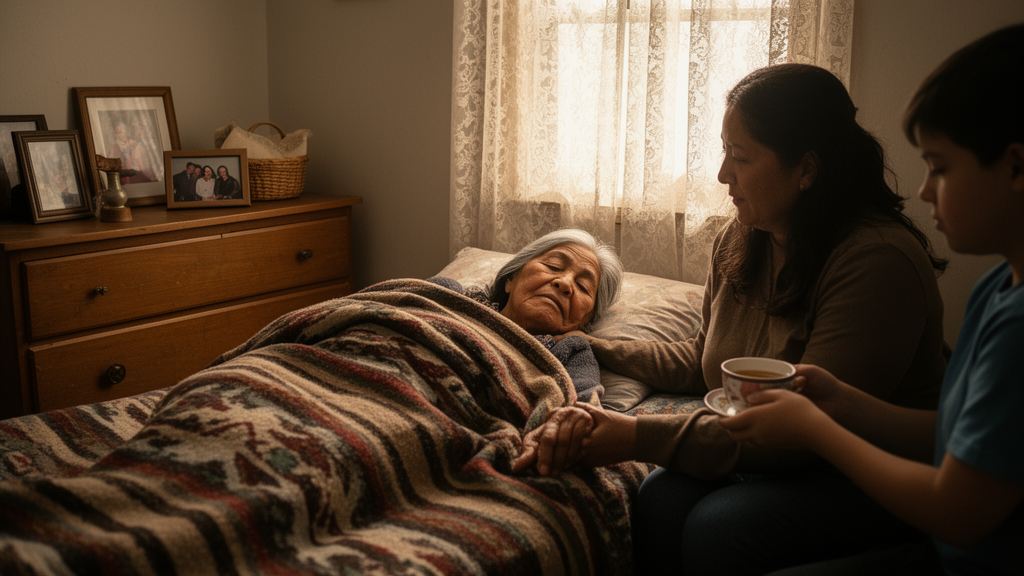
Participants described a strong expectation that family members should provide care for dying relatives themselves, and a corresponding reluctance to allow outsiders into the home, particularly people who were not tribal citizens. Systemic gaps also emerged as a major obstacle. The Chickasaw Nation does not currently operate its own hospice program, meaning families must rely on non-tribal agencies.
The study found that local non-tribal hospice agencies were generally viewed as high quality and culturally accommodating, yet participants nonetheless expressed a strong preference for services integrated within the tribal health system and responsive to local culture. This suggests that the problem is not simply the quality of available care but the fit between that care and community expectations. One of the most intractable barriers identified by the researchers was bureaucratic rather than cultural.
Hospice eligibility typically requires a six-month timeline to death, and participants described how this requirement collides with the desire for a cure: families and patients often want to keep pursuing treatment, and accepting a six-month prognosis feels like an act of surrender. The researchers describe this tension as seemingly intractable, since it is embedded in the very structure of hospice eligibility. The findings underscore the importance of culturally responsive education about hospice and palliative care.
The study also highlights the potential value of tribal involvement in end-of-life care delivery, so that services are delivered in ways that respect local norms about family, home, and community. As a qualitative study based on 27 participants in a single tribal community, the research cannot quantify how common each barrier is across the broader population of American Indians and Alaska Natives, and the findings reflect the perspectives of one nation’s citizens and providers. Nevertheless, the study offers a detailed account of how knowledge gaps, cultural expectations, psychological barriers, and systemic design interact to shape end-of-life decisions.
The authors conclude that addressing these barriers will require both education within the community and structural changes that bring hospice services closer to tribal control and cultural expectations. By documenting the perspectives of providers, leaders, and families within one tribal health context, the study provides a foundation for designing interventions that communities themselves can shape, rather than imposing models that may conflict with local values about dying, caregiving, and the role of family.
Subject of Research: Barriers to hospice and palliative care use in the Chickasaw Nation tribal community
Article Title: Barriers to end-of-life care in an Oklahoma tribal community
Article References: Jervis, L. L., Ramadugu, M., & Saunkeah, B. R. (2026). Barriers to end-of-life care in an Oklahoma tribal community. Frontiers in Public Health, 14, Article 1931261. https://doi.org/10.3389/fpubh.2026.1931261
Image Credits: AI Generated
DOI: 10.3389/fpubh.2026.1931261
Keywords: American Indian, hospice, palliative care, end-of-life care, Chickasaw Nation, tribal health system, health disparities, qualitative research, Oklahoma, culturally responsive care, Barriers, end-of-life
Cite Scienmag News
Ophelia Keating. (October 26, 2026). Why Hospice Care Reaches Fewer American Indian Families at Life’s End. Scienmag. https://scienmag.com/why-hospice-care-reaches-fewer-american-indian-families-at-lifes-end/
Ophelia Keating. "Why Hospice Care Reaches Fewer American Indian Families at Life’s End." Scienmag, 26 October 2026, https://scienmag.com/why-hospice-care-reaches-fewer-american-indian-families-at-lifes-end/. Accessed 26 October 2026.
Ophelia Keating. "Why Hospice Care Reaches Fewer American Indian Families at Life’s End." Scienmag. October 26, 2026. https://scienmag.com/why-hospice-care-reaches-fewer-american-indian-families-at-lifes-end/


