


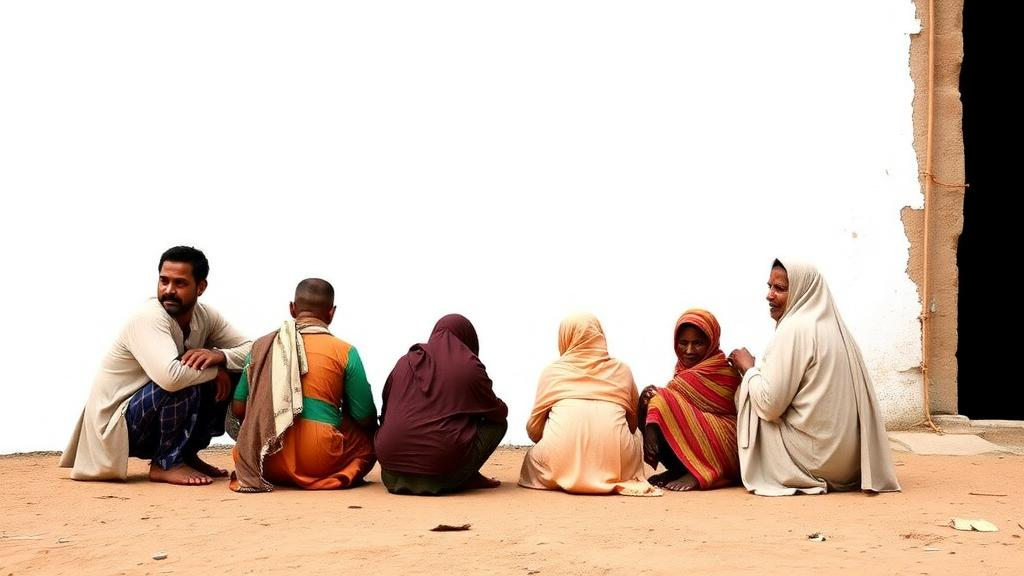
When violence against the Rohingya minority in Myanmar escalated after 2012, hundreds of thousands of people fled across borders into Bangladesh, Malaysia, Thailand and Indonesia, creating one of Southeast Asia’s most severe humanitarian emergencies. Among the organizations that mobilized most visibly was Muhammadiyah, Indonesia’s largest Islamic social movement, founded in 1912 and equipped with vast networks in education, healthcare, disaster management and social welfare. Yet a new study published in Discover Global Society reveals a striking puzzle: despite its moral authority and organizational reach, Muhammadiyah never became a formal mediator between the Myanmar government and Rohingya representatives. Instead, it deliberately concentrated on humanitarian diplomacy, refugee assistance and advocacy. Understanding why a powerful faith-based organization stayed at the edge of formal peacemaking offers rare insight into the structural limits of religious actors in international conflict resolution.
The research, led by Andi Adawiah of Universitas Lamappapoleonro together with colleagues at Universitas Muhammadiyah Yogyakarta, examines Muhammadiyah’s response to the Rohingya crisis between 2012 and 2017. The team used a qualitative case study design, combining interviews with Muhammadiyah leaders and humanitarian practitioners, analysis of institutional documents, official statements, press releases and program publications, and a review of academic literature. Interviews were conducted in Yogyakarta and Jakarta between 2024 and 2025, with informants selected purposively for their direct involvement in decision-making, humanitarian operations or policy discussions. The researchers applied cross-source triangulation, comparing interview results with organizational records, media reports and scholarly publications to minimize interpretive bias, and processed their data through the interactive qualitative analysis model of Miles and Huberman, involving data reduction, data display and conclusion drawing.
The theoretical engine of the study is Graham T. Allison’s Organizational Process Model, a framework originally developed in his classic analysis of the Cuban Missile Crisis. Allison argued that organizations do not respond to complex crises through pure rational calculation; instead, their behavior is shaped by established routines, standard operating procedures, institutional specialization and internal decision-making structures. Applied to Muhammadiyah, this lens suggests that the organization’s choices during the Rohingya crisis reflected the operational competencies already embedded in its institutional DNA: humanitarian relief, social services, education and advocacy, rather than formal diplomatic negotiation. The organization acted the way its structure allowed it to act.
The empirical findings bear this out. Muhammadiyah channeled assistance through institutions such as the Muhammadiyah Disaster Management Center, mobilizing financial aid, refugee support programs and advocacy campaigns, and collaborating with national and international humanitarian partners. One senior Muhammadiyah leader interviewed for the study explained the logic plainly, noting that the organization has strong experience in humanitarian assistance, education and social services but does not possess diplomatic authority to negotiate directly with the Myanmar government, and that its contribution is to help victims and advocate for humanitarian concerns. Another informant, a humanitarian practitioner, emphasized that the conflict in Myanmar is considered a domestic political issue, that religious organizations like Muhammadiyah have limited access to official negotiation channels, and that humanitarian diplomacy therefore became the most realistic approach.
These statements point to three interlocking constraints that kept Muhammadiyah out of formal peacemaking. The first is institutional: the organization’s historical mission and expertise lie in welfare and relief, not in international mediation, and its routines naturally steered it toward activities it performs well. The second is legal and diplomatic: as a non-state religious organization, Muhammadiyah lacks the state-level authority and diplomatic legitimacy that direct political mediation between a government and an ethnic group demands. The third is political: Myanmar treats the Rohingya question as a matter of domestic sovereignty, making external non-state involvement in negotiations exceptionally sensitive and effectively closing the official channels through which mediation would have to pass.
Crucially, the study argues that Muhammadiyah’s limited peacemaking role was not a matter of unwillingness or indifference. Rather, it was an adaptive organizational response to structural and procedural constraints. The distinction matters for the broader literature on faith-based organizations and peacebuilding. Scholars have long recognized that religious actors bring unique assets to conflict settings, including moral legitimacy, grassroots networks and the capacity to mobilize resources across borders. But a persistent debate concerns whether such organizations can participate effectively in formal political negotiations. The Muhammadiyah case supports the view that their influence tends to be stronger in humanitarian assistance, community reconciliation and dialogue facilitation than in official mediation, and it explains why: the bottleneck is institutional, not motivational.
To situate the case within wider scholarship, the authors conducted a bibliometric analysis of publication trends related to Muhammadiyah, the Rohingya crisis, humanitarian diplomacy and faith-based peacebuilding. The analysis showed a dramatic rise in scholarly output between 2016 and 2020, with document counts climbing from roughly 25 to around 180, peaking in 2020 before declining and then plateauing at 155 to 170 documents in 2022 through 2024. Geographically, Indonesia dominates the field with approximately 500 documents, roughly double the output of second-placed Bangladesh, followed by the United States, Australia and the United Kingdom. Word cloud, cluster and network visualizations of the literature revealed that the most prominent terms were Rohingya, Indonesia, Myanmar and humanitarian, with religious vocabulary such as Islam, Muslim and Islamic forming a distinct thematic nucleus alongside terms like refugees, conflict, diplomacy and rights.
The bibliometric patterns reinforce the study’s central claim. The literature overwhelmingly frames the Rohingya crisis through humanitarian and advocacy perspectives rather than formal conflict mediation, and themes directly related to negotiation and conflict resolution are conspicuously scarce. A thematic map placed refugees, human, education, Rohingya, Myanmar and Bangladesh in the quadrant of motor themes, meaning they are both well developed and central to the field, while niche themes such as fatwas, dakwah and philanthropy remain specialized and peripheral. In other words, both practitioners and scholars treat religious organizations primarily as humanitarian actors, and Muhammadiyah’s own strategic behavior mirrors that collective understanding of what faith-based organizations can realistically accomplish in conflict zones.
The findings carry practical implications for policymakers and humanitarian planners. The authors recommend that Muhammadiyah institutionalize a dedicated mechanism for peace mediation and conflict resolution, for example a permanent division or council for conflict diplomacy, to complement its humanitarian operations. They also suggest deeper collaboration with the Indonesian government, ASEAN and the Organisation of Islamic Cooperation to align faith-based initiatives with state-level diplomatic strategies, expanded partnerships with international NGOs and interfaith networks to increase legitimacy and access to resources, and internal capacity building through leadership training, resource mobilization and digital diplomacy. More broadly, the study encourages governments to view religious organizations not merely as moral voices but as potential partners in sustainable peace and humanitarian governance, capable of bridging the divide between states and civil society.
The research also extends Allison’s Organizational Process Model into a new domain, demonstrating that the routines and specializations of faith-based organizations, not just those of governments and bureaucracies, shape outcomes in international crises. The authors acknowledge limitations: the study focuses exclusively on Muhammadiyah and the Rohingya crisis, and future work should adopt comparative and multi-method approaches involving organizations such as Nahdlatul Ulama, Islamic Relief and Catholic Relief Services, along with longitudinal tracking of Muhammadiyah’s evolving strategies and integration of qualitative interviews with quantitative impact measures. For now, the case stands as a compelling demonstration that in modern conflict response, what an organization does is often determined less by what it wants than by what its structure, procedures and political environment permit.
Subject of Research: Faith-based organizational constraints on peacemaking and humanitarian diplomacy in the Rohingya crisis
Article Title: Exploring Entrepreneurship and Human Resource Management in Muhammadiyah’s Peacemaking Role during the Rohingya Conflict in Myanmar
Article References: Adawiah, A., Putra, H. A., Qodir, Z., Jubba, H., & Younus, M. (2026). Exploring Entrepreneurship and Human Resource Management in Muhammadiyah’s Peacemaking Role during the Rohingya Conflict in Myanmar. Discover Global Society, 4(1), Article 217. https://doi.org/10.1007/s44282-026-00564-7
Image Credits: AI Generated
DOI: 10.1007/s44282-026-00564-7
Keywords: Muhammadiyah, Rohingya, Myanmar, humanitarian diplomacy, faith-based organizations, peacemaking, conflict mediation, Indonesia, refugees, Organizational Process Model, peacebuilding, non-state actors
Cite Scienmag News
Courtney Benton. (October 4, 2026). Why a Giant Islamic Charity Chose Aid Over Mediation in the Rohingya Crisis. Scienmag. https://scienmag.com/why-a-giant-islamic-charity-chose-aid-over-mediation-in-the-rohingya-crisis/
Courtney Benton. "Why a Giant Islamic Charity Chose Aid Over Mediation in the Rohingya Crisis." Scienmag, 4 October 2026, https://scienmag.com/why-a-giant-islamic-charity-chose-aid-over-mediation-in-the-rohingya-crisis/. Accessed 4 October 2026.
Courtney Benton. "Why a Giant Islamic Charity Chose Aid Over Mediation in the Rohingya Crisis." Scienmag. October 4, 2026. https://scienmag.com/why-a-giant-islamic-charity-chose-aid-over-mediation-in-the-rohingya-crisis/


