


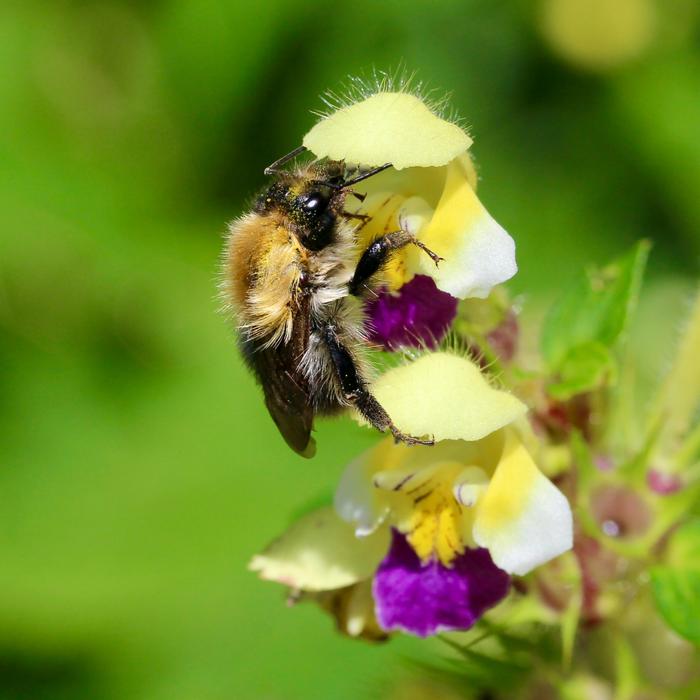
Climate change is affecting ecosystems in many different ways. One of its consequences are increasingly longer and more intense periods of heat, which affect essential natural processes – such as pollination. A team of researchers from Julius-Maximilians-Universität Würzburg (JMU) has now investigated in more detail how heat affects one particular player in these processes: The bumblebee.

Credit: Sabine Nooten / Uni Würzburg
Climate change is affecting ecosystems in many different ways. One of its consequences are increasingly longer and more intense periods of heat, which affect essential natural processes – such as pollination. A team of researchers from Julius-Maximilians-Universität Würzburg (JMU) has now investigated in more detail how heat affects one particular player in these processes: The bumblebee.
“Bumblebees are important pollinators in natural and agricultural systems. They therefore have a high economic and biodiversity value,” explains Dr. Sabine Nooten, head of the study. The furry insects are also extremely susceptible to heat events, as they are particularly well adapted to colder habitats.
Experimental Heat Harms the Animals
As pollinators, bumblebees are guided by the scents emitted by plants. These chemical signposts not only reveal the location of the plants, they also contain information about the condition of the flowers.
In the experiment, bumblebees were exposed to temperatures of 40 degrees Celsius in tubes – with serious consequences. “We found that the heat significantly impaired the bumblebees’ ability to detect floral scents,” says Sabine Nooten. They virtually lose their sense of smell.
Deteriorations of up to 80 percent were observed in female workers. Males lost up to 50 percent of their sense of smell. It was also noticeable that wild bumblebees had even greater problems with the heat than commercially used animals.
Even a subsequent regeneration period at suitable temperatures did not immediately lead to an improvement. 24 hours after the heat tests, most of the specimens still showed impairments.
Follow-up Study in Planning
The study confirms how strongly the interaction between insects and plants is affected by climate change. Heatwaves therefore play a key role here. These findings might prove important for future species conservation initiatives.
A follow-on project based on the results of the study has already been approved, says Sabine Nooten: “Now that we have found out that heat waves impair the physiological processes of bumblebees to detect flower scents, our focus is now on the behavioural side. We will test how the foraging behaviour of bumblebees is affected by experimental heatwaves.
Climate change is affecting ecosystems in many different ways. One of its consequences are increasingly longer and more intense periods of heat, which affect essential natural processes – such as pollination. A team of researchers from Julius-Maximilians-Universität Würzburg (JMU) has now investigated in more detail how heat affects one particular player in these processes: The bumblebee.
“Bumblebees are important pollinators in natural and agricultural systems. They therefore have a high economic and biodiversity value,” explains Dr. Sabine Nooten, head of the study. The furry insects are also extremely susceptible to heat events, as they are particularly well adapted to colder habitats.
Experimental Heat Harms the Animals
As pollinators, bumblebees are guided by the scents emitted by plants. These chemical signposts not only reveal the location of the plants, they also contain information about the condition of the flowers.
In the experiment, bumblebees were exposed to temperatures of 40 degrees Celsius in tubes – with serious consequences. “We found that the heat significantly impaired the bumblebees’ ability to detect floral scents,” says Sabine Nooten. They virtually lose their sense of smell.
Deteriorations of up to 80 percent were observed in female workers. Males lost up to 50 percent of their sense of smell. It was also noticeable that wild bumblebees had even greater problems with the heat than commercially used animals.
Even a subsequent regeneration period at suitable temperatures did not immediately lead to an improvement. 24 hours after the heat tests, most of the specimens still showed impairments.
Follow-up Study in Planning
The study confirms how strongly the interaction between insects and plants is affected by climate change. Heatwaves therefore play a key role here. These findings might prove important for future species conservation initiatives.
A follow-on project based on the results of the study has already been approved, says Sabine Nooten: “Now that we have found out that heat waves impair the physiological processes of bumblebees to detect flower scents, our focus is now on the behavioural side. We will test how the foraging behaviour of bumblebees is affected by experimental heatwaves.
Journal
Proceedings of the Royal Society B Biological Sciences
Article Title
The heat is on: reduced detection of floral scents after heatwaves in bumblebees
Article Publication Date
28-Aug-2024
COI Statement
No COI
Cite Scienmag News
Sloane Callahan. (August 30, 2024). When the heat makes you disoriented. Scienmag. https://scienmag.com/when-the-heat-makes-you-disoriented/
Sloane Callahan. "When the heat makes you disoriented." Scienmag, 30 August 2024, https://scienmag.com/when-the-heat-makes-you-disoriented/. Accessed 3 September 2026.
Sloane Callahan. "When the heat makes you disoriented." Scienmag. August 30, 2024. https://scienmag.com/when-the-heat-makes-you-disoriented/

