


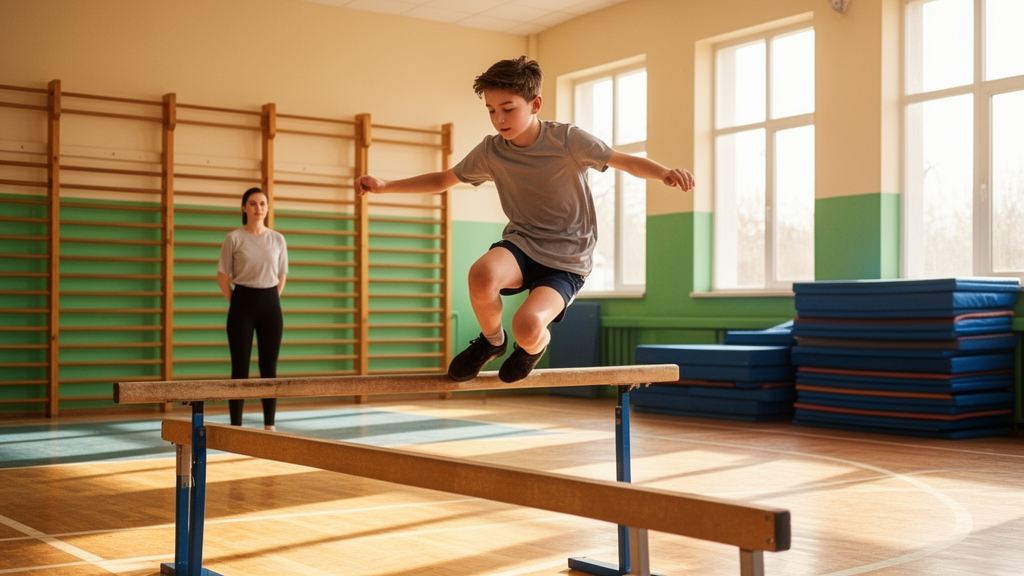
Physical education classes at university are often dismissed as little more than a graduation requirement, a slot in the weekly timetable where students run drills and earn attendance credit. A new study from the Philippines argues that these classes can be far more consequential, and that the psychology unfolding inside them follows a surprising and counterintuitive logic. Surveying 1,294 undergraduate students enrolled in minor physical education courses across higher education institutions in Region III, researchers Joseph Lobo and Felimon Pimentel Jr. found that when teachers grant students autonomy, students learn more deeply, but not simply because they feel supported. The engine driving that deeper learning, their statistical models suggest, is self-efficacy: each student’s private belief in their own capability.
The study, published in SN Social Sciences, employed a quantitative explanatory-predictive design and analyzed the data through partial least squares structural equation modeling, a statistical framework well suited to testing networks of relationships among psychological variables simultaneously. The research team measured four constructs: perceived teacher autonomy support, meaning the degree to which instructors offer choice, acknowledge feelings, and encourage self-initiated participation rather than compliance; self-efficacy, the belief in one’s capacity to execute the tasks at hand; perceived peer support, the encouragement students feel from classmates; and deep learning, the approach to study characterized by attempts to understand underlying meaning, connect ideas, and integrate new material with prior knowledge rather than memorizing fragments for an exam.
The conceptual scaffolding comes from two well-established psychological traditions. Self-determination theory, developed by Edward Deci and Richard Ryan, holds that humans flourish when their basic psychological needs for autonomy, competence, and relatedness are satisfied, and that autonomy-supportive teaching, as opposed to controlling instruction, nourishes intrinsic motivation. Self-efficacy theory, formulated by Albert Bandura in 1977 and elaborated in his 1997 volume on the exercise of control, holds that beliefs about capability shape the goals people set, the effort they invest, and their persistence in the face of difficulty. The Philippine study braids these strands together in a single path model, asking not just whether teacher support matters, but through what psychological channel it operates, and under what social conditions that channel strengthens or weakens.
The headline finding is deceptively simple: perceived teacher autonomy support was positively associated with deep learning, and self-efficacy showed the strongest direct association with deep learning of any variable in the model. In other words, the single most powerful predictor of whether a student engaged deeply with physical education was not how supportive the teacher was, but how capable the student believed themselves to be. This aligns with a substantial body of evidence. A systematic review by Tonia Honicke and Jaclyn Broadbent found consistent links between academic self-efficacy and performance, and Barry Zimmerman’s work established self-efficacy as an essential motive to learn, one that fuels the self-regulatory cycles of planning, monitoring, and reflection that deep learning demands.
But the more technically interesting result lies in the mediation analysis. The indirect association between teacher autonomy support and deep learning, transmitted through self-efficacy, was statistically significant and consistent with partial mediation. Partial mediation means the pathway through self-efficacy explains part, but not all, of the relationship between autonomy support and deep learning; a direct association remains even after accounting for the indirect route. Practically, this suggests autonomy-supportive teaching does two things at once: it lifts deep learning directly, perhaps by satisfying students’ need for autonomy and fostering intrinsic motivation, and it also builds students’ confidence in their own abilities, which then carries its own independent weight in driving deeper engagement. Teachers, in this framing, are not merely pleasant presences; they are architects of their students’ self-beliefs.
Then comes the twist that gives the study its title. Perceived peer support did not amplify the benefits of teacher autonomy support, as the researchers might reasonably have expected. Instead, it negatively moderated the association between teacher autonomy support and self-efficacy: the positive link between a teacher’s autonomy-giving style and a student’s self-efficacy became weaker at higher levels of perceived peer support. The authors’ own phrasing captures the paradox: students feel supported, but that is not the whole story. When classmates are highly supportive, the distinctive contribution of the autonomy-supportive teacher to a student’s confidence appears to diminish, as though the two sources of support partially substitute for one another in shaping efficacy beliefs.
The moderation finding is not without precedent. Research on peer feedback has shown that classmates can meaningfully shape self-efficacy, and a 2021 study by Annette Bürgermeister, Ines Glogger-Frey, and Hector Saalbach demonstrated that structured peer feedback on learning strategies can raise both self-efficacy and feedback quality. Recent work published in the Journal of Sport and Exercise Psychology by Cheon and colleagues has even documented reciprocal relations between students’ agentic engagement and peer support in physical education, suggesting that students can actively create supportive environments for themselves. What the new study adds is the suggestion that peer support and teacher support are not simply additive; their effects on self-efficacy interact, and abundance in one channel may dilute the marginal effect of the other.
Several mechanisms could plausibly account for this pattern, and the authors situate their findings within the broader literature rather than overclaiming a single cause. One possibility is functional overlap: if peer support and teacher autonomy support both satisfy the psychological need for relatedness and both provide mastery-relevant informational cues, then students already awash in peer encouragement may have less room for the teacher’s contribution to register in their efficacy beliefs. Another possibility involves the nature of efficacy information itself. Bandura identified mastery experiences, vicarious experience, verbal persuasion, and physiological states as the principal sources of self-efficacy, and peer support may operate heavily through persuasion and modeling, channels that can saturate. A third reading is motivational: strong peer bonds might shift students toward socially oriented goals, subtly reframing the meaning of teacher-provided autonomy in a collective context, a consideration particularly salient in Filipino classrooms where group harmony carries cultural weight.
The methodological choices deserve attention as well. Partial least squares structural equation modeling, popularized in methodological primers by Joseph Hair and colleagues, excels at estimating complex path models with multiple constructs and is increasingly common in educational and knowledge-management research. The instrument development followed established validation procedures, including content validity assessment in the tradition of Charles Lawshe’s quantitative approach and face validity indexing as described by Muhamad Saiful Bahri Yusoff. The measurement of deep learning drew on the research tradition inaugurated by Ference Marton and Roger Säljö in 1976, who first distinguished surface approaches focused on reproduction from deep approaches focused on meaning, and refined through the revised two-factor Study Process Questionnaire of John Biggs and colleagues. Ethical oversight was provided by the Institutional Review Board of Filamer Christian University, with informed consent, voluntary participation, and data protection compliant with the Philippine Data Privacy Act of 2012.
The practical implications reach beyond the gymnasium. If self-efficacy is the strongest direct correlate of deep learning, then interventions that build students’ confidence, through graduated mastery experiences, realistic and specific feedback, and opportunities to witness peers succeeding, may pay outsized dividends in how deeply students engage with course material. If autonomy-supportive teaching works partly by building that confidence, then professional development programs that train teachers to offer rationales, acknowledge negative feelings, and provide choice, approaches validated in intervention studies by Johnmarshall Reeve and Sung Hyeon Cheon, become a dual-purpose investment. And if peer support moderates the teacher effect, then educators should attend to the composition and climate of peer groups rather than treating classroom support as a teacher-only variable. For a subject often treated as an afterthought in university curricula, the study makes a case that physical education is a live laboratory for the psychology of learning, one where agency, confidence, and social context interweave in ways that lecture halls are only beginning to replicate.
Subject of Research: The roles of self-efficacy and peer support in linking teacher autonomy support to deep learning in university physical education
Article Title: “I feel supported, but that is not the whole story…” Self-efficacy as a mediator and perceived peer support as a moderator between perceived teacher autonomy support and deep learning in physical education
Article References: Lobo, J., & Pimentel, F., Jr. (2026). “I feel supported, but that is not the whole story…” Self-efficacy as a mediator and perceived peer support as a moderator between perceived teacher autonomy support and deep learning in physical education. SN Social Sciences, 6(9), Article 405. https://doi.org/10.1007/s43545-026-01707-y
Image Credits: AI Generated
DOI: 10.1007/s43545-026-01707-y
Keywords: teacher autonomy support, self-efficacy, peer support, deep learning, physical education, self-determination theory, structural equation modeling, higher education, student motivation, mediation analysis, moderation analysis, Philippines
Cite Scienmag News
Courtney Benton. (October 18, 2026). When Supportive Teachers Are Not Enough: Self-Efficacy Drives Deep Learning in Physical Education. Scienmag. https://scienmag.com/when-supportive-teachers-are-not-enough-self-efficacy-drives-deep-learning-in-physical-education/
Courtney Benton. "When Supportive Teachers Are Not Enough: Self-Efficacy Drives Deep Learning in Physical Education." Scienmag, 18 October 2026, https://scienmag.com/when-supportive-teachers-are-not-enough-self-efficacy-drives-deep-learning-in-physical-education/. Accessed 18 October 2026.
Courtney Benton. "When Supportive Teachers Are Not Enough: Self-Efficacy Drives Deep Learning in Physical Education." Scienmag. October 18, 2026. https://scienmag.com/when-supportive-teachers-are-not-enough-self-efficacy-drives-deep-learning-in-physical-education/


