


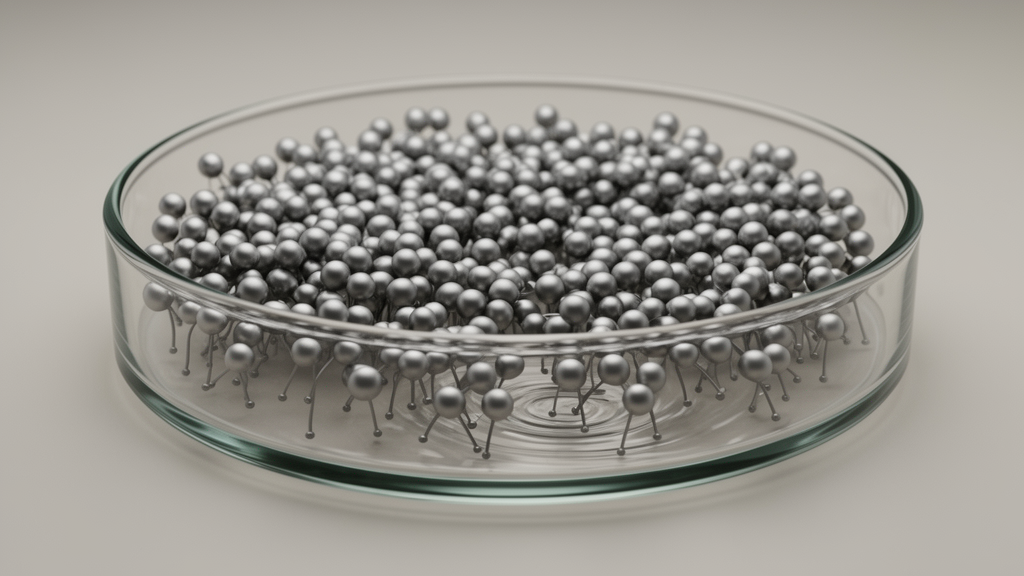
Ultra-dense crowds, where people are packed so tightly that physical contact becomes unavoidable, are among the most dangerous environments in modern public life. Accidents are reported every year, and the deadliest mechanisms, from crushing to asphyxiation by thoracic compression, are mechanical rather than psychological. Yet the fundamental physics of how such crowds move has remained stubbornly obscure. A new study published in PLOS Complex Systems by Thomas Chatagnon of Forschungszentrum Jülich and colleagues proposes a strikingly simple answer to a long-standing puzzle: the missing ingredient in crowd models may be nothing more than the way each individual human body loses and recovers its balance.
For decades, the dominant explanation for crowd disasters invoked panic. Early theories suggested that people in emergencies lose rational control and behave selfishly or chaotically, and simulation models were built to propagate emotional states through virtual crowds. But empirical evidence has steadily dismantled this picture. Eyewitness accounts, video analyses, interviews and sociological investigations of real disasters consistently show that people in extreme crowding remain calm, cooperative and often altruistic. Fatal outcomes instead arise from collective mechanical instabilities, when local pressures, force chains and density waves propagate through a compressed mass of bodies, causing loss of balance, fainting and asphyxiation. The crowd, in this reframing, is a complex dynamical system governed by biomechanics, not by emotion.
The empirical record of dense-crowd behaviour is remarkably rich. Observations during the 2006 Hajj in Mecca documented stick-slip instabilities and turbulent-like flows, sometimes described as earthquake-like crowd turbulence, in which sudden large-scale ruptures sweep through packed pedestrians. Propagating density waves were famously recorded at an Oasis concert in the United Kingdom in 2005, where waves emerged spontaneously in the standing audience. Transversal oscillating rushes have been measured experimentally in competitive crowds pressing toward bottlenecks, and collective chiral rotations, in which an entire crowd slowly turns as a coherent body, have been documented at the St. Fermín festival in Pamplona and at the Love Parade in Duisburg. These patterns arise without clear triggers and without intentional coordination, and no existing model could reproduce them within a single interpretable framework.
The reason, the authors argue, lies in a simplification that nearly all existing models share: the representation of pedestrians as passive two-dimensional disks. Classical microscopic models, built on social forces, collision avoidance or trajectory optimisation, work well at low and intermediate densities, where balance is maintained effortlessly through normal locomotion. But at densities of four to five pedestrians per square metre and above, contact becomes continuous and the dynamics change fundamentally. Contact forces challenge postural control, standing balance must be actively maintained, and the upper body and legs become constrained in different ways. A disk cannot topple, cannot step, and cannot fall, so a crowd of disks cannot capture the biomechanics that dominates motion at extreme density.
The new model, deliberately minimalist, gives each simulated pedestrian two coupled subsystems: an upper body and a set of legs, each represented by a position in the horizontal plane. The upper body corresponds roughly to the ground-projected centre of mass, while the legs correspond to the centre of the support area beneath the feet. Two antagonistic mechanisms couple them. When the upper body drifts away from the legs, an unintentional unbalancing force, effectively the linearised effect of gravity, amplifies the displacement, just as a leaning body tends to fall. In response, an intentional rebalancing force drives the legs to move back underneath the upper body, restoring the upright posture. Each pedestrian is thus a mechanical analogue of an inverted pendulum, a conceptual model long used in individual postural-control research, but here embedded in a dense interacting crowd.
Interactions between pedestrians are handled through purely repulsive, short-range potentials acting independently at the two levels, with a larger repulsion distance at the upper-body level than at the leg level, reflecting the fact that shoulders are wider than feet. This asymmetry makes the legs more mobile and better able to adjust under compression. A damping term represents each pedestrian’s active resistance to being pushed. Crucially, the collective dynamics turn out to be governed mainly by the balance and unbalance rates and speeds rather than by the precise form of the contact potentials, which work equally well whether exponential or algebraic. The organising principle, in other words, is internal balance control, not the fine details of contact modelling.
When the researchers simulated 196 pedestrians in a small periodic domain, the model spontaneously produced collective patterns that had eluded previous modelling attempts. With intermediate unbalancing rates and speeds, coherent diagonal density waves emerged and propagated across the crowd at roughly four to five metres per second, matching the wave speeds observed at the Oasis concert and in controlled experiments on impulse propagation through standing crowds. With a higher unbalancing rate and a lower speed, the system instead organised into a global chiral rotation, with every pedestrian tracing a synchronised circular trajectory at a period of about twelve seconds, strikingly close to the roughly eighteen-second rotations documented in Pamplona. The rotational period proved tunable through the model parameters, with the ratio of unbalancing to balancing rates controlling the timescale.
A systematic exploration of the parameter space revealed a well-structured phase diagram with four regimes: a crystallised state with low energy and low correlation, a density-wave state with intermediate energy and high coherence, a chiral-oscillation state with low energy and high coherence, and a disordered state in which body and leg behaviours decouple. The authors tested robustness by varying system size, adding positional noise to initial conditions and drawing individual parameters from random distributions; the phase diagram remained essentially unchanged. Collective dynamics also persisted without leg-to-leg interactions, although synchronisation became harder, and were insensitive to the damping rate provided it remained positive. The emergent patterns, in short, are intrinsic features of the coupled balance dynamics rather than artefacts of fine-tuning.
Mechanically, the crowd can be viewed as a spatially extended network of coupled inverted pendulums, or equivalently as mass-spring-damper units exchanging energy and perturbations through short-range exclusion forces. This interpretation connects the model to the theory of coupled oscillatory systems, multi-layer dynamics and Kuramoto-type synchronisation, offering a conceptual bridge between individual postural control and crowd-scale order. The internal two-layer structure introduces degrees of freedom that naturally favour oscillatory responses and feedback loops, creating precisely the conditions under which macroscopic modes can emerge from purely local interactions, without any global rule or intentional coordination.
The authors are careful to position the work as explanatory rather than predictive. The full human body dynamics at stake in a real crush are far more complex, and future extensions must address the singularity that arises when body and legs coincide, replace the propulsive unbalancing force with a conservative gravitational-like potential, incorporate state-dependent parameters, heterogeneous populations, friction and falling mechanisms. The role of the arms remains an open question: evidence from crowd disasters shows suffocation by thoracic compression is a leading cause of death, and eyewitnesses describe struggling even to protect their chest, yet the model suggests active arm pushing is not required to reproduce observed collective motion. Calibration against video data of large events and controlled motion-capture experiments will determine whether this two-level paradigm, which gives crowd particles legs, can mature into a quantitative tool for forecasting and mitigating hazards in the world’s most dangerous gatherings.
Subject of Research: Biomechanical balance recovery as a driver of emergent collective dynamics in ultra-dense pedestrian crowds
Article Title: Giving particles legs: How balance recovery may drive emergent collective dynamics in ultra-dense crowds
Article References: Chatagnon, T., Chraibi, M., Pettré, J., Seyfried, A., & Tordeux, A. (2026). Giving particles legs: How balance recovery may drive emergent collective dynamics in ultra-dense crowds. PLOS Complex Systems, 3(10), e0000110. https://doi.org/10.1371/journal.pcsy.0000110
Image Credits: AI Generated
DOI: 10.1371/journal.pcsy.0000110
Keywords: crowd dynamics, ultra-dense crowds, balance recovery, pedestrian model, inverted pendulum, density waves, chiral rotation, emergent behaviour, biomechanics, crowd safety, self-organisation, PLOS Complex Systems
Cite Scienmag News
Reid Dalton. (October 8, 2026). When Particles Get Legs: Balance Recovery May Drive the Hidden Waves of Ultra-Dense Crowds. Scienmag. https://scienmag.com/when-particles-get-legs-balance-recovery-may-drive-the-hidden-waves-of-ultra-dense-crowds/
Reid Dalton. "When Particles Get Legs: Balance Recovery May Drive the Hidden Waves of Ultra-Dense Crowds." Scienmag, 8 October 2026, https://scienmag.com/when-particles-get-legs-balance-recovery-may-drive-the-hidden-waves-of-ultra-dense-crowds/. Accessed 8 October 2026.
Reid Dalton. "When Particles Get Legs: Balance Recovery May Drive the Hidden Waves of Ultra-Dense Crowds." Scienmag. October 8, 2026. https://scienmag.com/when-particles-get-legs-balance-recovery-may-drive-the-hidden-waves-of-ultra-dense-crowds/


