


In the bustling field of language comprehension, a recent study emerging from Kyushu University unveils a fascinating exploration into how children and adults process ambiguity in language. Published on February 13, 2025, in the esteemed journal PLOS One, the research demonstrates compelling differences in interpretative strategies between age groups when faced with uncertain pronouns like "that." The findings not only challenge existing notions about linguistic development but also shed light on broader implications for communication, including speech therapy and artificial intelligence, thereby redefining our understanding of language cognition.
Consider a moment during a clear night when a shooting star races across the sky, prompting a friend to ask, “Did you see that?” Instinctively, observers associate the query with the spectacular event rather than the mundane twinkling backdrop. This natural instinct forms the crux of the Kyushu University research, which scrutinizes how verbal uncertainties are navigated by different age groups. Researchers, led by Reiki Kishimoto and Kazuhide Hashiya, have conducted psychological experiments to unravel the cognitive pathways we traverse when interpreting vague references.
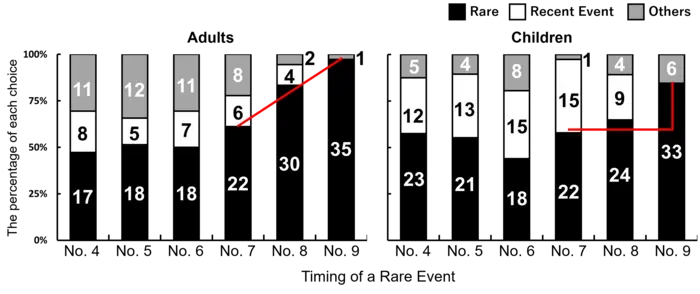
The research involved a structured assessment where participants, comprised of Japanese children aged 7 to 10 and adults, observed animated scenarios featuring a lineup of nine monsters. Each displayed varying behaviors: while eight monsters performed identical actions, one distinguished itself with a unique action. Following the animations, participants were prompted with a phrase in Japanese, “Ima-no mita?” translating to “Did you see that?” Their task was to indicate which monster they believed the pronoun referred to. This study design served to analyze the interplay between recency and rarity in determining the focus of ambiguous utterances.
Results indicated a shared tendency among children and adults to select either the final monster presented or the unique one, showcasing a common instinct to lean on familiarity and novelty in disambiguation. However, a marked difference arose in the way cognition operated. Adults displayed a gradual shift toward recognizing the distinct behavior as more significant as it appeared later in the sequence, indicating a sophisticated integration of temporal cues. Conversely, children almost exclusively fixated on the last monster, suggesting a more concrete attachment to the immediacy of the moment rather than the rarity of the event.
Moreover, adults exhibit a level of cognitive flexibility that allows them to conceptualize temporal distance in a fluid manner, unlike children who treat recency and rarity as separate entities. This insight underscores the developmental aspects of language understanding, emphasizing how growing neurological complexity enables adults to glean nuanced information from conversational cues. Research implications extend beyond ordinary discourse, hinting at potential applications in areas such as dialogue systems for artificial intelligence and enhanced communication strategies for individuals with autism.
One compelling takeaway from the study relates to how ambiguous references demand contextual interpretations beyond their immediate meanings. This facet can be particularly challenging for children, including those on the autism spectrum, who may struggle with implicit contextual cues in communication. The importance of shedding light on these interpretive strategies resonates deeply in educational and therapeutic contexts, where promoting effective communication is vital.
The exploration into cultural and linguistic variance remains a priority for Kishimoto and Hashiya as future extensions of their research. By examining the influence of differing languages and cultural contexts on interpretive patterns, the researchers aim to broaden understanding in a global communication landscape increasingly shaped by digital interactions. The rapid proliferation of social media platforms necessitates a heightened awareness of how individuals process information differently in diverse communicative environments.
Kishimoto emphasizes, “Understanding social interaction in a rapidly evolving communication system is more crucial than ever,” hinting at the need for adaptive strategies to navigate the ambiguity that characterizes modern discourse. As the interaction between cognition and context is continually reframed by technological advancements, these findings pave the way for innovative strategies that acknowledge the nuanced processing capabilities inherent in human communication.
The Kyushu University researchers’ commitment to enhancing clinical interventions stems from their recognition of the various challenges faced by children who struggle with ambiguous language. By unraveling the cognitive mechanisms behind interpretation, the goal is to empower these children with the skills to better navigate social interactions. Strengthening communication abilities fosters more profound social ties, a foundational aspect of fostering mental health and well-being.
As the study concludes, it signals an essential step in understanding how individuals conceive and respond to the complexities of language. The implications for AI—particularly in developing conversational agents capable of nuanced recognition of human communication—highlight the intricate dance between linguistics and technology. By equipping machines with an understanding of human-like interpretive processes, we inch closer to creating AI that interacts with emotional intelligence.
The research from Kyushu University stands as a testament to the evolving field of linguistics and cognitive development. As we journey through the complexities of communication, insights from such studies will undoubtedly fuel both scholarly discourse and practical applications in making human interaction richer and more inclusive for all.
Cite Scienmag News
Courtney Benton. (March 25, 2025). What Does “That” Refer to in the Question “Did You See That?” – An Exploration for Science Magazine Readers. Scienmag. https://scienmag.com/what-does-that-refer-to-in-the-question-did-you-see-that-an-exploration-for-science-magazine-readers/
Courtney Benton. "What Does “That” Refer to in the Question “Did You See That?” – An Exploration for Science Magazine Readers." Scienmag, 25 March 2025, https://scienmag.com/what-does-that-refer-to-in-the-question-did-you-see-that-an-exploration-for-science-magazine-readers/. Accessed 9 September 2026.
Courtney Benton. "What Does “That” Refer to in the Question “Did You See That?” – An Exploration for Science Magazine Readers." Scienmag. March 25, 2025. https://scienmag.com/what-does-that-refer-to-in-the-question-did-you-see-that-an-exploration-for-science-magazine-readers/


