


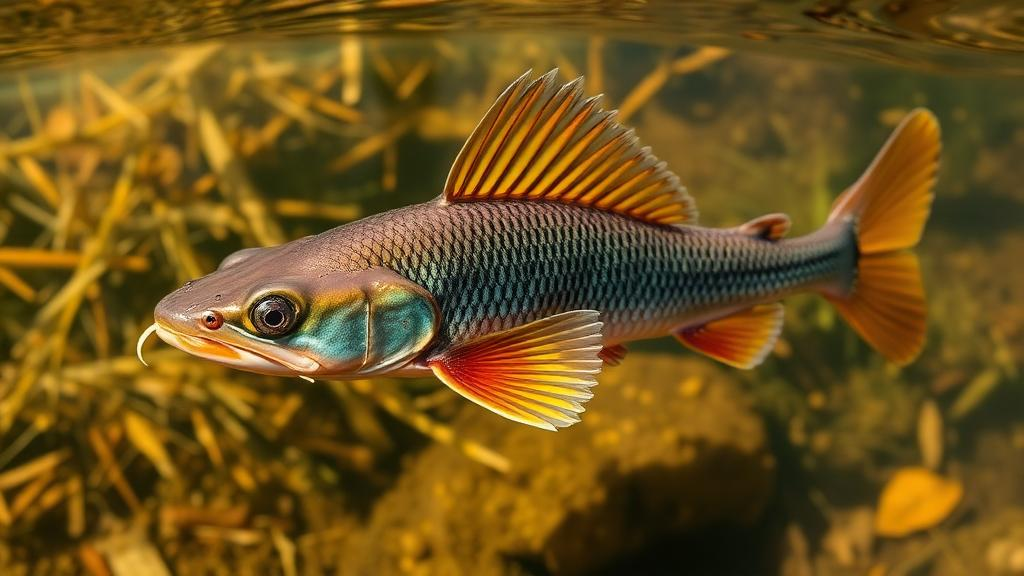
In a thermally unusual corner of the Sakarya River in Türkiye, where hot springs hold water temperatures between 18 and 24 degrees Celsius year-round, two large predatory catfish now share the same waters: the native Wels catfish, Silurus glanis, and the non-native African sharptooth catfish, Clarias gariepinus. A new study published in the journal NeoBiota combines laboratory feeding trials, stable isotope analysis, and species distribution modelling to ask a deceptively simple question: what happens to native fish communities when a warming climate pushes an invasive apex predator deeper into the territory of a declining native one? The answer, the researchers report, is a compounding threat in which climate change amplifies the ecological impact of an invader while reshaping its interactions with native counterparts.
The African sharptooth catfish is one of the world’s most widely introduced freshwater fish, exported globally for aquaculture because of its rapid growth, disease resistance, tolerance of crowded ponds, and ability to breathe atmospheric oxygen and even disperse overland. Adults commonly exceed one metre in length. Those same traits, however, make it a formidable invader, and the species has been linked elsewhere to the displacement of native fish, food web disruption, and parasite transmission. In Türkiye, it has gained a foothold in a section of the Sakarya River warmed by springs, where it now coexists with the Wels catfish, a species that is native and declining in the region even though it behaves as a damaging invader in other parts of Europe.
To measure predation pressure directly, the team ran comparative functional response experiments, a standard tool in invasion science that quantifies how efficiently a predator consumes prey as prey density rises. Wild-caught catfish of both species were offered two prey fish at densities from one to 64 individuals in 90-litre tanks held at 21.5 degrees Celsius, matching the average temperature of the collection sites. One prey was the native bleak Alburnus escherichii, the dominant small fish at the study site; the other was gibel carp, Carassius gibelio, an invasive cyprinid now widespread across the country. The number of prey eaten after 24 hours was used to estimate each predator’s attack rate and handling time.
Every predator-prey combination produced a Type II functional response, the classic pattern in which consumption is disproportionately high when prey are scarce, a dynamic that can drive prey populations toward local collapse. The critical difference emerged between prey species. Both catfish took significantly longer to handle gibel carp than bleak, and the functional response ratio, which integrates attack rate and handling time into a single measure of predatory impact, was roughly three times higher on the native prey. Clarias gariepinus posted a ratio of 203.5 on the bleak compared with 61.3 on gibel carp; for Silurus glanis the corresponding figures were 123.5 and 49.0. Clarias gariepinus also attacked the native bleak at a significantly higher rate than the Wels catfish did.
The researchers attribute the gibel carp’s partial refuge from predation to its deeper body shape and to the predators’ lack of evolutionary experience with it, whereas slender-bodied bleak closely resemble South African minnows and barbs whose populations have crashed following sharptooth catfish invasions. Because both predators converge on the same native prey, their combined presence could destabilize bleak populations faster than either predator acting alone, a concern sharpened by the fact that the invaders consumed more of the native prey per unit time under the study’s warm conditions.
Laboratory results, however, can oversimplify natural food webs, so the team also analysed stable isotopes of carbon and nitrogen in muscle tissue from fifteen wild specimens of each species. Nitrogen isotope ratios placed both predators at similar trophic positions, with the Wels catfish slightly higher at 3.57 versus 3.30 for the African catfish. Yet their isotopic niches barely overlapped: the African catfish’s niche ellipse overlapped only 5.4 percent of the Wels catfish’s at the 95 percent level, and a negligible 0.3 percent at the core 40 percent level. The narrower isotope signature of the African catfish suggests it feeds on a more specialized subset of resources in the wild, consistent with the idea that generalist invaders can shrink their trophic niche when sharing waters with a native competitor, easing direct conflict while maintaining pressure on shared prey.
The third strand of the study looked outward in space and forward in time. Using nine modelling algorithms and quality-controlled occurrence records filtered for spatial errors and autocorrelation, the researchers built ensemble ecological niche models for both predators and both prey, then projected habitat suitability under two CMIP6 climate scenarios, an intermediate SSP1-2.6 pathway and a high-emission SSP5-8.5 pathway, for mid-century and end-of-century horizons. Model performance was strong, with True Skill Statistics above 0.6 for all species and reaching 0.93 or higher for the Wels catfish and gibel carp in the best algorithms.
The projections tell a coherent story about climate niches. The African catfish is associated with thermally stable environments with moderate seasonal variability, while the Wels catfish prefers regions with pronounced seasonal temperature swings and is sensitive to cold-quarter temperatures. The native bleak is likewise governed by temperature-related variables and favours areas with distinct seasons but low daily fluctuation. Under future scenarios, both predators are projected to expand their ranges, and their overlapping habitat increases, raising the probability of interspecific encounters and competition. The Wels catfish’s climatic tolerance aligns more closely with bleak habitat across temperate Europe, meaning the native predator may threaten the native prey over a broader area than the invader, at least climatically.
The authors are careful to frame the models as risk maps rather than prophecies. Species distribution models identify where interactions could plausibly occur, but they cannot predict the outcome of competition or predation because they omit behavioural flexibility, diet switching, and density-dependent processes. Fully forecasting predator dynamics under climate change, they note, would require individual-based or mechanistic multispecies models parameterized with interaction data that do not yet exist. The study also acknowledges limits in its field evidence: isotope samples came only from the sympatric site, so niche separation could not be confirmed where the species occur apart, and factors such as dissolved oxygen, flow, habitat structure, and pollution were outside the modelling scope.
The conservation implications extend well beyond one Turkish river. Hot-spring refugia like Eminekin act as invasion beachheads, and connectivity during warm months is expected to strengthen as the climate warms, allowing thermally tolerant invaders to disperse outward. Meanwhile the Wels catfish, historically a keystone structure in these fish communities, is being squeezed by overfishing, pollution, drought, and now competition from a functionally similar invader prized by some anglers, whose translocations and stocking practices may further shape future distributions. The researchers argue for habitat restoration, vigilant monitoring of predator-prey dynamics, stricter regulation of aquaculture and stocking, and climate-adaptive biosecurity planning, coupled with transboundary cooperation across Eurasia. As their integrated evidence shows, warming waters do not merely shift species ranges on a map; they can raise the per-capita predatory power of an invasive fish, redraw the boundaries of its conflict with native predators, and leave vulnerable native prey caught between both.
Subject of Research: Trophic interactions and climate-driven range dynamics of invasive and native catfish in Turkish freshwater ecosystems
Article Title: Trophic interactions and climate-driven range dynamics of native and invasive catfish in freshwater ecosystems
Article References: Başkurt, S., Emiroğlu, Ö., Aksu, S., Köse, E., Mol, O., Çınar, E., South, J., & Tarkan, A. S. (2026). Trophic interactions and climate-driven range dynamics of native and invasive catfish in freshwater ecosystems. NeoBiota, 105, 67-88. https://doi.org/10.3897/neobiota.105.174895
Image Credits: AI Generated
DOI: 10.3897/neobiota.105.174895
Keywords: invasive species, Clarias gariepinus, Silurus glanis, functional response, stable isotope analysis, ecological niche modelling, climate change, freshwater ecosystems, predation, Sakarya River, biodiversity conservation, species distribution models
Cite Scienmag News
Gavin Prescott. (October 19, 2026). Warming Waters Supercharge Invasive Catfish and Squeeze Native Prey Across Freshwaters. Scienmag. https://scienmag.com/warming-waters-supercharge-invasive-catfish-and-squeeze-native-prey-across-freshwaters/
Gavin Prescott. "Warming Waters Supercharge Invasive Catfish and Squeeze Native Prey Across Freshwaters." Scienmag, 19 October 2026, https://scienmag.com/warming-waters-supercharge-invasive-catfish-and-squeeze-native-prey-across-freshwaters/. Accessed 19 October 2026.
Gavin Prescott. "Warming Waters Supercharge Invasive Catfish and Squeeze Native Prey Across Freshwaters." Scienmag. October 19, 2026. https://scienmag.com/warming-waters-supercharge-invasive-catfish-and-squeeze-native-prey-across-freshwaters/


