


For millions of Americans living with chronic inflammatory skin diseases, the newest generation of treatments has transformed what it means to live with psoriasis, atopic dermatitis, and hidradenitis suppurativa. Biologic therapies, engineered proteins that target specific immune signaling molecules, can clear skin, ease pain, and restore quality of life in patients who once exhausted every conventional option. Yet these medications remain out of reach for a striking share of the population, not because of price tags alone but because of geography. A pilot study published in the Archives of Dermatological Research suggests that a low-cost, video-based telementoring model could begin to close that gap by teaching primary care providers in underserved communities how to prescribe dermatologic biologics themselves.
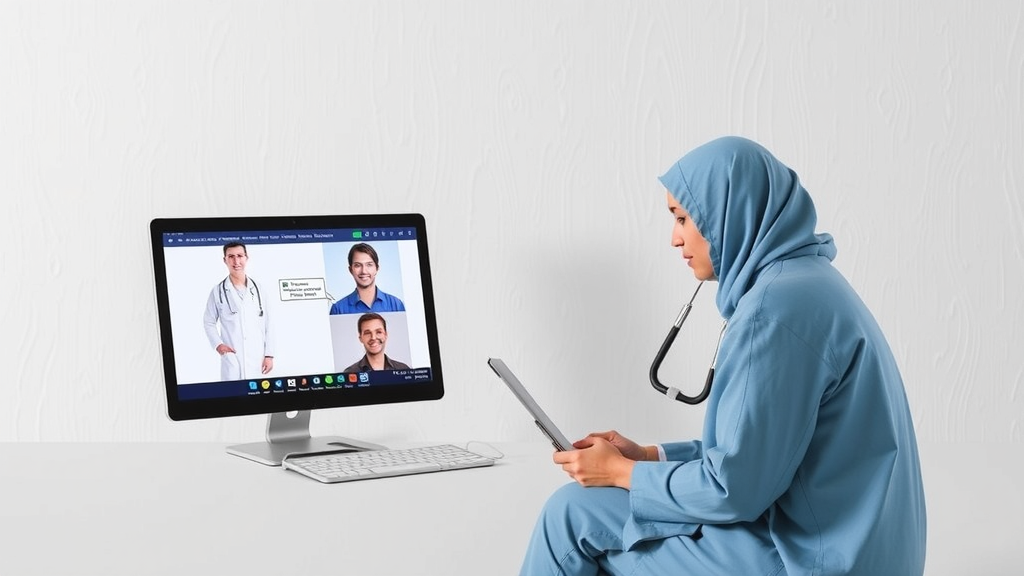
The work, led by dermatologists and collaborators at Penn State, including Matthew Helm, Jordan Willis, Thomas N. Helm, Kelly Gerard, and Galen Foulke, tested whether the Extension for Community Healthcare Outcomes, or ECHO, model could be adapted to dermatologic biologic education. Project ECHO, originally developed at the University of New Mexico to train rural clinicians in hepatitis C management, operates on a simple but powerful premise: rather than routing patients to distant specialists, it routes specialist knowledge to the clinicians patients already see. Academic experts deliver short didactic presentations over videoconference, then participants discuss real cases together, building competence through repeated, case-based learning rather than one-off lectures.
The rationale for applying this model to biologics is grounded in a well-documented distribution problem. Research published in JAMA Dermatology found substantial disparities in dermatologist density between urban and rural counties in the United States, and more recent calls to action in the dermatology literature have emphasized that rural patients face long travel distances and long waits for specialty appointments. For conditions like chronic plaque psoriasis, where network meta-analyses of systemic treatments show that biologic agents often outperform older systemic therapies, the consequence is a two-tiered system: patients near academic centers access cutting-edge therapy while those in rural areas may go undertreated. Studies of health care resource use for psoriasis have shown that where a patient lives materially changes the care they receive.
Compounding the geography problem is the nature of the medications themselves. Biologics are large, complex proteins typically administered by injection, and their use demands knowledge of drug classes and targets, screening requirements, monitoring protocols, side effect recognition, and the labyrinthine prior authorization processes insurers impose. Surveys of physicians have found that hesitation to prescribe biologics often stems less from skepticism about efficacy than from unfamiliarity with logistics, safety management, and the paperwork of patient assistance programs. That unfamiliarity is precisely what a structured telementoring curriculum can address, and it is what the Penn State team set out to test.
The pilot was deliberately small and pragmatic. Before recruitment, the team used a survey to assess whether the program was feasible to run in their setting. They then recruited eight primary care providers through flyers and email for an eight-session series accredited for continuing medical education credit. Each session followed the classic ECHO structure: a 20-minute talk from an expert on topics such as the major biologic classes, their approved dermatologic indications, monitoring and adverse effects, and strategies for navigating prior authorization, followed by case-based discussions in which participants brought their own clinical dilemmas to the group. A pharmacist collaborator contributed expertise on prescription assistance programs, a crucial and often overlooked barrier to getting these drugs into patients’ hands.
To measure whether the curriculum moved the needle, the researchers administered surveys after each session, asking participants to self-report changes in their knowledge of biologics, their ability to care for patients who might be candidates for these drugs, their plans to change their practice, and their sense of professional isolation around biologic prescribing. Professional isolation is a recurring theme in rural medicine: clinicians who rarely interact with specialists can lose confidence in managing complex therapy, and that lost confidence translates directly into patients who are never offered the treatment. Implementation science frameworks, including validated measures of implementation outcomes referenced by the authors, informed the survey design.
The results, while preliminary, were encouraging across all measured domains. After the sessions, participants reported increased knowledge of dermatologic biologics, improved confidence in their ability to care for relevant patients, concrete plans to change their practice, and a decreased sense of professional isolation. In other words, the program did not just transfer information; it appears to have shifted self-efficacy, the belief that one can competently manage a therapy, which behavioral research consistently identifies as a key determinant of whether new practices are adopted. For a short pilot with eight participants, that pattern of self-reported movement in the intended direction is a meaningful proof of concept.
The study’s authors are careful about scope. This was a short report on a pilot program, not a trial with objective endpoints; self-reported knowledge gains are not the same as demonstrated prescribing competence, and eight providers cannot represent the full landscape of rural primary care. The participants did not consent to public sharing of their data, so detailed results are not available. Still, the findings align with a growing evidence base. A dermatology-focused ECHO program reported in Rural and Remote Health in 2018 already demonstrated the model’s promise for extending dermatologic expertise, and the landmark New England Journal of Medicine study that launched ECHO showed primary care providers could achieve hepatitis C cure rates comparable to specialists when properly mentored. The dermatologic biologic application extends that logic to one of the most consequential therapeutic shifts in modern skin medicine.
Equity considerations give the work added urgency. Studies of safety-net clinics and uninsured psoriasis populations have documented persistent barriers to biologic access even when patients do reach specialty care, suggesting that the problem spans both referral pathways and prescribing behavior. If telementoring can equip primary care providers, who see patients where they live, to identify biologic candidates, initiate workups, navigate payer requirements, and connect patients to assistance programs, it addresses the access bottleneck at multiple points simultaneously. The ECHO model’s low cost and reliance on existing videoconference infrastructure make it especially attractive for health systems with limited resources.
The Penn State pilot, supported in part by grants from the National Center for Advancing Translational Sciences and reviewed as exempt by the university’s institutional review board, offers a template rather than a finished solution. Larger cohorts, objective measures of prescribing quality and patient outcomes, and longer follow-up will be needed before telementoring can be declared a validated route to biologic access in underserved communities. But the conceptual advance is clear and, in an era when virtual education has become routine, timely. The medications that can clear a patient’s skin and transform their psychological wellbeing already exist; the challenge is moving expertise, not patients, across the distance between academic medical centers and the rural exam rooms where care actually happens. A modest series of 20-minute talks and shared cases may prove to be a surprisingly effective bridge.
Subject of Research: Telementoring of primary care providers in dermatologic biologic therapy to expand access in underserved rural communities
Article Title: Expanding access to biologics: a pilot ECHO program for primary care providers
Article References: Helm, M., Willis, J., Helm, T. N., Gerard, K., & Foulke, G. (2026). Expanding access to biologics: a pilot ECHO program for primary care providers. Archives of Dermatological Research, 318(1), Article 472. https://doi.org/10.1007/s00403-026-04976-y
Image Credits: AI Generated
DOI: 10.1007/s00403-026-04976-y
Keywords: Project ECHO, biologics, telementoring, rural dermatology, primary care, psoriasis, atopic dermatitis, access to care, continuing medical education, health equity, Expanding, access
Cite Scienmag News
Ophelia Keating. (September 25, 2026). Virtual Telementoring Brings Biologic Expertise to Rural Primary Care. Scienmag. https://scienmag.com/virtual-telementoring-brings-biologic-expertise-to-rural-primary-care/
Ophelia Keating. "Virtual Telementoring Brings Biologic Expertise to Rural Primary Care." Scienmag, 25 September 2026, https://scienmag.com/virtual-telementoring-brings-biologic-expertise-to-rural-primary-care/. Accessed 4 October 2026.
Ophelia Keating. "Virtual Telementoring Brings Biologic Expertise to Rural Primary Care." Scienmag. September 25, 2026. https://scienmag.com/virtual-telementoring-brings-biologic-expertise-to-rural-primary-care/


