


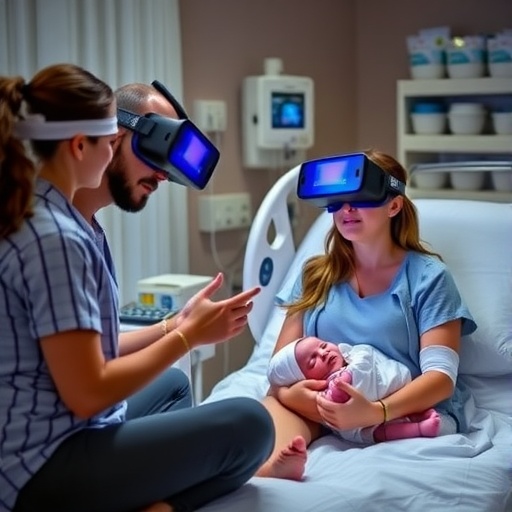
A team of clinicians has tested whether an immersive virtual reality (VR) meditation program can ease stress in a high-stakes setting: parents of newborns cared for in the neonatal intensive care unit (NICU). The study also extends beyond families, assessing potential benefits for NICU providers who face persistent workload pressures, emotional strain, and burnout risk.
The intervention centers on VR-based meditation sessions designed to guide attention and calm physiological arousal. Unlike standard relaxation materials, VR attempts to reduce exposure to stressful cues by replacing the immediate environment with a controlled, calming experience. The researchers focused on both perceived stress and related outcomes that reflect how stress may accumulate during prolonged NICU stays.
To evaluate effectiveness, participants were recruited from NICU parent populations and the care teams supporting them. Outcomes were tracked using validated psychological measures commonly used in clinical research, capturing changes in stress intensity over the course of the intervention. For providers, the design specifically targeted stress and burnout indicators, acknowledging that caregiver well-being can influence continuity of care.
The study’s analytical approach emphasizes statistical comparisons between pre- and post-intervention assessments, seeking evidence that VR meditation meaningfully shifts stress trajectories. By incorporating provider outcomes, the work also explores whether the same tool can act on the mental burden of the people delivering NICU care, potentially offering a dual-benefit model.
In the findings, VR meditation showed promising signals of stress reduction among parents, suggesting that immersive guided practice may be a practical adjunct to existing NICU support. For staff, the results point toward benefits that could translate into less emotional exhaustion and improved resilience—key elements in mitigating burnout.
Importantly, the research situates VR not as a replacement for clinical mental health care, but as an accessible coping technology that can be deployed within a stressful environment. The NICU context is especially relevant because families often endure uncertainty, sleep disruption, and high emotional load.
From a technology standpoint, the trial highlights how VR can deliver standardized, repeatable sessions—reducing variation that may occur with purely verbal or text-based interventions. This standardization is crucial for clinical scalability.
Overall, the study frames VR meditation as a viral-science-news style innovation: a low-complexity, high-immersion wellness tool with measurable clinical endpoints. If validated in broader trials, it could become a new element in NICU support programs for both families and the professionals caring for them.
Cite Scienmag News
Harold Sullivan. (July 15, 2026). Virtual Reality Meditation Reduces Stress in Neonatal Intensive Care Parents and Staff. Scienmag. https://scienmag.com/virtual-reality-meditation-reduces-stress-in-neonatal-intensive-care-parents-and-staff/
Harold Sullivan. "Virtual Reality Meditation Reduces Stress in Neonatal Intensive Care Parents and Staff." Scienmag, 15 July 2026, https://scienmag.com/virtual-reality-meditation-reduces-stress-in-neonatal-intensive-care-parents-and-staff/. Accessed 4 September 2026.
Harold Sullivan. "Virtual Reality Meditation Reduces Stress in Neonatal Intensive Care Parents and Staff." Scienmag. July 15, 2026. https://scienmag.com/virtual-reality-meditation-reduces-stress-in-neonatal-intensive-care-parents-and-staff/


