

Wednesday, July 15, 2026
Science
No Result
View All Result
  • Login
  • HOME
  • SCIENCE NEWS
  • CONTACT US
  • HOME
  • SCIENCE NEWS
  • CONTACT US
No Result
View All Result
Scienmag
No Result
View All Result
Home Science News Technology and Engineering

Cluster analysis reveals distinct motor deficit risk profiles in preterm infants

July 15, 2026
in Technology and Engineering
Reading Time: 2 mins read
0
Cluster analysis reveals distinct motor deficit risk profiles in preterm infants

Cluster analysis reveals distinct motor deficit risk profiles in preterm infants

65
SHARES
587
VIEWS
Share on FacebookShare on Twitter
ADVERTISEMENT

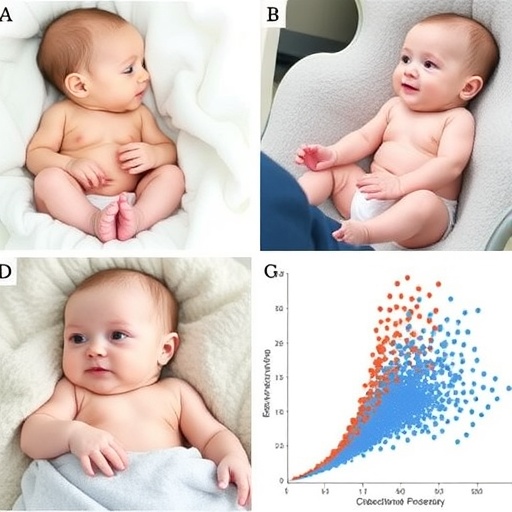
Preterm birth can set the stage for long-term neurodevelopmental challenges, but not every infant faces the same risk trajectory. In a new study published July 15, 2026, researchers used a cluster analysis approach to map distinct motor-deficit “risk profiles” in preterm infants, moving beyond one-size-fits-all predictions.

The team analyzed motor outcomes to determine whether preterm infants could be grouped into patterns reflecting different underlying developmental risks. Rather than treating motor deficits as a single category, the study sought to reveal how multiple clinical signals combine to shape later motor performance.

Cluster analysis is particularly suited to this problem because it can detect subgroups within heterogeneous populations. By applying statistical clustering to outcome-related data, the authors identified motor deficit profiles that differ in severity and in how early-life factors align with later motor impairment.

Importantly, the study frames motor deficits as probabilistic risk profiles, not deterministic outcomes. This distinction matters for clinical translation: clinicians can use profile-based risk grouping to tailor monitoring intensity and early interventions, potentially improving the timing of therapy rather than reacting after impairments become obvious.

The findings also emphasize that motor development in preterm infants is shaped by complex interactions among factors measured early in life. Some infants appear more resilient, showing lower likelihood of persistent motor problems, while others fall into higher-risk clusters.

For clinicians, the work offers a roadmap for stratifying follow-up care. For families, it provides a clearer way to discuss uncertainty: risk is presented in profiles, reflecting data-driven probabilities that can evolve as more developmental information becomes available.

The authors’ statistical approach supports the concept that early motor trajectories are not uniform across preterm infants. This could help future studies test whether targeted therapies differ in effectiveness depending on the cluster a child belongs to.

Overall, the study highlights a shift toward precision pediatric neurology—using data-driven patterns to refine risk assessment and improve the pathway from early detection to intervention.

Subject of Research: Preterm infant motor deficits and risk stratification
Article Title: Risk profiles of motor deficits in preterm infants: a cluster analysis approach
Article References: Middendorf, L., Jaekel, J., Gellhaus, A. et al. Risk profiles of motor deficits in preterm infants: a cluster analysis approach. Pediatr Res (2026). https://doi.org/10.1038/s41390-026-05300-0
Image Credits: AI Generated
DOI: 10.1038/s41390-026-05300-0
Keywords:

Tags: cluster analysis in neurodevelopmentcomplex interactions influencing preterm motor developmentdata-driven clustering in pediatric neurodevelopmentearly detection of motor impairmentsearly-life clinical signals and motor developmentheterogeneity in preterm neurodevelopmental outcomesindividualized monitoring strategies for preterm infantslong-term neurodevelopmental challenges in preemiesPreterm infant motor deficit risk profilesprobabilistic risk modeling for motor impairmentssubgroups in preterm motor outcomestailored interventions for preterm infants
Share26Tweet16
Previous Post

Teleworking Cuts Carbon Emissions Only When Done Right

Next Post

Virtual Reality Meditation Reduces Stress in Neonatal Intensive Care Parents and Staff

Related Posts

Reheating Power Cycles Could Boost Electricity from LNG’s Wasted Cold Energy
Technology and Engineering

Reheating Power Cycles Could Boost Electricity from LNG’s Wasted Cold Energy

July 15, 2026
Braiding and Fusion Enable Universal Gates for Anyons on Quantum Hardware
Medicine

Braiding and Fusion Enable Universal Gates for Anyons on Quantum Hardware

July 15, 2026
Invisible Skin Sensors Bring Breakthrough Health Monitoring Into Wearables
Technology and Engineering

Invisible Skin Sensors Bring Breakthrough Health Monitoring Into Wearables

July 15, 2026
Food System Transformation Could Reshape Global Agriculture, Experts Say
Medicine

Food System Transformation Could Reshape Global Agriculture, Experts Say

July 15, 2026
Designing Rational Home-Based Studies to Assess Infants’ Sleep Patterns
Technology and Engineering

Designing Rational Home-Based Studies to Assess Infants’ Sleep Patterns

July 15, 2026
GPS satellite data calibrated for improved space weather research
Technology and Engineering

GPS satellite data calibrated for improved space weather research

July 15, 2026
Next Post
Virtual Reality Meditation Reduces Stress in Neonatal Intensive Care Parents and Staff

Virtual Reality Meditation Reduces Stress in Neonatal Intensive Care Parents and Staff

  • Mothers who receive childcare support from maternal grandparents show more

    Mothers who receive childcare support from maternal grandparents show more parental warmth, finds NTU Singapore study

    27656 shares
    Share 11059 Tweet 6912
  • University of Seville Breaks 120-Year-Old Mystery, Revises a Key Einstein Concept

    1061 shares
    Share 424 Tweet 265
  • Bee body mass, pathogens and local climate influence heat tolerance

    682 shares
    Share 273 Tweet 171
  • Researchers record first-ever images and data of a shark experiencing a boat strike

    546 shares
    Share 218 Tweet 137
  • Groundbreaking Clinical Trial Reveals Lubiprostone Enhances Kidney Function

    531 shares
    Share 212 Tweet 133
Science

Embark on a thrilling journey of discovery with Scienmag.com—your ultimate source for cutting-edge breakthroughs. Immerse yourself in a world where curiosity knows no limits and tomorrow’s possibilities become today’s reality!

RECENT NEWS

  • Perseverance rover captures unprecedented record of ancient Mars asteroid impacts
  • Reheating Power Cycles Could Boost Electricity from LNG’s Wasted Cold Energy
  • ECOG-ACRIN ENDURANCE Trial Publishes Randomized Evidence on Lenalidomide Maintenance Duration in Multiple Myeloma
  • Tiny Water Droplets May Unlock Solutions for Global Plastic Waste Dissolving

Categories

  • Agriculture
  • Anthropology
  • Archaeology
  • Athmospheric
  • Biology
  • Biotechnology
  • Blog
  • Bussines
  • Cancer
  • Chemistry
  • Climate
  • Earth Science
  • Editorial Policy
  • Marine
  • Mathematics
  • Medicine
  • Pediatry
  • Policy
  • Psychology & Psychiatry
  • Science Education
  • Social Science
  • Space
  • Technology and Engineering

Subscribe to Blog via Email

Enter your email address to subscribe to this blog and receive notifications of new posts by email.

Join 5,146 other subscribers

© 2025 Scienmag - Science Magazine

Welcome Back!

Login to your account below

Forgotten Password?

Retrieve your password

Please enter your username or email address to reset your password.

Log In
No Result
View All Result
  • HOME
  • SCIENCE NEWS
  • CONTACT US

© 2025 Scienmag - Science Magazine

Discover more from Science

Subscribe now to keep reading and get access to the full archive.

Continue reading
