

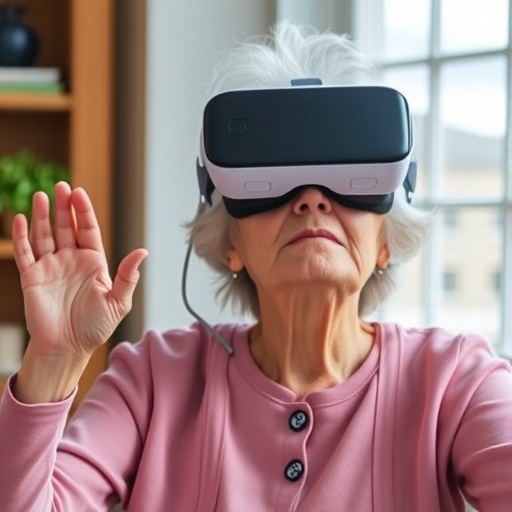
In a groundbreaking advancement at the nexus of mental health treatment and immersive technology, researchers have unveiled compelling evidence that virtual reality (VR) can be harnessed as an effective tool to manage emotional distress in older adults suffering from mental illness. This revelation emerges from a meticulously conducted randomized controlled trial spearheaded by Seethaler, Güntner, Lütt, and colleagues, marking a pivotal moment in the evolution of therapeutic interventions for an often underrepresented demographic in psychiatric care.
As the global population ages, the prevalence of mental health disorders such as anxiety, depression, and chronic emotional distress among older adults is an escalating concern for clinicians and caregivers alike. Traditional treatments, while beneficial, often encounter limitations including accessibility, side effects, and patient adherence. The integration of VR technology offers a transformative avenue, leveraging immersive environments to facilitate relaxation and psychological relief in a manner that is both engaging and scalable.
The study, published in Translational Psychiatry, rigorously tested the efficacy of VR relaxation protocols tailored specifically for older adults diagnosed with various mental illnesses. Participants were randomly assigned to either a VR intervention group or to control conditions, ensuring that the observed outcomes could be attributed definitively to the virtual reality experience. This methodological strength lends considerable weight to the findings, illuminating new frontiers for evidence-based use of VR in clinical settings.
At the heart of the intervention was a bespoke VR relaxation environment designed to stimulate calming sensory pathways and elicit emotional regulation. Participants engaged with serene virtual landscapes accompanied by soothing auditory cues, crafted to reduce the hyperarousal often associated with emotional distress. Cognitive engagement within these virtual spaces aimed to interrupt maladaptive ruminative cycles that exacerbate anxiety and depressive symptoms.
Quantitative metrics indicated a significant reduction in reported emotional distress following VR sessions compared to baseline measures. Physiological markers, including heart rate variability and galvanic skin response, corroborated these subjective reports, revealing lowered sympathetic nervous system activity post-intervention. Such objective data underscores the potential of VR as not merely a distraction but a true modulator of neurobiological stress responses.
Moreover, the trial assessed parameters relating to usability and acceptability of VR among older adults, a group sometimes presumed to be technologically averse. Contrary to these assumptions, participants expressed high levels of engagement and satisfaction, with many reporting feelings of escapism and rejuvenation following VR immersion. This suggests that well-designed technological interventions can transcend generational divides, fostering inclusivity in mental health treatment modalities.
The implications of this study extend beyond individual symptom management; VR therapy could alleviate pressure on healthcare systems by providing accessible, home-based interventions that supplement traditional therapies or pharmacological treatments. This digital therapeutic approach offers scalability and adaptability, potentially revolutionizing mental health care frameworks globally as VR hardware becomes increasingly affordable and widespread.
Neuroscientifically, the capacity of VR to alter emotional processing networks offers insights into the plasticity of the aging brain. By activating neural circuits underlying relaxation and positive affect, VR experiences could foster resilience against the deleterious effects of chronic emotional distress. Continued exploration is warranted to delineate the specific neurophysiological mechanisms involved and to optimize stimulus parameters tailored to diverse clinical profiles.
Ethical and practical considerations also arise from this burgeoning field. Ensuring equitable access to VR technologies, safeguarding patient data within these digital platforms, and training clinicians in the therapeutic deployment of VR represent essential steps for responsible integration into mental healthcare. Furthermore, longitudinal studies are needed to evaluate the durability of therapeutic gains and to identify any potential adverse effects stemming from immersive technologies.
This study exemplifies a paradigm shift in psychiatric interventions, wherein technology not only supplements but fundamentally transforms the patient experience. With emotional distress exerting a profound toll on the quality of life in older adults, VR-induced relaxation presents a beacon of hope, empowering individuals through immersive engagement and self-directed coping strategies.
As the intersection of biotechnology and digital innovation accelerates, the landscape of mental health treatment is poised for radical transformation. The VR intervention explored by Seethaler and colleagues embodies this trend, illustrating how advanced simulations can be aligned with psychological needs to yield tangible clinical benefits. Further research is imperative to refine protocols, expand target populations, and integrate multimodal therapies for comprehensive care.
In conclusion, the empirical evidence from this landmark randomized controlled trial opens exciting vistas for the application of virtual reality in managing emotional distress among older adults with mental illness. By combining scientific rigor with technological creativity, this research advances the frontier of psychiatric treatment, promising enhanced well-being through immersive experience and paving the way for a future in which mental health care is more personalized, effective, and accessible than ever before.
Subject of Research: Using virtual reality relaxation techniques to manage emotional distress in older adults with mental illness.
Article Title: Managing emotional distress in older adults with mental illness: a randomized controlled trial evaluating virtual reality relaxation.
Article References:
Seethaler, M., Güntner, L., Lütt, A. et al. Managing emotional distress in older adults with mental illness: a randomized controlled trial evaluating virtual reality relaxation. Transl Psychiatry (2026). https://doi.org/10.1038/s41398-026-03955-1
Image Credits: AI Generated


