


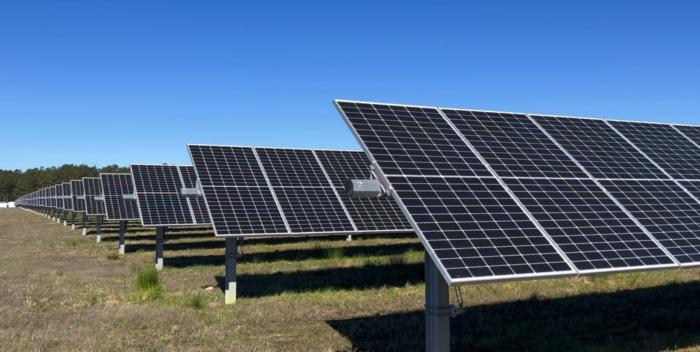
As solar energy technology advances and becomes increasingly cost-effective, its integration into diverse landscapes has accelerated globally. Among these landscapes, farmland is emerging as an attractive site for deploying large-scale solar photovoltaic (PV) installations. This trend, while promising in terms of energy sustainability, has spurred a controversial debate about the potential impacts such developments may have on adjacent property values. A new comprehensive study conducted by researchers at Virginia Tech delves into this pressing issue, systematically quantifying how solar farms influence real estate markets around them.
The study, published in the prestigious Proceedings of the National Academy of Sciences, leverages an extensive dataset that encompasses nearly 3,700 commercial-scale solar photovoltaic sites and close to nine million property sales across the United States. This unprecedented scale allows the research team to surpass anecdotal assessments that often attribute negative property value effects to the installation of solar arrays. By applying rigorous econometric methods and spatial analysis, the researchers examined property price fluctuations over a 15-year timeframe before and after solar farm construction, carefully accounting for variables such as proximity, land use type, and political leanings of the communities involved.
At the heart of this investigation is a rigorous difference-in-differences econometric modeling strategy, which isolates the impact of solar farm presence from other confounding real estate market trends. Beyond simple distance calculations, the team developed a sophisticated solar visibility model designed to assess whether visual exposure to solar panels contributes to changes in home valuations. This model integrates spatial data with topographical features, enabling a granular understanding of how line-of-sight to solar installations correlates with market responses at the neighborhood level.
One of the most striking findings reveals a pronounced elevation in the value of agricultural and vacant lands located within two miles of solar arrays, with an average increase nearing 19.4 percent. This surge likely reflects growing recognition of these lands’ leasing potential for future renewable energy developments, thus signaling that solar technology may be acting as an economic catalyst for certain types of rural real estate. It also challenges traditional narratives that often overlook positive externalities linked with renewable energy infrastructure investments.
In contrast, the study identifies a modest decline in residential property values, averaging a 4.8 percent drop within a three-mile radius of large-scale solar sites. This decrease, while statistically significant, is nuanced by several mitigating factors. Notably, the negative impact diminishes with increasing distance from the solar arrays and wanes over time as installations become integrated into the local landscape. Furthermore, residential properties on larger lots, specifically those exceeding five acres, appear insulated from valuation losses, which suggests that spatial context and land parcel size are crucial determinants in how solar farms affect neighboring home prices.
Contrary to popular assumptions, the research finds that physical visibility of solar farms from residences does not play a decisive role in depressing property values. This indicates that the stigma associated with solar panels may stem more from perception and social attitudes than from any tangible visual disruption or environmental harm. Indeed, the authors note that counties with politically left-leaning populations often experience negligible or even positive residential real estate impacts, illustrating that community sentiment and ideological dispositions significantly mediate the economic ramifications of renewable energy installations.
The implications of these results extend deeply into the nexus of sustainable energy policy, agricultural economics, and community planning. By providing clear, data-driven insights into the localized economic effects of solar farms, the study equips policymakers, developers, and landowners with essential tools to mitigate potential conflicts and foster cooperative relationships. It encourages integrating property value considerations into site selection and project design, thereby optimizing benefits while minimizing social friction.
Moreover, the findings challenge policymakers to reevaluate the narrative surrounding solar energy adoption in rural communities. The distinct appreciation in agricultural land values underscores solar integration’s potential to offer alternative revenue streams to farmers, advocates greater solar leasing opportunities, and advocates harnessing energy transitions as economic development instruments rather than sources of disruption or loss. This paradigm shift could reshape rural economies, contributing to diversified income portfolios for landowners amid an evolving energy landscape.
For residential neighborhoods adjacent to solar installations, the study advocates for comprehensive engagement and transparent communication strategies to address perceived negative externalities. Understanding that valuation dips are largely linked to stigma rather than any substantive damage opens pathways for education, outreach, and inclusion of residents in the planning phases. Such participatory approaches could foster broader acceptance and mitigate opposition, facilitating smoother deployment of renewable infrastructure.
Technically, the use of long-term real estate transaction data combined with advanced spatial econometric models exemplifies the cutting edge of environmental economics research. By marrying property market microdata with geospatial assessment of solar site attributes, the study pioneers a novel methodological framework that can be adapted to assess impacts of other forms of land-use change. Its methodological rigor sets a new standard for empirical evaluations of renewable energy’s economic externalities.
The research team emphasizes that this work represents an initial but crucial step toward a more nuanced comprehension of solar development impacts. They encourage future investigations to delve into context-specific analyses, exploring variations across different regional, socio-economic, and environmental conditions. Such targeted studies could further illuminate mechanisms underlying property market dynamics and inform tailored policy interventions.
Ultimately, this pioneering research advocates for evidence-based decision making in solar energy siting, balancing ecological benefits, economic considerations, and community preferences. It envisions a future where data guides equitable and sustainable energy transitions, ensuring that rural landscapes and their inhabitants derive maximal benefit from the global push towards clean energy.
News Publication Date: 9-Jun-2025
Cite Scienmag News
Faith Mcneil. (June 9, 2025). Virginia Tech Study Reveals How Solar Farms Affect Property Values. Scienmag. https://scienmag.com/virginia-tech-study-reveals-how-solar-farms-affect-property-values/
Faith Mcneil. "Virginia Tech Study Reveals How Solar Farms Affect Property Values." Scienmag, 9 June 2025, https://scienmag.com/virginia-tech-study-reveals-how-solar-farms-affect-property-values/. Accessed 4 September 2026.
Faith Mcneil. "Virginia Tech Study Reveals How Solar Farms Affect Property Values." Scienmag. June 9, 2025. https://scienmag.com/virginia-tech-study-reveals-how-solar-farms-affect-property-values/


