


Atopic diseases now affect roughly one in five people worldwide, and in the United States allergic rhinitis alone touches about a quarter of adults. Yet the relationship between these allergic conditions and the respiratory viruses that dominate early childhood has long been framed as a one-way causal arrow: severe viral infection in infancy drives allergic sensitization, wheeze, and eventually asthma. A review published on 18 September 2026 in Frontiers in Allergy by Megan E. Hanna, Syed-Rehan A. Hussain, Mitchell H. Grayson, and colleagues at Nationwide Children’s Hospital and The Ohio State University College of Medicine argues that the arrow points in both directions, and that the microbiome may be the hidden variable determining which way it tips.
The historical evidence for viral infection as a driver of atopy is substantial. Infants hospitalized with severe respiratory syncytial virus (RSV) infection between two and ten months of age were found to carry a much-increased risk of asthma and allergic sensitization, with follow-up of such cohorts extending to eighteen years. Seasonal analyses reinforced the pattern: children born so that they were two to six months old during the RSV season showed increased recurrent wheeze. But infection alone was insufficient, since nearly all infants are infected with RSV by two years of age, and more recent studies suggest the strongest association is with wheeze rather than asthma, peaking shortly after infection and disassociating as the child ages.
Human rhinovirus (hRV) tells a different story. Unlike RSV, which appears to drive post-viral airway disease in children without pre-existing atopy, hRV drives asthma and recurrent wheeze in children who already have allergic sensitization, usually at an older age. This reciprocal arrangement, in which RSV acts on the non-atopic infant lung and hRV acts on the atopic older child lung, has pushed researchers to ask not only how viruses create atopy but how atopy reshapes the antiviral immune response itself.
Animal models have provided the most detailed mechanistic picture. Because RSV does not naturally infect mice, the review’s authors and others have used murine parainfluenza virus-1, or Sendai virus, a natural rodent pathogen related to RSV, to define a pathway leading to post-viral airway disease that persists for the life of the animal. The pathway begins when airway epithelial infection recruits CD49d-expressing neutrophils, which are maintained in the airway by leukotriene D4 binding to cysteinyl leukotriene receptors on the neutrophils. These neutrophils then drive expression of FcεRI, the high-affinity receptor for IgE, on airway conventional dendritic cells.
At the same time, IgE is produced against Sendai virus, which remains present in the lungs. Crosslinking of anti-viral IgE by residual virus leads the dendritic cells to produce CCL28, a chemokine that recruits CCR10-expressing Th2 cells and type 2 innate lymphoid cells. These cells produce interleukin-13, driving the airway hyper-reactivity and mucous cell metaplasia that characterize post-viral disease. Exposure to a non-viral antigen in the middle of this antiviral response is sufficient to generate IgE against that antigen, suggesting the mice develop atopy as a direct consequence of the infection. Over time, natural killer cells interact with airway macrophages to drive an IL-13-dependent alternative activation, and these macrophages continue producing IL-13, sustaining the disease indefinitely.
Components of this pathway have now been demonstrated in humans, including the presence of CD49d-expressing neutrophils in severe disease, production of IgE against respiratory viruses, increased FcεRI expression on conventional dendritic cells, and CCL28 production when FcεRI is crosslinked. Whether antiviral IgE is the critical dependency in humans remains unclear, and two clinical trials of anti-IgE therapy have produced apparently contradictory results. In one randomized trial of omalizumab in inner-city children, reduced IgE was associated with fewer asthma exacerbations during viral seasons and with enhanced type I interferon production from plasmacytoid dendritic cells, suggesting that atopy had impaired antiviral immunity. But in a separate study where subjects were experimentally infected with hRV after omalizumab treatment, reduced asthma symptoms came with higher, not lower, viral titers, undermining the hypothesis that IgE blockade works by restoring interferon-mediated viral clearance.
The reverse question, whether atopy protects against severe viral disease, has gained traction from pandemic data. During the 2009 H1N1 influenza pandemic, having asthma was associated with reduced mortality and need for mechanical ventilation, though corticosteroid use and differential hospital treatment complicate the interpretation. During the COVID-19 pandemic, several studies suggested that people with atopy had less severe disease, and some even found atopy protective against infection itself. In mouse models, sensitization with house dust mite renders animals resistant to normally lethal infections with influenza or Sendai virus. Candidate mechanisms include TGF-β receptor II expression, overproduction of neuregulin-1, and, in the authors’ own work, IL-4-treated neutrophils with enhanced phagocytosis that contain more viral genomic RNA and reduce lung viral titers, an effect reversible by neutrophil depletion or IL-4 blockade. A study of preschool children found that the systemic neutrophil response to viral infection was more effective in those with allergic disease, lending human relevance to the murine finding.
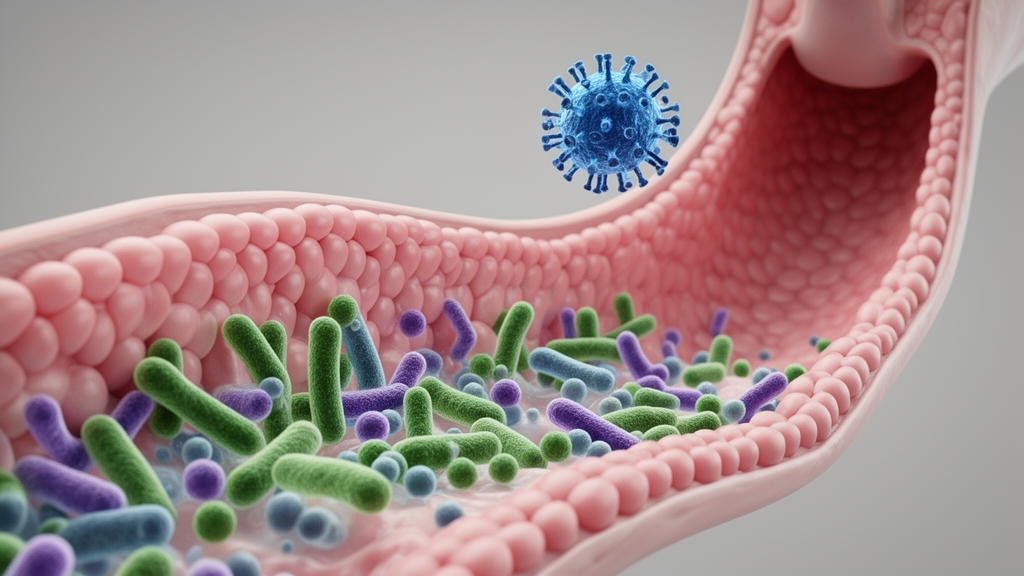
The microbiome enters as a third party in this negotiation. Early-life hypopharyngeal colonization with Streptococcus pneumoniae, Haemophilus influenzae, or Moraxella catarrhalis has been associated with increased risk of bronchitis and pneumonia at age four, while specific species differentially associate with lung function measures in children with a history of bronchiolitis. Viral infection itself reshapes the airway microbiome, and commensal bacteria altered during infection can contribute to post-viral airway disease. In the gut, RSV infection in mice induces anorexia through CD8+ cell depletion, reversing gut microbiome changes and shifting lipid metabolism toward sphingolipids, polyunsaturated fatty acids, and short-chain fatty acids, all potentially anti-inflammatory. Landmark birth cohort studies have shown that early-life gut microbiome alterations can precede childhood asthma, and supplementation with Lactobacillus has been shown to enrich gut microbiome Lactobacillus and enhance airway immune defense against both allergens and viral infection. Reduced gut microbiome diversity is associated with decreased regulatory T cells and increased interferon-gamma production, contributing to increased mortality from respiratory viral infection in mice.
The review’s conclusion is that the field must look beyond the initial hypothesis that early childhood viral infections drive atopy, and instead ask whether pre-existing atopy can serve as a protective evolutionary change against significant morbidity and mortality from viral illness. As biochemical mechanisms are elucidated in mouse models, identifying analogous human pathways will be essential for developing targeted therapeutics when atopy becomes pathologic and viral illness becomes fatal. The gut-lung axis, communicating through immune pathways and metabolites such as short-chain fatty acids, appears pivotal in modulating the interplay between atopy and respiratory viral responses, and disruption of gut microbial balance has been linked to reduced pulmonary immunity and increased susceptibility to respiratory viral infection. What remains is to determine which of these pathways, defined with precision in rodents, operate with the same logic in humans, and whether manipulating them, through microbiome-directed interventions, IgE-directed therapies, or neutrophil-targeted approaches, can shift the balance from wheeze toward protection.
Subject of Research: Immunology
Article Title: Are we there yet? understanding interactions between respiratory viral infections, atopy, and the microbiome
Article References: Hanna, M. E., Kartha, N., LaMantia, A., Grayson, M. H., & Hussain, S.-R. A. (2026). Are we there yet? understanding interactions between respiratory viral infections, atopy, and the microbiome. Frontiers in Allergy, 7, Article 1952677. https://doi.org/10.3389/falgy.2026.1952677
Image Credits: AI Generated
DOI: 10.3389/falgy.2026.1952677
Keywords: atopy, RSV, rhinovirus, asthma, microbiome, gut-lung axis, interferon, IgE, there, understanding, interactions, between
Cite Scienmag News
Kristina Jarvis. (October 17, 2026). Viral infections, atopy, and the microbiome: a two-way street in the airways. Scienmag. https://scienmag.com/viral-infections-atopy-and-the-microbiome-a-two-way-street-in-the-airways/
Kristina Jarvis. "Viral infections, atopy, and the microbiome: a two-way street in the airways." Scienmag, 17 October 2026, https://scienmag.com/viral-infections-atopy-and-the-microbiome-a-two-way-street-in-the-airways/. Accessed 17 October 2026.
Kristina Jarvis. "Viral infections, atopy, and the microbiome: a two-way street in the airways." Scienmag. October 17, 2026. https://scienmag.com/viral-infections-atopy-and-the-microbiome-a-two-way-street-in-the-airways/


