


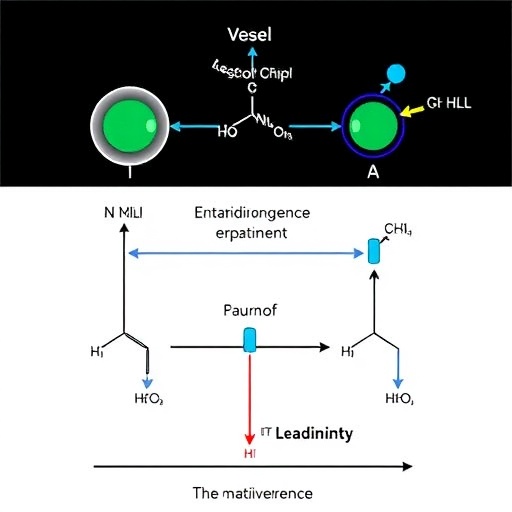
In a groundbreaking advance in synthetic organic chemistry, researchers have unveiled a novel strategy to accomplish the long-sought enantioconvergent rearrangement of vinylcyclopropanes (VCPs), specifically focusing on vinyl gem-difluorocyclopropanes. The vinylcyclopropane–cyclopentene (VCP–CPent) rearrangement represents a foundational transformation for assembling five-membered carbocycles, which are crucial frameworks in both synthetic and medicinal chemistry. Despite its utility, achieving enantioconvergence in these rearrangements—where racemic starting materials are converted selectively into a single enantiomeric product—has remained elusive for less activated VCPs. Now, this new approach harnesses a unique rhodium-mediated intermediate to unlock this challenging transformation, opening doors to a new class of highly selective and chemoselective synthetic pathways.
The crux of this innovative strategy hinges on the generation of a so-called vinyl fluoroallyl rhodium intermediate, a species markedly different from those previously characterized in similar rearrangement mechanisms. This key intermediate orchestrates the enantioconvergent rearrangement in a way that was unlikely or impossible with prior catalytic systems. By delving into this distinctive mechanistic detail, the investigators have provided a fresh perspective on how transition metal catalysis can be exploited for precise stereocontrol in complex molecular rearrangements. Such mechanistic insights not only enhance our fundamental understanding but also foster the rational design of future catalytic systems.
A feature that makes this study especially intriguing is the discovery of what the authors term “vessel-controlled chemodivergence.” During experimentation, it was observed that simply switching the reaction vessel from a standard glass vial to a plastic tube drastically alters the chemoselectivity of the rearrangement product profile. In plastic tubes, the reaction predominantly yields gem-difluorocyclopentenes, while in glass vials, cyclopentenones are formed nearly exclusively. This unexpected phenomenon underscores the subtle but profound influence that reaction apparatus can exert on chemical transformations, an aspect that is often overlooked in synthetic methodology development.
The observation of vessel effect-induced chemodivergence represents a paradigm shift in synthetic chemistry, demonstrating how macro-environmental factors can steer product distribution and selectivity. This finding is poised to have wide-ranging implications, prompting synthetic chemists to re-examine the materials and conditions under which reactions are conducted. More importantly, the ability to toggle between two valuable scaffolds—gem-difluorocyclopentenes and cyclopentenones—by a mere change in reaction vessel offers chemists unprecedented control and flexibility in designing synthetic routes.
In terms of overall performance, the protocol boasts excellent yields and enantioselectivities for both gem-difluorocyclopentenes and cyclopentenones, with enantiomeric excess (e.e.) values reaching impressive levels. Such selectivity is particularly notable given that these substrates are less activated VCPs, which are traditionally more challenging to engage effectively in enantioconvergent transformations. The high chemoselectivity observed further enhances the practical utility of this methodology in complex molecule construction.
The products obtained through this method, especially gem-difluorocyclopentenes, hold significant promise as privileged scaffolds within the realms of synthetic and medicinal chemistry. These motifs are often difficult or inefficient to synthesize through conventional routes, and their inclusion within bioactive molecules can impart unique physicochemical and biological properties, such as increased metabolic stability and lipophilicity modulation. The presence of geminal fluorine atoms frequently influences molecular conformation and interaction with biological targets, making these products particularly attractive for drug discovery.
Beyond advancing synthetic methodology, the researchers also performed preliminary biological activity studies that highlight the potential of gem-difluorocyclopentene as a bioisostere for cyclopentenone. Bioisosteres are molecular entities that mimic the biological properties of another functional group but often provide improved pharmacokinetic or pharmacodynamic profiles. The identification of gem-difluorocyclopentenes as promising bioisosteres introduces new avenues for medicinal chemists seeking to optimize therapeutic leads while maintaining or enhancing biological activity.
Mechanistic investigations underpinning this study offer deep insights into the enantioconvergent rearrangement mechanism. The rhodium catalyst interacts with the vinyl gem-difluorocyclopropane substrate to form a vinyl fluoroallyl rhodium intermediate, which undergoes controlled rearrangement pathways dependent on the reaction environment. The divergence in product outcome linked to reaction vessels is hypothesized to arise from differential surface interactions or trace metal contamination commonly present in glassware but absent from plastic tubes. These nuances in reaction environment highlight the complexity and delicate balance of factors influencing catalytic cycles.
The identification of the vinyl fluoroallyl rhodium species as a pivotal intermediate distinguishes this research from prior studies on VCP rearrangements, where such intermediates were not observed or considered mechanistically relevant. By controlling the stereochemical fate within this intermediate’s formation and subsequent steps, the researchers have successfully navigated the longstanding challenge of achieving enantioconvergence with less activated VCP substrates. This approach exemplifies the ingenuity required to manipulate transient organometallic species for stereoselective synthetic gains.
Furthermore, the vessel-controlled chemodivergence phenomenon expands our appreciation of how subtle environmental conditions dictate reaction pathways. Previous studies have largely focused on reaction media, temperature, and catalyst ligands as determinants of selectivity. This new evidence points to the physical attributes and surface chemistry of reaction vessels as additional, and previously underappreciated, variables influencing reaction outcomes. Adjusting and optimizing these parameters promises to become an essential consideration in future reaction development.
The implications for large-scale and industrial organic synthesis are profound. By enabling access to enantiomerically enriched gem-difluorocyclopentenes and cyclopentenones with high fidelity and yield, this methodology paves the way for streamlined synthesis of complex, fluorinated five-membered ring systems—important subunits in pharmaceuticals and agrochemicals. Moreover, the simplicity of toggling chemoselectivity via vessel choice can greatly simplify workflow and enhance synthetic efficiency on production scales.
This research stands as a testimony to the importance of meticulous experimentation and mechanistic exploration in discovering unexpected yet impactful synthetic phenomena. The thoughtful integration of organometallic catalysis, strategic substrate design, and an eye toward practical reaction parameters exemplifies best practices in contemporary chemical innovation. The newfound ability to control enantioconvergent rearrangement and chemoselectivity by interchangeable reaction vessels sets a new standard for precision and adaptability in synthetic methodology.
In conclusion, the work reported by Jiang, Li, Chen and colleagues marks a significant milestone in the field of asymmetric catalysis and five-membered ring synthesis. Through the innovative use of vinyl gem-difluorocyclopropanes and rhodium catalysis, coupled with the surprising vessel-dependent chemodivergence discovery, this study provides a versatile, highly selective approach to two valuable scaffold types. It showcases the power of fine mechanistic control and environmental sensitivity in shaping synthetic destiny, ultimately offering chemical scientists new tools for complex molecule construction and medicinal chemistry innovation.
The findings presented here are likely to inspire a wave of exploration into alternative catalytic pathways, vessel effects, and fluorine-containing building blocks, invigorating the pursuit of functional molecules with enhanced stereochemical and biological profiles. As the synthetic community embraces these insights, the frontiers of asymmetric catalysis and scaffold diversification will undoubtedly expand, offering new molecular architectures previously considered difficult to access. This pioneering work thus represents both a practical advance and a conceptual leap in modern organic chemistry.
Cite Scienmag News
Bethany Barker. (April 17, 2026). Vessel-Controlled Chemodivergence in Enantioconvergent Rearrangement. Scienmag. https://scienmag.com/vessel-controlled-chemodivergence-in-enantioconvergent-rearrangement/
Bethany Barker. "Vessel-Controlled Chemodivergence in Enantioconvergent Rearrangement." Scienmag, 17 April 2026, https://scienmag.com/vessel-controlled-chemodivergence-in-enantioconvergent-rearrangement/. Accessed 4 September 2026.
Bethany Barker. "Vessel-Controlled Chemodivergence in Enantioconvergent Rearrangement." Scienmag. April 17, 2026. https://scienmag.com/vessel-controlled-chemodivergence-in-enantioconvergent-rearrangement/


