


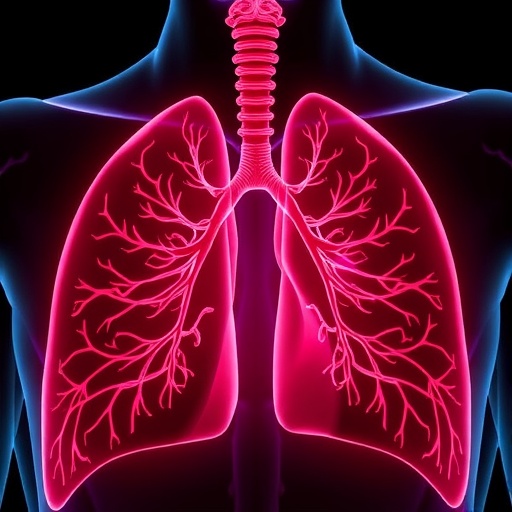
In a groundbreaking advancement within pulmonary medicine, researchers at the University of Virginia Health System have pioneered a novel methodology to identify individuals at risk of developing interstitial lung disease (ILD), a debilitating condition notorious for progressive lung scarring and respiratory failure. Interstitial lung disease encompasses a collection of chronic pulmonary disorders characterized by inflammation and fibrosis of lung tissue, frequently culminating in irreversible damage and necessitating lung transplantation. Currently, ILD remains largely underdiagnosed until advanced stages, by which time substantial lung injury has often occurred, limiting therapeutic intervention efficacy.
The investigative team, spearheaded by Dr. John S. Kim of UVA Health’s Division of Pulmonary and Critical Care, has focused their efforts on discovering and validating plasma biomarkers — biological molecules present in blood plasma — that can not only forecast survival outcomes in patients already diagnosed with ILD but, significantly, detect those predisposed to the disease prior to clinical manifestation. This early detection paradigm carries profound implications for the proactive management and potential prevention of ILD, shifting the clinical approach from reactive treatment towards anticipatory care.
ILD’s most prevalent subtype, idiopathic pulmonary fibrosis (IPF), exemplifies the enigmatic nature of these conditions, as its etiology remains largely unknown. Disease progression varies extensively among patients; some experience a swift decline in lung function, while others endure a more protracted course. Despite the approval of antifibrotic agents capable of decelerating IPF progression, their clinical use is often hampered by adverse effects such as hepatotoxicity and severe gastrointestinal distress, underscoring the urgent need for safer and more efficacious therapeutic alternatives.
By leveraging sophisticated proteomic analysis techniques, Dr. Kim and collaborators have previously identified several plasma proteins with high expression levels in ILD-affected lung tissues, which correlate strongly with new-onset ILD, enabling prognostication of disease trajectory. This pioneering biochemical signature serves as a molecular fingerprint, opening avenues for refined diagnostic accuracy and risk stratification models that integrate blood-based biomarkers with lung imaging and genomic profiling.
The group’s latest findings, disseminated through a publication in the esteemed American Journal of Respiratory and Critical Care Medicine, represent a culmination of meticulous research utilizing data from extensive cohorts such as the Multi-Ethnic Study of Atherosclerosis (MESA) Lung Study and the Subpopulations and Intermediate Outcome Measures in COPD (SPIROMICS). These longitudinal studies furnish a diverse demographic and biologic database critical for validating biomarker efficacy across heterogeneous populations and disease phenotypes.
Central to this research trajectory is a five-year grant awarded by the National Heart, Lung, and Blood Institute (NHLBI), which supports ongoing efforts to translate biomarker discoveries into clinical tools capable of enrolling high-risk adults in preventative clinical trials. Such interventional studies are pivotal in evaluating novel therapeutics designed to halt or reverse fibrogenesis during the incipient stages of ILD, potentially sparing patients the devastating morbidity associated with advanced disease.
Interstitial lung disease’s pathophysiology involves aberrant wound healing processes where alveolar epithelial injury instigates chronic inflammation, fibroblast activation, and extracellular matrix deposition culminating in irreversible fibrosis. The complexity and heterogeneity of these molecular events have historically impeded the development of targeted therapies. The elucidation of plasma biomarkers offers a promising window into these pathogenic cascades, thereby furnishing clinicians with actionable insights to tailor interventions and monitor therapeutic responses.
Moreover, the integration of biomarker data with high-resolution computed tomography and genetic predisposition profiles enhances the precision medicine framework in pulmonology. This multidimensional approach empowers physicians to discern subtle molecular disturbances preceding radiographic changes, facilitating earlier diagnosis and individualized treatment planning — a paradigm shift from symptom-based detection to molecular surveillance.
The implications of this research extend beyond ILD and IPF. The methodologies and biomarker frameworks developed could conceivably be adapted to other fibrosing lung disorders and chronic respiratory conditions marked by similar pathobiological traits. This amplifies the potential impact of the UVA Health team’s work, positioning it at the vanguard of respiratory disease research worldwide.
Dr. Kim’s vision encompasses not only the refinement of diagnostic tools but also the delineation of molecular hallmarks distinguishing early versus late-stage ILD. This dual objective aims to deepen scientific understanding of disease evolution and uncover novel therapeutic targets. By dissecting the molecular signatures attributable to varying disease severities, this research could facilitate the stratification of patients for specific treatment modalities and prognostic outlooks.
Notably, despite current advancements, ILD remains a leading cause of lung transplantation, with one-third of annual lung transplants performed on patients suffering from these fibrotic lung diseases. The scarcity of donor organs and the complexities of post-transplant care reinforce the critical necessity to develop preventative strategies supported by biomarker-guided surveillance.
In summary, UVA Health’s pioneering work in identifying blood-based biomarkers heralds a new era in interstitial lung disease management. By detecting individuals at risk before overt clinical manifestation, this research endeavors to transform ILD from an often fatal diagnosis to a preventable condition. The integration of biomarker science with clinical practice promises to revolutionize respiratory medicine, offering hope for improved patient outcomes through early intervention, personalized medicine, and novel therapeutic development.
News Publication Date: 2024-06
Web References:
– American Journal of Respiratory and Critical Care Medicine: https://doi.org/10.1164/rccm.202503-0610OC
– Making of Medicine Blog: http://makingofmedicine.virginia.edu
References:
– Kim JS, Debban CL, Guzman D, et al. Plasma protein biomarkers associated with new-onset interstitial lung disease. American Journal of Respiratory and Critical Care Medicine. 2024. DOI: 10.1164/rccm.202503-0610OC.
Cite Scienmag News
Barbara Leach. (October 10, 2025). UVA Health Pioneers Early Detection Method for Identifying Individuals at Risk of Severe Lung Scarring Before Symptoms Emerge. Scienmag. https://scienmag.com/uva-health-pioneers-early-detection-method-for-identifying-individuals-at-risk-of-severe-lung-scarring-before-symptoms-emerge/
Barbara Leach. "UVA Health Pioneers Early Detection Method for Identifying Individuals at Risk of Severe Lung Scarring Before Symptoms Emerge." Scienmag, 10 October 2025, https://scienmag.com/uva-health-pioneers-early-detection-method-for-identifying-individuals-at-risk-of-severe-lung-scarring-before-symptoms-emerge/. Accessed 8 September 2026.
Barbara Leach. "UVA Health Pioneers Early Detection Method for Identifying Individuals at Risk of Severe Lung Scarring Before Symptoms Emerge." Scienmag. October 10, 2025. https://scienmag.com/uva-health-pioneers-early-detection-method-for-identifying-individuals-at-risk-of-severe-lung-scarring-before-symptoms-emerge/


