


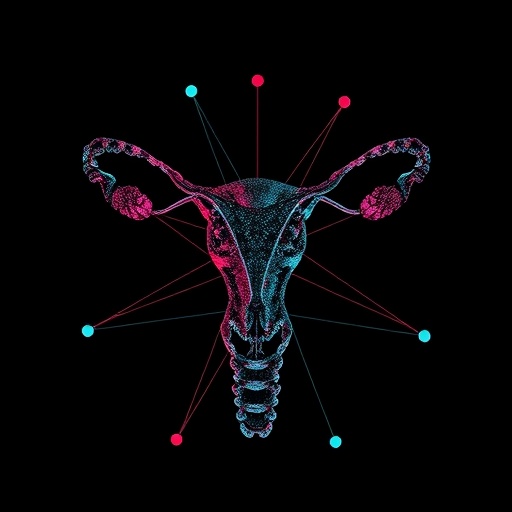
Precision medicine has transformed the way clinicians approach some forms of cancer, but for the vast majority of gynecological disorders — from endometriosis and polycystic ovary syndrome to uterine fibroids and recurrent pregnancy loss — treatment remains largely empirical, relying on trial-and-error hormonal therapies, surgery, and symptom management rather than disease-modifying interventions informed by a patient’s own biology. A new perspective published in Nature Communications by Mst. Khatun, Juha S. Tapanainen and Andres Salumets argues that this gap is not primarily a failure of clinical effort but a failure of framework, and the authors lay out a detailed roadmap for connecting the statistical promises of polygenic risk scores to the mechanistic clarity of functional genomics, ultimately enabling precision models of gynecological disease.
The central premise of the work is that the field of women’s health has accumulated an enormous quantity of genetic association data without yet converting that data into actionable biological understanding. Genome-wide association studies have identified hundreds of genetic loci linked to conditions such as endometriosis, but for most of these loci, the causal gene, the causal variant, and the mechanism by which the variant perturbs tissue function remain unknown. Polygenic risk scores, which aggregate the effects of many variants across the genome into a single risk estimate, can stratify patients statistically, yet they offer little guidance to a clinician deciding which pathway to target in a specific patient. The authors contend that closing this translational gap requires a deliberate, staged pipeline that moves risk discovery through variant-to-gene mapping, functional validation, and finally into patient-derived disease models.
At the foundation of the proposed framework is the refinement and clinical integration of polygenic risk scores. The authors note that while PRS for gynecological conditions already capture meaningful heritable risk — endometriosis and polycystic ovary syndrome being notable examples with large-scale GWAS meta-analyses — their predictive power in diverse populations remains limited because most genomic datasets are heavily skewed toward individuals of European ancestry. A clinically useful PRS must therefore be built on ancestrally diverse cohorts, calibrated for the specific population in which it will be used, and validated prospectively in longitudinal cohorts. Beyond prediction, the real value of polygenic information, the authors argue, lies in its use as a discovery tool: risk-enriched cohorts can be prioritized for deep phenotyping and functional studies, so that genetics does not merely forecast disease but actively directs laboratory investigation toward the variants most likely to matter.
The second stage of the framework addresses the notorious difficulty of translating GWAS loci into causal biology. Most disease-associated variants identified by GWAS sit in non-coding regions of the genome, frequently in enhancers and other regulatory elements whose activity is highly cell-type- and context-dependent. In gynecological tissues, this contextuality is extreme: the endometrium undergoes cyclical remodeling under the influence of estrogen and progesterone, and ovarian theca and granulosa cells respond to dynamic endocrine signaling across the menstrual cycle. A variant that disrupts a hormonal-response enhancer may exert effects only at specific cycle phases, in specific cell compartments, or under specific inflammatory or metabolic conditions. The authors therefore emphasize the need for integrative fine-mapping approaches that combine statistical colocalization with functional annotations — chromatin accessibility maps, enhancer-promoter interaction data, transcription factor binding profiles and expression quantitative trait loci — generated in the very cell types and physiological states relevant to each disease.
Crucially, the framework insists that such functional annotation must come from human tissue rather than inferred from model organisms. Reproductive tissues are among the most species-divergent in the body, and processes such as spontaneous endometrial decidualization, menstruation and deep placentation have no faithful counterparts in common laboratory animals. Single-cell RNA sequencing and single-cell ATAC-seq of human endometrium, ovary and myometrium have already begun to reveal disease-relevant cell states, such as altered epithelial subpopulations and stromal fibroblast phenotypes in endometriosis, but the authors stress that these snapshots must now be extended to genotype-aware, cell-type-specific studies that directly test whether risk alleles change regulatory activity in the cells that matter.
The third and most operationally demanding stage of the framework concerns functional validation and disease modeling, and here the authors place patient-derived experimental systems at the center. Human-induced pluripotent stem cells, generated by reprogramming a patient’s somatic cells, can in principle be differentiated into endometrial epithelial and stromal lineages, ovarian granulosa-like cells, or other reproductive cell types, allowing the impact of a patient’s own genetic background to be studied in a controlled laboratory setting. Genome editing tools, particularly CRISPR-Cas9 and its base- and prime-editing derivatives, can then be used to introduce or correct specific risk variants in these models, creating isogenic pairs in which the only difference is the allele under investigation. Such isogenic comparisons are, in the authors’ view, the gold standard for demonstrating causality: if correcting a risk allele in a patient-derived endometrial stromal cell line rescues an aberrant decidualization response, the chain from variant to phenotype becomes experimentally concrete.
Alongside iPSC-based models, the framework embraces organoid technology as a bridge between reductionist cell culture and intact tissue physiology. Endometrial organoids, which recapitulate key epithelial functions including hormonal responsiveness and cyclical proliferation, and ovarian follicle-like assemblies grown in vitro, provide three-dimensional, multicellular contexts in which gene function can be perturbed and observed with physiological relevance. The authors also highlight emerging systems such as microfluidic “organ-on-chip” platforms that can apply cyclic hormonal and mechanical cues to engineered tissue constructs, potentially reproducing aspects of the menstrual cycle in a dish. These models, combined with live-cell imaging, secretome profiling and multi-omic readouts, turn genetic risk hypotheses into testable mechanistic questions.
The perspective also confronts the practical barriers that have kept such integrated pipelines rare in gynecological research. Patient-derived reproductive cell types are technically difficult to derive and differentiate; protocols for generating faithful endometrial stromal and epithelial cells from iPSCs are still maturing; and many gynecological diseases are inherently multifocal and influenced by systemic factors — immune dysregulation, metabolic syndrome, microbiome composition — that single-tissue models cannot fully capture. The authors advocate for combinatorial modeling strategies that pair cell-autonomous genetic studies with co-culture systems incorporating immune and vascular components, and they call for large, well-phenotyped biobanks with consent frameworks enabling genetic data, clinical trajectories and sample-derived models to be linked across decades of a patient’s reproductive life.
Equally central to the framework is the question of equity. Because most genomic discovery has been performed in populations of European descent, polygenic tools risk widening existing health disparities if deployed without recalibration, while functional genomics resources and disease models remain concentrated in well-funded institutions in high-income countries. The authors argue that the precision gynecology agenda must include deliberate investment in genomic research on underrepresented populations, so that variant-to-function maps and risk models are valid across the full spectrum of human genetic diversity. They frame this not only as an ethical imperative but as a scientific one: ancestrally diverse datasets improve fine-mapping resolution for all populations by reducing linkage disequilibrium confounding.
The envisioned clinical payoff is concrete. In the authors’ framework, a patient presenting with severe endometriosis-associated infertility might first undergo genetic risk profiling; variants of high functional priority identified through this profile would then inform which patient-derived models are generated and which molecular pathways are interrogated; and the resulting mechanistic findings would guide the selection of targeted therapeutics — for instance, drugs modulating a specific inflammatory, angiogenic or steroid-signaling axis — rather than the current one-size-fits-all hormonal suppression. Similar logic applies to personalized prognosis in adenomyosis, tailored stimulation protocols in assisted reproduction, and risk-informed surveillance for gynecological cancers. The authors are careful to note that this vision remains aspirational: no such end-to-end pipeline is yet in routine clinical use, and substantial work in cohort building, protocol standardization and functional validation lies ahead.
What the perspective offers, ultimately, is an architecture for getting there — a clear articulation of which pieces exist, which are missing, and how they connect. By insisting that polygenic risk, functional genomics and patient-derived modeling be treated as one integrated continuum rather than separate enterprises, the authors provide the field with both a critique of the status quo and a practical program of research. As genomic technologies become cheaper and organoid and editing methodologies more robust, the framework suggests that gynecological medicine may finally be positioned to join the ranks of specialties in which a patient’s genome is not merely a research curiosity but a clinical instrument — one that informs who is at risk, why the disease develops, and how it should be treated in the individual patient rather than the average one.
Cite Scienmag News
Juliet Wilcox. (September 8, 2026). A framework linking polygenic risk to precision gynecological disease models. Scienmag. https://scienmag.com/a-framework-linking-polygenic-risk-to-precision-gynecological-disease-models/
Juliet Wilcox. "A framework linking polygenic risk to precision gynecological disease models." Scienmag, 8 September 2026, https://scienmag.com/a-framework-linking-polygenic-risk-to-precision-gynecological-disease-models/. Accessed 8 September 2026.
Juliet Wilcox. "A framework linking polygenic risk to precision gynecological disease models." Scienmag. September 8, 2026. https://scienmag.com/a-framework-linking-polygenic-risk-to-precision-gynecological-disease-models/


