


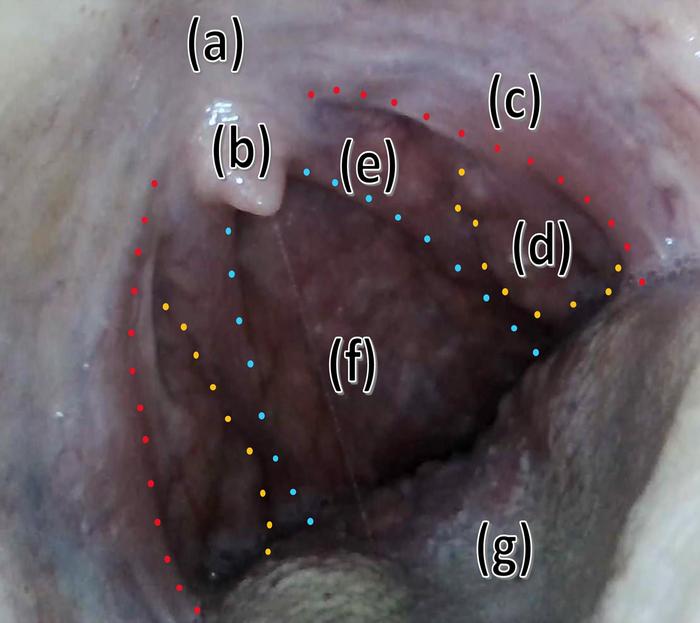
The rise in the incidence of oropharyngeal squamous cell carcinomas (OPSCCs) linked to human papillomavirus (HPV)-16 infection has become notable, surpassing cervical high-risk HPV infections by 2019. HPV-associated OPSCCs present a better prognosis compared to traditional oropharyngeal malignancies, largely due to lower correlations with chronic tobacco and alcohol use. Despite the sexually transmitted nature of HPV-associated OPSCCs, data on sexual behaviors is sparse in cancer registries, complicating correlation studies. Notably, high-risk factors in men include recent same-sex sexual activity, with significant odds ratios noted in studies. This context underscores the need for accessible and effective screening tools to manage the increasing OPSCC burden, especially in resource-limited settings.

Credit: Michael W. Ross,
The rise in the incidence of oropharyngeal squamous cell carcinomas (OPSCCs) linked to human papillomavirus (HPV)-16 infection has become notable, surpassing cervical high-risk HPV infections by 2019. HPV-associated OPSCCs present a better prognosis compared to traditional oropharyngeal malignancies, largely due to lower correlations with chronic tobacco and alcohol use. Despite the sexually transmitted nature of HPV-associated OPSCCs, data on sexual behaviors is sparse in cancer registries, complicating correlation studies. Notably, high-risk factors in men include recent same-sex sexual activity, with significant odds ratios noted in studies. This context underscores the need for accessible and effective screening tools to manage the increasing OPSCC burden, especially in resource-limited settings.
Materials and Methods
In this study, the feasibility of using low-cost videoscopes to obtain high-quality “oral selfies” for OPSCC screening was examined. The equipment included a $30 Depstech 86T industrial videoscope, known for its waterproof capability and high resolution, connected to a Windows PC laptop. The participants, familiar with the project, were instructed to record a 20-30 second video of their oropharynx. The setup involved positioning the videoscope’s head between the maxillary central incisors and capturing all anatomical landmarks. The videoscope’s ability to provide clear images of the oropharyngeal region was assessed through these recorded videos.
Results
Two sub-studies were conducted to evaluate the practicality and effectiveness of the videoscope. In the first sub-study, five volunteers recorded videos, with an average time of 36 seconds to capture all necessary landmarks. Feedback from a focus group highlighted the ease of use, the novelty of viewing one’s oropharynx, and the need for proper orientation of the videoscope. Marking the scope’s top and initial practice were recommended for better results. The primary barrier was controlling tongue position, critical for clear visibility of the palatine tonsils. Nevertheless, the videos produced were of sufficient quality for diagnostic purposes. Participants reported that while the process was initially challenging, they quickly adapted and found the task manageable.
The second sub-study involved nine participants who successfully recorded their oropharynx videos, which were then graded on clarity and completeness. The average score was 3.1 on a 5-point scale, indicating that most videos provided a reasonably clear view of the oropharynx. This sub-study reinforced the initial findings on the practicality and quality of using videoscopes for this purpose. Reviewers noted that although some videos were not perfect, the overall quality was acceptable for screening purposes. The videos were evaluated based on several criteria including lighting, focus, and the visibility of critical anatomical features.
Discussion
The data suggest that commercially available videoscopes, coupled with laptops, can effectively produce clear and well-lit videos of the oropharynx. The primary challenge remains the control of tongue positioning to avoid obstruction of key anatomical features. Despite this, the study demonstrates that with proper guidance and practice, individuals can use these low-cost devices to obtain videos suitable for screening OPSCCs. The ease of use and affordability of the videoscopes make them a promising tool for widespread screening, particularly in low-resource settings where traditional medical imaging equipment may not be available. The study also highlights the potential for telemedicine applications, where these videos could be reviewed by specialists remotely.
Conclusions
This study supports the potential of low-cost videoscopes as a viable tool for screening HPV-associated oropharyngeal cancers. The ease of use and ability to capture diagnostic-quality images highlight their promise, especially with appropriate user training to overcome initial barriers like tongue control. Further large-scale studies are warranted to solidify these findings and integrate this technology into regular screening practices. The implementation of such low-cost screening tools could significantly enhance the early detection and management of OPSCCs, ultimately improving patient outcomes and reducing healthcare costs.
Full text
The study was recently published in the Cancer Screening and Prevention.
Cancer Screening and Prevention (CSP) publishes high-quality research and review articles related to cancer screening and prevention. It aims to provide a platform for studies that develop innovative and creative strategies and precise models for screening, early detection, and prevention of various cancers. Studies on the integration of precision cancer prevention multiomics where cancer screening, early detection and prevention regimens can precisely reflect the risk of cancer from dissected genomic and environmental parameters are particularly welcome.
Follow us on X: @xiahepublishing
Follow us on LinkedIn: Xia & He Publishing Inc.
Journal
Cancer Screening and Prevention
Article Title
Using Low-cost Videoscopes to Obtain Accurate Video “Oral Selfies” as Screening for HPV-associated Oropharyngeal Cancer: A New Screening Technology?
Article Publication Date
25-Jun-2024
Cite Scienmag News
Nathaniel Bowman. (August 20, 2024). Using low-cost videoscopes to obtain accurate video “oral selfies” as screening for hpv-associated oropharyngeal cancer: a new screening technology? Scienmag. https://scienmag.com/using-low-cost-videoscopes-to-obtain-accurate-video-oral-selfies-as-screening-for-hpv-associated-oropharyngeal-cancer-a-new-screening-technology/
Nathaniel Bowman. "Using low-cost videoscopes to obtain accurate video “oral selfies” as screening for hpv-associated oropharyngeal cancer: a new screening technology?" Scienmag, 20 August 2024, https://scienmag.com/using-low-cost-videoscopes-to-obtain-accurate-video-oral-selfies-as-screening-for-hpv-associated-oropharyngeal-cancer-a-new-screening-technology/. Accessed 3 September 2026.
Nathaniel Bowman. "Using low-cost videoscopes to obtain accurate video “oral selfies” as screening for hpv-associated oropharyngeal cancer: a new screening technology?" Scienmag. August 20, 2024. https://scienmag.com/using-low-cost-videoscopes-to-obtain-accurate-video-oral-selfies-as-screening-for-hpv-associated-oropharyngeal-cancer-a-new-screening-technology/

