


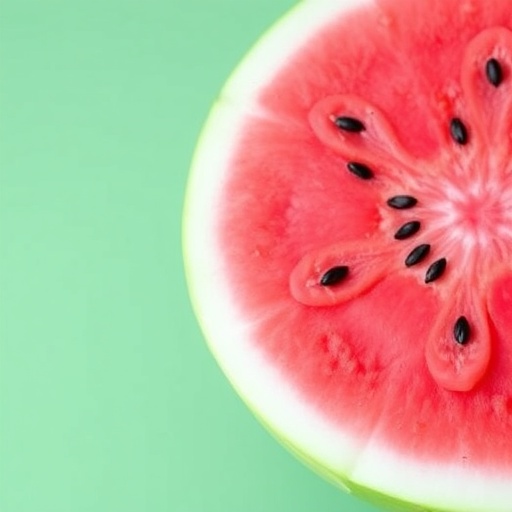
WINTER SPRINGS, Fla., August 5, 2026 — Watermelon rind, long treated as kitchen waste, has entered the mainstream of nutrition science. The United States Department of Agriculture’s FoodData Central now includes an official nutrient profile for raw watermelon rind, giving researchers, registered dietitians, food manufacturers and recipe developers standardized data for evaluating the edible outer layer of the fruit. The listing could accelerate efforts to use more of the watermelon, while providing a reliable nutritional reference for food products, dietary guidance and research studies.
The new entry describes diced raw watermelon rind in measurable nutrient terms rather than relying on estimates or comparisons with related vegetables. A 50-gram serving, equivalent to approximately one-third of a cup, contains 10 calories, 1 gram of dietary fiber, 140 milligrams of potassium and 4 milligrams of vitamin C. These amounts position the rind as a low-energy food that can contribute modestly to fiber and micronutrient intake. Although it does not match the nutritional profile of watermelon flesh, the rind offers a distinct edible component that can supplement the fruit’s overall value.
FoodData Central is designed to provide standardized information about the composition of foods, including calories, macronutrients, vitamins and minerals. Such databases are important because nutrition professionals and researchers need consistent reference values when formulating recipes, comparing ingredients or analyzing dietary surveys. Before an official entry was available, information about watermelon rind could be difficult to locate or may have been inferred from similar foods. The new profile creates a common starting point for assessing how rind contributes to meals and dietary patterns.
The rind consists of more than the firm green outer skin. Its thick, pale inner layer has a texture and composition that allow it to be prepared in ways similar to certain vegetables. It can be shredded into slaws, blended into smoothies, incorporated into juices, sliced for quick pickling or cooked in stir-fries and relishes. Heat, acid and mechanical processing can soften its texture and change its flavor, making the rind adaptable to both sweet and savory recipes. Its relatively low calorie content also allows it to add bulk without substantially increasing the energy density of a dish.
Dietary fiber is one of the most relevant components in the new profile. Fiber is not fully digested in the small intestine, and different types can influence intestinal function, stool consistency and the activity of microorganisms in the colon. The one gram provided by a 50-gram serving is not a large amount by itself, but repeated use of the rind could contribute to total daily fiber intake. Potassium, another nutrient identified in the listing, is an electrolyte involved in nerve signaling, muscle contraction and fluid balance. Vitamin C supports collagen formation, antioxidant defense and normal immune function.
The rind’s nutritional significance should nevertheless be interpreted in context. It is not intended to replace the watermelon flesh, which remains the fruit’s most familiar and nutrient-rich portion. Watermelon flesh is approximately 92 percent water and provides vitamin C, vitamin B5, vitamin A, vitamin B6 and potassium, as well as lycopene and other naturally occurring carotenoids. A two-cup serving contains about 80 calories, making the fruit a hydrating, relatively low-energy food. The rind adds another option for using the fruit, but its nutritional contribution depends on the amount consumed and how it is prepared.
The new database record also addresses a practical problem with food waste. Consumers commonly discard the rind after removing the sweet interior, even though the inner rind can be prepared as an ingredient. Using more of the fruit may increase the edible yield of each watermelon and reduce the volume of organic material sent to waste streams. However, preparation remains important. The rind should be washed before cutting, and recipes should distinguish between the edible inner rind and the tough external skin, which has a much less appealing texture.
The USDA listing arrives as researchers continue to examine associations between watermelon consumption and overall diet quality. An analysis of National Health and Nutrition Examination Survey data published in the journal Nutrients reported that children and adults who consumed watermelon had higher overall diet quality and greater intakes of dietary fiber, magnesium, potassium, vitamins A and C, lycopene and other carotenoids than people who did not report consuming it. The watermelon-consuming groups also consumed less added sugar and saturated fat. Because the analysis was observational, it cannot establish that watermelon itself caused these differences, and the findings may not apply equally to every population.
For nutrition professionals, the official rind profile may be more consequential than the novelty of the ingredient. Standardized data can support nutrient calculations for recipes, educational materials and meal-planning tools, while helping food developers evaluate products that use previously discarded portions of produce. For consumers, the change offers a scientifically documented reason to look beyond the red center of the watermelon. The rind is not a miracle food, but its newly recognized nutritional identity may help transform an overlooked byproduct into a practical ingredient and make whole-fruit eating easier to measure, study and share.
News Publication Date: August 5, 2026.
Web References: USDA FoodData Central nutrition profile for raw watermelon rind; Nutrients study on watermelon consumption and diet quality; National Watermelon Promotion Board.
References: USDA FoodData Central; National Watermelon Promotion Board; analysis of NHANES data published in Nutrients, volume 14, issue 22, article 4883.
Cite Scienmag News
Daisy Hatcher. (August 5, 2026). USDA Adds Official Nutrition Profile for Watermelon Rind, Encouraging Whole-Fruit Use. Scienmag. https://scienmag.com/usda-adds-official-nutrition-profile-for-watermelon-rind-encouraging-whole-fruit-use/
Daisy Hatcher. "USDA Adds Official Nutrition Profile for Watermelon Rind, Encouraging Whole-Fruit Use." Scienmag, 5 August 2026, https://scienmag.com/usda-adds-official-nutrition-profile-for-watermelon-rind-encouraging-whole-fruit-use/. Accessed 3 September 2026.
Daisy Hatcher. "USDA Adds Official Nutrition Profile for Watermelon Rind, Encouraging Whole-Fruit Use." Scienmag. August 5, 2026. https://scienmag.com/usda-adds-official-nutrition-profile-for-watermelon-rind-encouraging-whole-fruit-use/


