


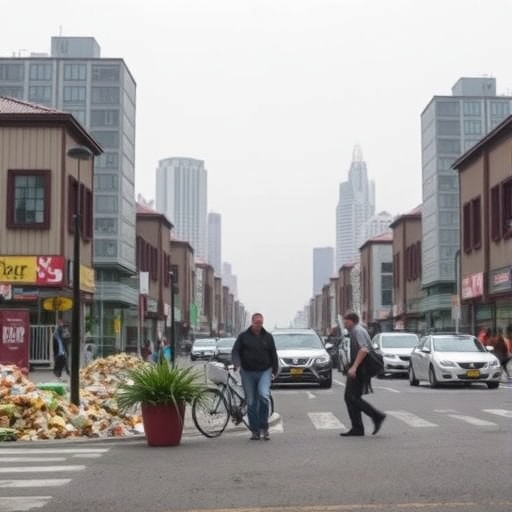
Food waste is an escalating global crisis, with the average individual discarding approximately 132 kilograms of food annually—a figure that is steadily increasing worldwide. This troubling trend, traditionally associated with wealthier nations, is now increasingly prevalent across middle- and lower-income countries, particularly driven by rapid urbanization and economic growth. These changes in socioeconomic dynamics have resulted in a convergence of food waste levels across different income groups, signaling a shift that demands urgent attention from policymakers, industries, and consumers alike.
Historically, the burden of food waste fell predominantly on affluent societies, where excess food availability and consumption patterns facilitated substantial wastage. However, recent research published in the Cell Press journal Cell Reports Sustainability highlights a nuanced reality: the gap in per capita food waste among high-, upper-middle-, and lower-middle-income countries has narrowed considerably, reflecting a convergence primarily fueled by emerging urban centers in countries such as China, India, and Brazil. This phenomenon challenges earlier assumptions and underscores the need for comprehensive strategies that address food waste in diverse economic contexts.
One of the primary drivers identified is urbanization, which reshapes consumer behavior and food distribution systems. Urban dwellers often have enhanced access to supermarkets and cold storage facilities, enabling them to purchase larger quantities of perishable items. Paradoxically, this increased accessibility and modern convenience can lead to overbuying, resulting in spoilage and waste at the household level. Contrastingly, rural communities typically generate less waste, partly due to cultural practices that favor repurposing leftover or discarded food—practices that are vulnerable to erosion as urban lifestyles expand.
The supply chain itself is not exempt from contributing to this complex issue. For example, in Brazil, supermarket chains alone suffered an estimated loss of 6.7 billion Brazilian Reais (approximately 1.2 billion USD) due to food wastage in 2018. These figures spotlight the substantial inefficiencies embedded in retail and distribution processes. Moreover, technological advances such as refrigerated transport have shifted the locus of waste from production and wholesale stages to final consumers, illuminating systemic challenges within cold chain logistics and consumer food management.
Given these systemic shifts, experts advocate for a multi-faceted approach to combat food waste. Enhancing cold chain infrastructure is essential but not sufficient on its own; complementary efforts in educating consumers about proper food storage, portion control, and strategic meal planning are equally critical. Without addressing consumer habits directly, there is a risk that improvements in supply chain technology will simply relocate food waste burdens to the increasingly urban middle class, exacerbating environmental impacts and resource inefficiencies.
Governments, retailers, manufacturers, and civil society organizations must collaborate to develop and implement policies that incentivize sustainable practices. These could include laws that encourage or mandate food donation programs within the retail and hospitality sectors, alongside public awareness campaigns that promote responsible consumption behaviors. Educational interventions targeting portion sizes and the creative reuse of leftovers can alter social norms, transforming food from a disposable commodity into a valued resource.
The environmental consequences of food waste extend far beyond economic loss. Wasted food accounts for significant unnecessary water, land, and energy consumption, contributing to greenhouse gas emissions that exacerbate climate change. Emerging economies, in particular, face the dual challenge of supporting growing populations and mitigating environmental degradation. Persistent food wastage in these regions jeopardizes food security, burdens waste management systems, and threatens public health outcomes by fostering unsustainable consumption patterns that could become deeply entrenched without timely intervention.
Researchers emphasize the importance of incorporating food waste reduction strategies into broader sustainability frameworks—linking them to equity, ecosystem preservation, and climate policy objectives. Coordinated global efforts are paramount, but interventions must be tailored to specific regional contexts to be effective. What works in rural Africa may differ significantly from urban East Asia or Latin America, necessitating a flexible policy architecture informed by localized research and community engagement.
Public and private sector innovation offers promising pathways forward. Advanced technology can improve tracking and forecasting to optimize supply chain efficiency and reduce spoilage. Meanwhile, novel business models—ranging from food sharing platforms to composting initiatives—demonstrate the potential of community-level solutions to divert waste from landfills and reinforce circular economic principles. Nonetheless, such innovations require supportive regulatory environments and consumer buy-in to realize their full impact.
Engagement at the consumer level remains critical. Behavioral change is arguably the most complex yet vital element in the fight against food waste. Educational campaigns that underscore the environmental, social, and economic costs of waste, combined with practical tips and incentives, create the groundwork for shifting consumption norms. This cultural transformation, when coupled with systemic reforms, holds the potential to stem the rising tide of global food waste and foster more resilient food systems.
Inaction carries significant risks. As urbanization and economic growth continue unabated in many parts of the world, unchecked food waste threatens to lock in inefficient consumption behaviors that will become gradually harder to reverse. The cumulative impact will be felt acutely in terms of increased greenhouse gas emissions, resource depletion, and social inequities regarding food access. Early and decisive investments toward improving infrastructure, legislation, and public awareness are thus essential to avoid magnifying these long-term costs.
Ultimately, addressing the global convergence of food waste requires a deeply integrated approach that harmonizes technological advancement, policy innovation, and cultural adaptation. The crosscutting nature of this challenge calls for international cooperation grounded in nationally tailored strategies that respect unique economic, social, and environmental contexts. Only through such cohesive efforts can the global community advance toward sustainable food systems that safeguard the planet’s resources while feeding a growing population equitably and efficiently.
The insights provided by agricultural economists Emiliano Lopez Barrera and Dominic Vieira serve as a powerful reminder of the urgency and complexity of this issue. Their call to action highlights both the risks of complacency and the opportunities inherent in proactive stewardship. As civilizations worldwide grapple with pressing sustainability challenges, combating food waste must be a central priority, integrated holistically into broader efforts to build a just and resilient future.
Cite Scienmag News
Courtney Benton. (September 26, 2025). Urbanization Shrinks the Food Waste Gap Between Wealthy and Less Affluent Nations. Scienmag. https://scienmag.com/urbanization-shrinks-the-food-waste-gap-between-wealthy-and-less-affluent-nations/
Courtney Benton. "Urbanization Shrinks the Food Waste Gap Between Wealthy and Less Affluent Nations." Scienmag, 26 September 2025, https://scienmag.com/urbanization-shrinks-the-food-waste-gap-between-wealthy-and-less-affluent-nations/. Accessed 4 September 2026.
Courtney Benton. "Urbanization Shrinks the Food Waste Gap Between Wealthy and Less Affluent Nations." Scienmag. September 26, 2025. https://scienmag.com/urbanization-shrinks-the-food-waste-gap-between-wealthy-and-less-affluent-nations/


