

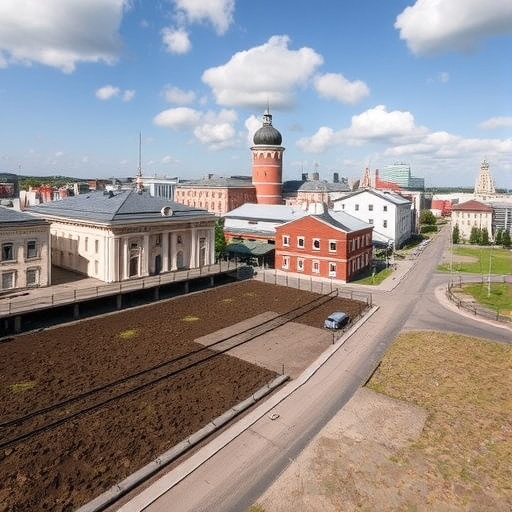
Urban areas are the epicenter of human activity, showcasing the intricate relationship between urban development and the environment. One of the critical dimensions of this relationship is the transformation of urban soils due to anthropogenic activities. A recent comprehensive study conducted by Skripnikov and colleagues provides an in-depth assessment of how urban soils in Rostov-on-Don have been altered. By utilizing sophisticated multivariate analysis techniques, the researchers investigate the chemical and physical properties of these soils, shedding light on the consequences of urbanization.
The increasing intensity of anthropogenic activities in cities has raised concerns about soil health and quality. Urban soils are not simply substrates; they are dynamic ecosystems that undergo continuous change due to human influence. The study meticulously delves into various factors that contribute to soil transformation, including construction, pollution, waste management, and land-use changes. Through their research, Skripnikov and his team aim to highlight the critical need for sustainable urban planning that takes soil health into account.
Chemical properties, including pH levels, organic matter content, and the presence of heavy metals, play a pivotal role in determining soil quality. The researchers conducted an extensive collection of soil samples from different urban zones, analyzing the concentration of various elements. Their findings reveal alarming levels of contamination in certain areas, underscoring the pressing issue of soil pollution. Alongside chemical assessments, the research also considers physical properties such as soil texture, structure, and moisture retention, all of which are essential indicators of soil health.
In urban environments, the introduction of impervious surfaces and alterations in land use significantly impact the hydrology of soils. The study highlights how these changes lead to increased runoff and reduced natural filtration, exacerbating issues related to soil degradation. The researchers employ sophisticated statistical models to analyze the correlations between various physical and chemical attributes of soils. This holistic approach provides a clearer picture of how anthropogenic influences are interlinked and affect overall soil health.
Through their meticulous methodology, the research team also investigates biodiversity within urban soils. The presence of microorganisms and invertebrates is crucial for maintaining soil structure and fertility. The study reveals that urbanization has led to a decline in soil biodiversity, with implications for ecosystem services such as nutrient cycling and organic matter decomposition. The loss of these vital organisms not only threatens soil health but also disrupts the balance of urban ecosystems.
An essential aspect of this research is the emphasis on informing policy decisions. The direct implications of soil quality for public health and urban sustainability cannot be overstated. The researchers advocate for the integration of soil assessments into urban planning and development strategies. By understanding the chemical and physical transformations of soils, policymakers can devise more effective regulations aimed at reducing pollution and promoting soil restoration.
The findings also illuminate the need for public awareness and education regarding urban soil health. The community’s role in fostering sustainable practices in urban gardens, green spaces, and landscape management can significantly contribute to improving soil quality. The study calls for collaborative efforts between scientists, policymakers, and the public to address the challenges posed by soil degradation in urban settings.
In closing, the work of Skripnikov et al. serves as a pivotal resource for understanding the complexities of urban soil transformations. The scientific community is encouraged to build upon these findings to explore innovative solutions for rehabilitating degraded urban soils. Future research endeavors will be vital in tracking these changes over time and recommending best practices for urban soil management, ultimately contributing to a healthier urban environment.
Furthermore, the study highlights the necessity for interdisciplinary approaches that combine chemistry, biology, and urban planning. It emphasizes that addressing soil health extends beyond environmental science to encompass social dimensions, making it a truly multidisciplinary endeavor. By engaging various stakeholders, including civic leaders, environmentalists, and the public, cohesive strategies can be developed to combat soil degradation.
In conclusion, the research presents a clarion call to recognize urban soils as critical components of urban ecosystems rather than mere spaces for construction. As cities continue to grow, the implications of neglecting soil health will become increasingly dire. The study’s results provide a foundation for developing comprehensive soil management protocols that prioritize environmental integrity and human well-being in the face of urbanization.
The assessment of urban soils in Rostov-on-Don stands as a critical case study, offering lessons applicable to cities worldwide. As urban areas face common challenges—from pollution to climate change—the insights gained from this research can foster resilience and sustainability. It is imperative that urban soils are understood as vital natural resources deserving of protection and management, ensuring that future generations can thrive in healthy urban environments.
Overall, this study exemplifies the intersection of environmental science and urban development, urging a reevaluation of how cities interact with their natural environments. The revelations of these anthropogenic transformations serve not only as a wake-up call for Rostov-on-Don but for urban centers globally. The persistent health of urban soils is essential for the overall sustainability of our cities, highlighting the delicate balance that must be maintained between human activity and the environment.
Ultimately, Skripnikov and his team have opened up significant avenues for further exploration into urban soil dynamics and health. As researchers continue to investigate these critical components of urban ecosystems, it becomes apparent that the lessons learned will resonate far beyond the borders of Rostov-on-Don, influencing environmental policy and urban planning worldwide.
Subject of Research: Assessment of anthropogenic transformation of urban soils in Rostov-on-Don.
Article Title: Assessment of anthropogenic transformation of urban soils in Rostov-on-Don based on multivariate analysis of chemical and physical properties.
Article References:
Skripnikov, P.N., Gorbov, S.N., Bezuglova, O.S. et al. Assessment of anthropogenic transformation of urban soils in Rostov-on-Don based on multivariate analysis of chemical and physical properties. Environ Monit Assess 198, 112 (2026). https://doi.org/10.1007/s10661-025-14943-1
Image Credits: AI Generated
DOI: https://doi.org/10.1007/s10661-025-14943-1
Keywords: Urban soils, anthropogenic transformation, multivariate analysis, chemical properties, physical properties, soil health, pollution, urban ecology, sustainable urban planning.


