


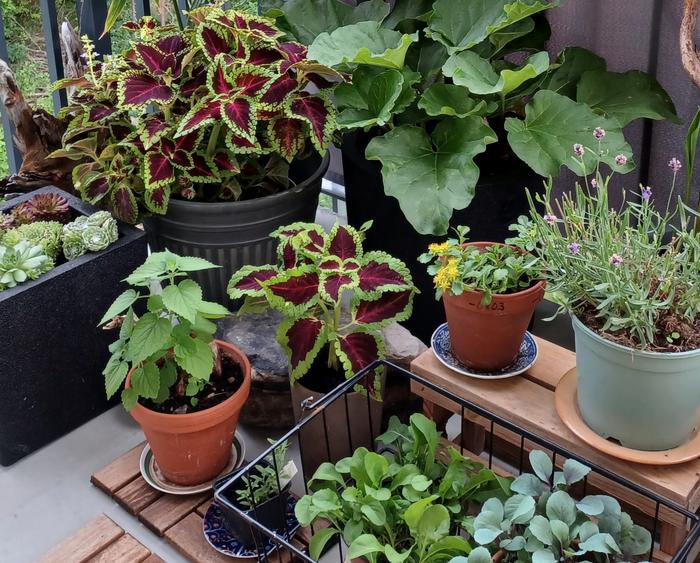
A one-month indoor gardening period increased the bacterial diversity of the skin and was associated with higher levels of anti-inflammatory molecules in the blood demonstrated a collaborative study between the University of Helsinki, Natural Resources Institute Finland and Tampere University.

Credit: Mika Saarenpää
A one-month indoor gardening period increased the bacterial diversity of the skin and was associated with higher levels of anti-inflammatory molecules in the blood demonstrated a collaborative study between the University of Helsinki, Natural Resources Institute Finland and Tampere University.
In his doctoral thesis, Mika Saarenpää investigated, among other things, how microbial exposure that promotes the health of urban residents, particularly enhancing their immune regulation, could be increased easily through meaningful activities integrated into everyday life.
Previously, it has been shown that contact with nature-derived, microbially rich materials alters the human microbiota. In Saarenpää’s study, research subjects committed to urban gardening, a natural activity for them, which may result in long-term changes in the functioning of the immune system.
“One month of urban indoor gardening boosted the diversity of bacteria on the skin of the subjects and was associated with higher levels of anti-inflammatory cytokines in the blood. The group studied used a growing medium with high microbial diversity emulating the forest soil,” says Doctoral Researcher Mika Saarenpää from the Faculty of Biological and Environmental Sciences, University of Helsinki.
In contrast, the control group used a microbially poor peat-based medium. According to Saarenpää, no changes in the blood or the skin microbiota were seen. Peat is the most widely used growing medium in the world, and the environmental impact of its production is strongly negative. Moreover, Saarenpää’s research indicates that it does not bring health benefits similar to a medium mimicking diverse forest soil.
“The findings are significant, as urbanisation has led to a considerable increase in immune-mediated diseases, such as allergies, asthma and autoimmune diseases, generating high healthcare costs. We live too ‘cleanly’ in cities,” Saarenpää says.
“We know that urbanisation leads to reduction of microbial exposure, changes in the human microbiota and an increase in the risk of immune-mediated diseases. This is the first time we can demonstrate that meaningful and natural human activity can increase the diversity of the microbiota of healthy adults and, at the same time, contribute to the regulation of the immune system.”
Urban gardening is an effortless way to improve health
Microbial exposure can be increased easily and safely at home throughout the year. The space and financial investment required is minor: in the study, the gardening took place in regular flower boxes, while the plants cultivated, such as peas, beans, mustards and salads, came from the shop shelf. Changes were observed already in a month, but as the research subjects enjoyed the gardening, many of them announced that they would continue the activity and switch to outdoor gardening in the summer.
According to Saarenpää, microbe-mediated immunoregulation can, at its best, reduce the risk of immune-mediated diseases or even their symptoms. If health-promoting microbial exposure could be increased at the population level, the healthcare costs associated with these diseases could be reduced and people’s quality of life improved.
“We don’t yet know how long the changes observed in the skin microbiota and anti-inflammatory cytokines persist, but if gardening turns into a hobby, it can be assumed that the regulation of the immune system becomes increasingly continuous,” Saarenpää notes.
Saarenpää considers it important to invest in children’s exposure to nature and microbes, as the development of the immune system is at its most active in childhood. Planter boxes filled with microbially rich soil could be introduced at kindergartens, schools and, for example, hospitals, especially in densely built urban areas. For urban gardening to bring health benefits instead of risks, the skin of the hands in particular must be unbroken, and the inhalation of dusty growing media avoided.
“My research emphasises the dependence of our health on the diversity of nature and that of soil in particular. We are one species among others, and our health depends on the range of other species. Ideally, urban areas would also have such a diverse natural environment that microbial exposure beneficial to health would not have to be sought from specifically designed products,” Saarenpää sums up.
Journal
Environment International
Subject of Research
People
Article Title
Urban indoor gardening enhances immune regulation and diversifies skin microbiota — A placebo-controlled double-blinded intervention study
Article Publication Date
26-Apr-2024
Cite Scienmag News
Morgan Morrow. (May 23, 2024). Urban gardening may improve human health – Research subjects benefitted from microbial exposure that boosts the immune system. Scienmag. https://scienmag.com/urban-gardening-may-improve-human-health-research-subjects-benefitted-from-microbial-exposure-that-boosts-the-immune-system/
Morgan Morrow. "Urban gardening may improve human health – Research subjects benefitted from microbial exposure that boosts the immune system." Scienmag, 23 May 2024, https://scienmag.com/urban-gardening-may-improve-human-health-research-subjects-benefitted-from-microbial-exposure-that-boosts-the-immune-system/. Accessed 4 September 2026.
Morgan Morrow. "Urban gardening may improve human health – Research subjects benefitted from microbial exposure that boosts the immune system." Scienmag. May 23, 2024. https://scienmag.com/urban-gardening-may-improve-human-health-research-subjects-benefitted-from-microbial-exposure-that-boosts-the-immune-system/

