


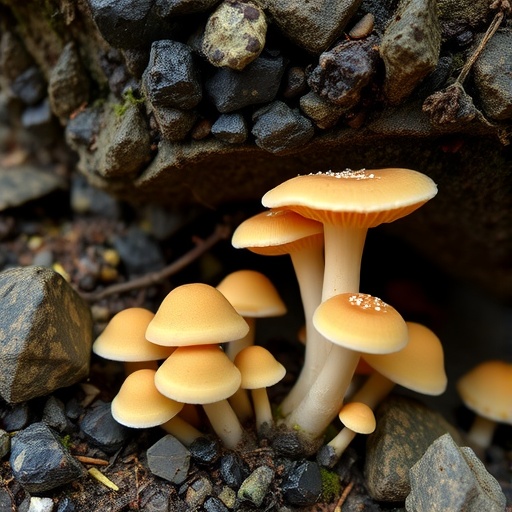
In a groundbreaking investigation spearheaded by researchers at the Johns Hopkins Bloomberg School of Public Health, new evidence has emerged suggesting that common urban fungal species may be evolving physiological adaptations to cope with elevated temperatures within cities. This revelation highlights the potential future risk that urban fungi could transition from benign environmental organisms into formidable human pathogens. The study, published recently in ISME Communications, addresses a growing concern among microbiologists and epidemiologists: the influence of global warming and urban heat islands on fungal evolution and pathogenicity.
Fungi, encompassing molds and yeasts, generally thrive in cooler environments and rarely survive at body temperatures typical of mammals. This thermal limitation has historically confined the scope of fungal pathogens affecting humans. Nonetheless, climate change has sparked fears that increasing ambient temperatures could select for fungal species with enhanced thermotolerance. Such a shift would reduce the thermal barrier that currently limits fungal colonization and infection in humans. The emergence of Candida auris, a yeast first detected in human patients in 2009 and now notorious for its multidrug resistance and elevated mortality rates, exemplifies the critical implications of fungi adapting to higher temperatures.
The investigation conducted by the Johns Hopkins team was driven by the recognition that urban environments experience discrete thermal gradients known as heat islands, where ambient temperatures can be significantly higher than surrounding rural areas. To explore whether fungi in cities are undergoing thermal adaptation, researchers collected samples from four specific sites across Baltimore with varying mean temperatures: a warm site, an above-average temperature site, an average temperature site, and a cool site. Sampling employed innovative methods, including the use of taffy-like candy to capture fungal microbes from sidewalk surfaces, ensuring non-destructive retrieval of diverse fungal populations.
Subsequent culturing and experimental exposure of fungal isolates revealed compelling physiological differences correlated with sampling site temperatures. Notably, fungi from warmer locales exhibited reduced melanin pigmentation compared to those from cooler areas. Melanin, known for its photoprotective and heat-absorbing properties, is generally more abundant in fungi inhabiting cold regions to aid in energy capture and thermal regulation. The decrease in pigmentation observed among warmer-site isolates aligns with an adaptive strategy to prevent heat overload, enabling these fungi to better survive under elevated temperature conditions.
Beyond pigmentation, thermotolerance assays demonstrated that fungal species derived from warmer urban microhabitats possessed a greater resilience to acute heat stress in laboratory conditions. Many such isolates survived brief exposure to temperatures exceeding 55 degrees Celsius, a threshold that imposes lethal stress on most fungal species. This enhanced heat resistance implies that fungi in warmer urban niches are gradually evolving mechanisms to endure transient thermal extremes, potentially broadening their survivability in mammalian hosts.
Of particular concern were findings involving fungal species with opportunistic pathogenic potential. The yeast Rhodotorula mucilaginosa, commonly found in the environment but infrequently causing human infection, showed increased viability post-heat exposure when isolated from the warmest site compared to counterparts from the coolest site. Similarly, Cystobasidium minutum, occasionally implicated in human disease, demonstrated remarkable heat stress resistance in isolates from the hottest urban surface sampled and could even propagate at 37 degrees Celsius—the standard human body temperature. These observations underscore the plausible trajectory toward enhanced pathogenicity facilitated by thermal adaptation.
While these findings illuminate important trends, the authors caution that this was a proof-of-concept study limited by factors including possible confounding environmental variables such as differential sun exposure, pedestrian traffic, and presence of urban fauna. Nevertheless, the congruence of thermal susceptibility data and pigmentation metrics provides a robust indication that urban fungal ecosystems are indeed responsive to microclimatic thermal stresses. It also reinforces the hypothesis that anthropogenic climate forcing could accelerate fungal evolutionary dynamics in densely populated areas.
The researchers advocate for expanded investigations involving multiple cities and broader sampling to validate these preliminary results and refine our understanding of fungal thermotolerance evolution. Such studies are imperative for anticipating emerging fungal disease threats and developing proactive public health strategies. The underpinning molecular mechanisms behind pigmentation modulation and heat resistance in fungi also deserve detailed characterization to elucidate potential targets for antifungal interventions.
Candida auris, cited as a contemporary example, is emblematic of the clinical challenges posed by heat-adapted fungal pathogens. This yeast’s ability to withstand febrile human temperatures and exhibit multidrug resistance has provoked significant alarm within infectious disease circles. The current study bolsters the theory that global warming has contributed to this species’ rapid adaptation, highlighting the broader risks of climate-driven fungal pathogen emergence in urban centers.
The authors emphasize that reducing urban heat island effects and mitigating climate change may have ancillary benefits in controlling the evolutionary pressures fostering fungal adaptations that increase human infection risks. In the meantime, vigilance in monitoring fungal populations in cities, along with investment in mycological research, remains critical. This pioneering study, therefore, serves not only as a window into contemporary urban microbial ecology but also as a call to action for interdisciplinary efforts bridging environmental science and medical mycology.
In summary, the Johns Hopkins Bloomberg School of Public Health study offers compelling insight into the dynamic interplay between urban heat gradients and fungal adaptation, providing a crucial framework to understand how environmental changes can influence emerging infectious diseases. The identification of thermal adaptations in environmental fungi within the same city underscores the urgency of addressing ecological and public health challenges posed by the ongoing climate crisis, especially in urban habitats where human exposure is inevitable.
News Publication Date:
October 4, 2023
Web References:
https://academic.oup.com/ismecommun/article/5/1/ycaf177/8273749
http://dx.doi.org/10.1093/ismeco/ycaf177
References:
Smith, D., Kulkarni, M., Bencomo, A., Faiez, T. S., Hardwick, J. M., & Casadevall, A. (2023). Environmental fungi from cool and warm neighborhoods in the heat-island of Baltimore City show differences in thermal susceptibility and pigmentation. ISME Communications. https://doi.org/10.1093/ismeco/ycaf177
Cite Scienmag News
Gavin Prescott. (November 5, 2025). Urban Fungi Exhibit Evidence of Thermal Adaptation, Study Finds. Scienmag. https://scienmag.com/urban-fungi-exhibit-evidence-of-thermal-adaptation-study-finds/
Gavin Prescott. "Urban Fungi Exhibit Evidence of Thermal Adaptation, Study Finds." Scienmag, 5 November 2025, https://scienmag.com/urban-fungi-exhibit-evidence-of-thermal-adaptation-study-finds/. Accessed 4 September 2026.
Gavin Prescott. "Urban Fungi Exhibit Evidence of Thermal Adaptation, Study Finds." Scienmag. November 5, 2025. https://scienmag.com/urban-fungi-exhibit-evidence-of-thermal-adaptation-study-finds/


