


Built-heritage conservation in shrinking cities can become mismatched with growth-oriented systems designed to sustain historic districts, according to a qualitative study of provincial-level historical and cultural districts in Liaoning Province, China. Researchers combined field investigations, semi-structured interviews with residents and grounded-theory analysis to examine how conservation dilemmas develop amid population loss and economic contraction. Their analysis identified a linked pathway in which government support weakens, economic conditions become strained, service levels decline and heritage resources deteriorate.
The study describes these relationships as cumulative associations within an explanatory framework, not as proof that any single factor alone causes heritage deterioration. Fiscal contraction and institutional maladaptation constrained the capacity of government support, while weaker public backing and shrinking local demand jointly undermined the market foundation of historical districts. Declining market activity and sustained population outflow were also associated with weaker public-service provision and community networks, contributing to declines in the districts’ social functions and spatial vitality.
The findings come from a geographically focused study using qualitative evidence to reconstruct the processes behind conservation problems. The population and scope were limited to provincial-level historical and cultural districts in Liaoning Province, and the interviews involved residents rather than a population-wide survey. Grounded theory allowed the researchers to construct a relational framework from field observations and interview material, but the design does not establish that the same sequence applies in every shrinking city or that all historic districts encounter the same combination of fiscal, demographic and market pressures.
On the basis of these findings, the authors propose a smart-shrinkage-oriented response framework. Its premise is to accept population decline and economic contraction rather than treat them as conditions that must be reversed. The framework seeks to optimize the allocation of limited resources through three strategies: differentiated conservation, low-cost maintenance and incremental reuse. It is presented as a policy and governance approach derived from the study’s empirical findings, not as evidence of a specific intervention’s effectiveness.
The central implication is that heritage protection in shrinking cities may require institutional and financial arrangements that can operate under conditions of reduced public capacity, weaker local markets and thinning community networks. The research offers an account of how these pressures can accumulate and connect within Liaoning’s historic districts. It also identifies adaptive conservation strategies for directing scarce resources toward maintaining heritage and enabling limited reuse, while the scope of the evidence leaves the framework’s performance across other settings unresolved.
Subject of Research: Built-heritage conservation challenges and governance in shrinking cities
Article Title: Urban shrinkage vs heritage protection: exploring the dilemma and promotion path of built heritage protection under urban decline
Article References: Zhang, H., Wang, F., Peng, H., Bi, Z., Bai, J., Cai, J., & Zhu, P. (2026). Urban shrinkage vs heritage protection: exploring the dilemma and promotion path of built heritage protection under urban decline. Humanities and Social Sciences Communications. https://doi.org/10.1057/s41599-026-09486-w
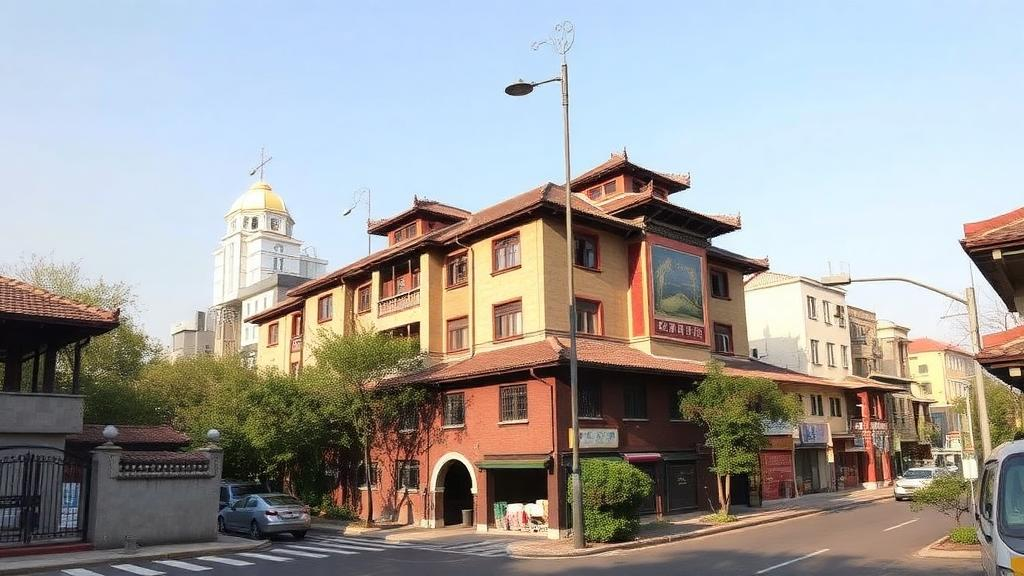
Image Credits: AI Generated
DOI: 10.1057/s41599-026-09486-w
Keywords: urban shrinkage, built heritage, heritage conservation, historic districts, Liaoning Province, China, grounded theory, adaptive reuse, community networks, smart shrinkage, Urban, shrinkage
Cite Scienmag News
Jordan Delaney. (October 21, 2026). Urban decline strains heritage conservation in Liaoning historic districts. Scienmag. https://scienmag.com/urban-decline-strains-heritage-conservation-in-liaoning-historic-districts/
Jordan Delaney. "Urban decline strains heritage conservation in Liaoning historic districts." Scienmag, 21 October 2026, https://scienmag.com/urban-decline-strains-heritage-conservation-in-liaoning-historic-districts/. Accessed 21 October 2026.
Jordan Delaney. "Urban decline strains heritage conservation in Liaoning historic districts." Scienmag. October 21, 2026. https://scienmag.com/urban-decline-strains-heritage-conservation-in-liaoning-historic-districts/


