

Tuesday, October 20, 2026
Science
No Result
View All Result
  • Login
  • HOME
  • SCIENCE NEWS
  • CONTACT US
  • HOME
  • SCIENCE NEWS
  • CONTACT US
No Result
View All Result
Scienmag
No Result
View All Result
Home Science News Technology and Engineering

Uranium levels in Iranian drinking water were below guidelines, with modeled health risks varying by age

October 20, 2026
in Technology and Engineering
Denise Maddox
By Denise Maddox Scienmag Editorial Profile - Mechanical Engineering
Reading Time: 2 mins read
0
Uranium in Drinking Water Stays Below Safety Limits, but Toddlers Face Highest Relative Risk, Study Finds

Uranium in Drinking Water Stays Below Safety Limits, but Toddlers Face Highest Relative Risk, Study Finds

65
SHARES
587
VIEWS
Share on FacebookShare on Twitter
ADVERTISEMENT

A study of drinking-water supplies in Arsanjan County, Iran, reported uranium, cesium, and rubidium concentrations and used Monte Carlo simulation to estimate age-specific uranium health risks. According to the article abstract, uranium concentrations were consistently below the U.S. Environmental Protection Agency and World Health Organization guideline of 30 µg/L. The maximum measured cesium concentration was 0.63 µg/L, while rubidium ranged from 2.04 to 13.94 µg/L.

The researchers assessed uranium through non-carcinogenic and carcinogenic risk calculations. In the modeled non-carcinogenic assessment, hazard quotient values were below 1 for every age group. Children younger than 2 years had the highest values, with a median hazard quotient of 0.028 and a 5th–95th percentile range of 0.012–0.061. These results are modeled estimates rather than observed health outcomes or evidence that the study directly measured adverse effects.

The simulations also produced an estimated median excess lifetime cancer morbidity risk of 1.58 × 10⁻⁶ and a median excess lifetime cancer mortality risk of 1.02 × 10⁻⁶ across all age groups. Sensitivity analysis identified uranium concentration as the most influential factor for both non-carcinogenic and excess cancer risk in the model. The abstract does not provide the sampling design, number of water samples, exposure assumptions, or uncertainty associated with the cancer-risk estimates beyond the reported percentile information for hazard quotients.

The authors said the results highlight the value of continued monitoring and age-specific risk assessment in regional drinking-water management. The available summary does not establish whether the modeled risks changed over time, whether the measured concentrations represent all drinking-water sources in the county, or whether the findings can be generalized beyond Arsanjan County. It also does not report health outcomes in residents, so the study should be interpreted as a concentration survey coupled with a probabilistic risk assessment rather than a clinical or epidemiological study.

Subject of Research: Monte Carlo assessment of uranium-related health risks in Arsanjan County drinking water

Article Title: Concentrations of uranium, cesium, and rubidium in drinking water and Monte Carlo–based age-specific health risk assessment of uranium

Article References: Mohammadpour, A., Golmohammadi, A.-M., Dehbandi, R., Shahrokh, M., Hashemi, H., & Gharaghani, M. A. (2026). Concentrations of uranium, cesium, and rubidium in drinking water and Monte Carlo–based age-specific health risk assessment of uranium. Scientific Reports. https://doi.org/10.1038/s41598-026-74880-y

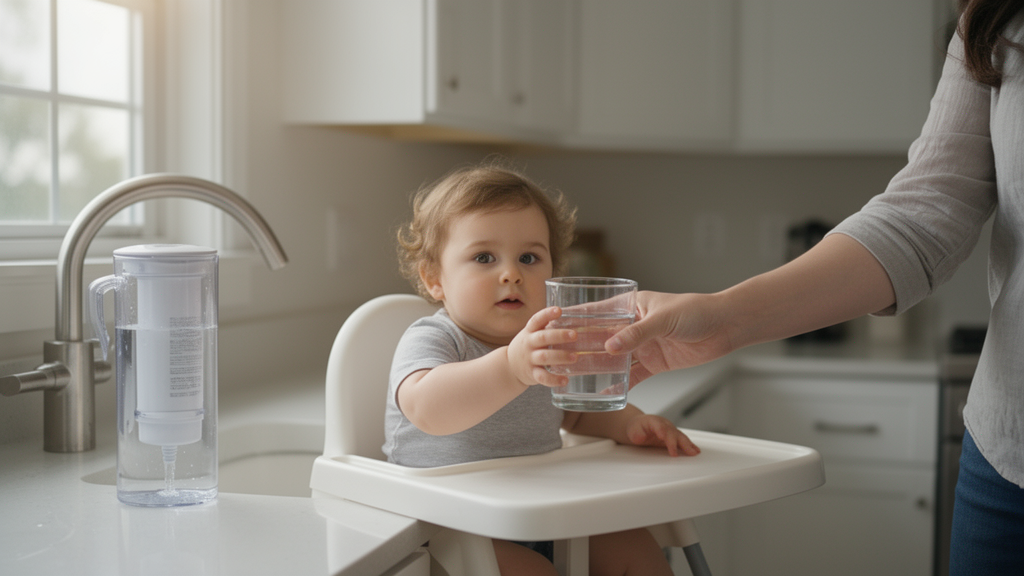
Image Credits: AI Generated

DOI: 10.1038/s41598-026-74880-y

Keywords: drinking water, uranium, cesium, rubidium, Monte Carlo simulation, health risk assessment, hazard quotient, cancer risk, Iran, Arsanjan County, Concentrations, drinking

Cite Scienmag News

Denise Maddox. (October 20, 2026). Uranium levels in Iranian drinking water were below guidelines, with modeled health risks varying by age. Scienmag. https://scienmag.com/uranium-levels-in-iranian-drinking-water-were-below-guidelines-with-modeled-health-risks-varying-by-age/


Denise Maddox. "Uranium levels in Iranian drinking water were below guidelines, with modeled health risks varying by age." Scienmag, 20 October 2026, https://scienmag.com/uranium-levels-in-iranian-drinking-water-were-below-guidelines-with-modeled-health-risks-varying-by-age/. Accessed 20 October 2026.

Denise Maddox. "Uranium levels in Iranian drinking water were below guidelines, with modeled health risks varying by age." Scienmag. October 20, 2026. https://scienmag.com/uranium-levels-in-iranian-drinking-water-were-below-guidelines-with-modeled-health-risks-varying-by-age/

Tags: age-specific health risks drinking waterArsanjan CountyCancer riskcesiumchildren's water exposure health risksconcentrationsdrinkingdrinking waterenvironmental health risk modelingHazard Quotienthealth risk assessmentIranlifetime cancer risk from drinking waterMonte Carlo simulationMonte Carlo simulation water risknon-carcinogenic and carcinogenic water riskrubidiumuraniumuranium and radioactive elements in drinking wateruranium concentration impact on healthuranium guidelines and safety standardsUranium levels in Iranian drinking waterwater safety risk assessmentwater sample analysis Iran
Share26Tweet16
Previous Post

Markov model estimates $1.2 billion 2023 NAFLD burden in Sri Lanka including diabetes

Next Post

Virtual Wards for Acute Care Patients: A Scoping Review

Related Posts

Nanofiltration membranes race to separate magnesium from lithium in brines
Technology and Engineering

Review maps nanofiltration strategies for separating magnesium and lithium from brines

October 20, 2026
Trust Beats Talent: What Really Drives Music Students to Compose With AI
Technology and Engineering

Chinese music students’ trust in GenAI linked most strongly to intention to use it for composition

October 20, 2026
Zn-Ti co-doping unlocks high-performance cordierite ceramics for 5G antennas
Technology and Engineering

Zn/Ti co-doped cordierite ceramics show improved microwave dielectric properties in experimental study

October 20, 2026
Plant Compound Quercetin Shows Promise Against Carbapenem-Resistant Superbug
Technology and Engineering

Quercetin showed in vitro promise as a carbapenem adjuvant against a carbapenem-resistant Klebsiella pneumoniae isolate

October 20, 2026
AI Sovereignty Without Owning the Stack: A New Blueprint for Governing Critical Dependencies
Technology and Engineering

Perspective proposes functional AI sovereignty framework based on conceptual synthesis, not empirical validation

October 20, 2026
Stromal Vascular Fraction and Xanthosine Independently Speed Canine Surgical Wound Healing
Technology and Engineering

Canine study finds stromal vascular fraction and xanthosine independently improve surgical wound healing

October 20, 2026
Next Post
Virtual Wards Bring Hospital-Level Care Into Patients Homes for Acute Illness

Virtual Wards for Acute Care Patients: A Scoping Review

  • Mothers who receive childcare support from maternal grandparents show more optimized

    Mothers who receive childcare support from maternal grandparents show more parental warmth, finds NTU Singapore study

    27656 shares
    Share 11059 Tweet 6912
  • University of Seville Breaks 120-Year-Old Mystery, Revises a Key Einstein Concept

    1061 shares
    Share 424 Tweet 265
  • Bee body mass, pathogens and local climate influence heat tolerance

    682 shares
    Share 273 Tweet 171
  • Researchers record first-ever images and data of a shark experiencing a boat strike

    546 shares
    Share 218 Tweet 137
  • Groundbreaking Clinical Trial Reveals Lubiprostone Enhances Kidney Function

    531 shares
    Share 212 Tweet 133
Science

Embark on a thrilling journey of discovery with Scienmag.com—your ultimate source for cutting-edge breakthroughs. Immerse yourself in a world where curiosity knows no limits and tomorrow’s possibilities become today’s reality!

RECENT NEWS

  • Retrospective study finds heterogeneity in recorded postoperative symptoms across assessors
  • Novel HEP-FIB score combined with machine learning models for non-invasive prediction of significant hepatic fibrosis in chronic hepatitis B patients: a single-center, internally validated study
  • Review maps nanofiltration strategies for separating magnesium and lithium from brines
  • Virtual Wards for Acute Care Patients: A Scoping Review

Categories

  • Agriculture
  • Anthropology
  • Archaeology
  • Athmospheric
  • Biology
  • Biotechnology
  • Blog
  • Bussines
  • Cancer
  • Chemistry
  • Climate
  • Earth Science
  • Editorial Policy
  • Marine
  • Mathematics
  • Medicine
  • Pediatry
  • Policy
  • Psychology & Psychiatry
  • Science Education
  • Science News
  • Social Science
  • Space
  • Technology and Engineering

Subscribe to Blog via Email

Enter your email address to subscribe to this blog and receive notifications of new posts by email.

Join 5,150 other subscribers

© 2025 Scienmag - Science Magazine

Welcome Back!

Login to your account below

Forgotten Password?

Retrieve your password

Please enter your username or email address to reset your password.

Log In
No Result
View All Result
  • HOME
  • SCIENCE NEWS
  • CONTACT US

© 2025 Scienmag - Science Magazine

Discover more from Science

Subscribe now to keep reading and get access to the full archive.

Continue reading