

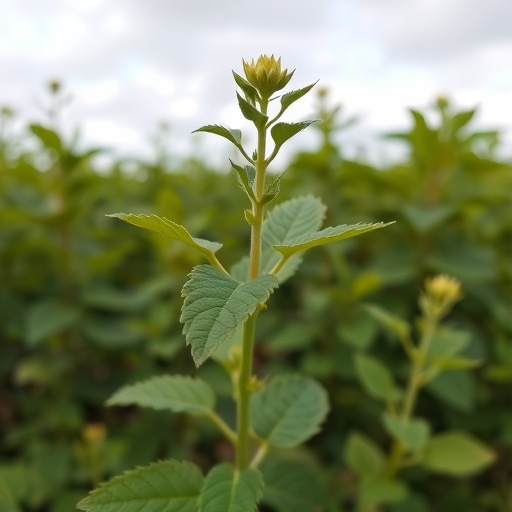
In a groundbreaking study, researchers have made significant strides in understanding the complex biochemical processes that underpin stem development in Camphora officinarum, better known as camphor tree. This comprehensive investigation, successfully integrating transcriptomics and metabolomics, sheds light on the mechanisms involved in secondary cell wall deposition and terpenoid biosynthesis. The implications of this research extend beyond academic curiosity; they may offer substantial insights for agricultural practices, especially in enhancing the traits of economically important plants.
The research primarily hinges on deciphering the intricate relationship between gene expression and the metabolite profiles during the different stages of stem development. By employing cutting-edge techniques, the team of scientists was able to map out how specific genes are expressed in relation to the biosynthesis of important metabolites that contribute to the strength and resilience of the plant’s structure. The findings reveal how the secondary cell wall’s composition is not merely a product of static genetic programming but a dynamic response to environmental cues and developmental signals.
Central to this investigation was the application of transcriptomics, which involves analyzing the complete set of RNA transcripts produced by the genome at any given time. This method provides a comprehensive view of how genes are turned on and off in response to intrinsic and extrinsic stimuli. Coupled with metabolomics, which focuses on the small molecules produced during metabolism, the study paints a vivid picture of the cellular processes occurring during stem development, linking changes in gene expression to alterations in metabolite composition.
One of the fascinating discoveries was the identification of specific transcription factors that play a crucial role in regulating the biosynthesis of lignin and cellulose, vital components of the plant’s secondary cell wall. These compounds not only provide structural support but also contribute to the plant’s defense against pests and pathogens. The researchers uncovered that the expression of these transcription factors is tightly regulated and can vary significantly depending on the developmental stage of the stem, highlighting the delicate balance that plants maintain in their growth and adaptation mechanisms.
Moreover, the study delves into the world of terpenoid biosynthesis, revealing how these compounds, known for their aromatic properties, are synthesized in response to developmental cues. Terpenoids are not only critical for the plant’s own survival—acting as natural insect repellents and antifungals—but they also have significant implications for human use, particularly in the fragrance and pharmaceutical industries. By analyzing the correlation between transcriptomic data and metabolite profiles, the researchers identified key genes that govern terpenoid production, allowing for enhanced understanding of these complex biosynthetic pathways.
The integration of both transcriptomic and metabolomic data opens up a new frontier in plant biology. It allows scientists to better predict how plants might respond to changes in their environment, such as varying temperatures, soil conditions, or the presence of pathogens. The ability to forecast these responses could lead to the development of more resilient plant varieties that are capable of thriving under adverse conditions. This predictive power could revolutionize agricultural strategies, especially in the face of climate change and its associated challenges.
Another noteworthy aspect of this research is its potential applications in biotechnology. With growing interest in genetically modified organisms (GMOs) and synthetic biology, the insights garnered from this study could inform strategies aimed at enhancing desirable traits in crops. By targeting specific genes identified in Camphora officinarum, it may become possible to engineer plants that boast improved yield, stronger disease resistance, or enhanced aromatic properties.
The methodologies employed in this research also signify a shift towards more holistic approaches in plant science. Rather than examining genes in isolation or focusing solely on metabolic products, this study emphasizes the interconnectedness of genetic and biochemical processes. This integrative approach is set to inspire future research endeavors, pushing the boundaries of our understanding of plant biology and adaptation.
Considering the broader implications, this research is particularly timely, as global food systems face increasing pressures from population growth and climate variability. By enhancing our understanding of plant metabolism and development, innovations inspired by such research could play an essential role in securing food supplies for the future. As such, findings from Camphora officinarum may resonate well beyond the laboratory, influencing agricultural practices and policies around the world.
Furthermore, the research highlights the importance of conserving biodiversity, especially in plant species that are not only ecologically significant but also hold potential for economic uses. As scientists uncover the biochemical treasures hidden within plants like Camphora officinarum, there is a compelling case to advocate for the protection of such species, ensuring that we do not lose source material for future innovations.
The intersection of biodiversity conservation, agricultural sustainability, and biochemical research presents a complex but essential narrative. Understanding the nuances of plant development mechanisms can empower our efforts in creating a sustainable environmental balance, whereby agricultural practices align more closely with ecological integrity.
As we continue to explore the depths of plant biochemistry and genetics, the study of Camphora officinarum serves as a potent reminder of the intricate relationships that exist within nature. Investing in this knowledge is not just an academic pursuit but a fundamental requirement for resilient ecosystems and food security around the globe.
This pioneering work sets the stage for even more intricate studies that could investigate similar processes in other economically valuable or endangered species. By building on this foundation, the scientific community can strive towards a future where we harness plant biology to not only improve human life but also respect and restore the natural world.
In conclusion, the integration of transcriptomics and metabolomics provides a remarkable framework for understanding the developmental processes of Camphora officinarum. This research represents a leap forward in plant sciences, promising a multitude of applications in agriculture, biotechnology, and conservation. As more discoveries emerge from such integrative approaches, we can expect a renaissance in our relationship with the botanical world—a relationship that could be pivotal in addressing some of the most pressing challenges of our time.
Subject of Research: Integration of transcriptomics and metabolomics in Camphora officinarum stem development.
Article Title: Integration of transcriptomics and metabolomics provides insights into secondary cell wall deposition and terpenoid biosynthesis during stem development in Camphora officinarum.
Article References:
Hou, J., Zhang, Q., Wang, R. et al. Integration of transcriptomics and metabolomics provides insights into secondary cell wall deposition and terpenoid biosynthesis during stem development in Camphora officinarum.
BMC Genomics (2025). https://doi.org/10.1186/s12864-025-12266-6
Image Credits: AI Generated
DOI: 10.1186/s12864-025-12266-6
Keywords: Transcriptomics, Metabolomics, Camphora officinarum, Secondary Cell Wall, Terpenoid Biosynthesis, Stem Development.


