


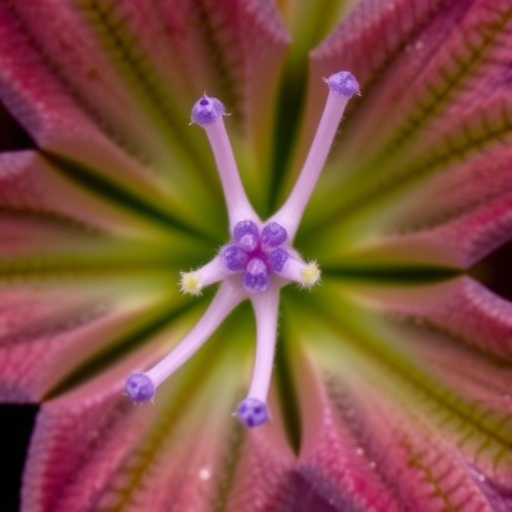
In a groundbreaking study published in the esteemed journal BMC Genomics, researchers have unveiled critical insights into the mechanisms driving petaloid stamen formation in the exquisite plant species Lagerstroemia speciosa ‘Zijuan’. This research, led by Zhang et al., leverages advanced transcriptomic techniques to deepen our understanding of flower morphology, particularly in a species noted for its stunning floral display.
The impetus for this research stems from the unique characteristics of petaloid stamens, which bear a striking resemblance to petals. This phenomenon raises intriguing questions about their developmental pathways and functional adaptations. The specter of petals and stamens blurs in this species, challenging traditional botanical categorization and prompting a clearer investigation into the genetic underpinnings of these structures. The study offers crucial insights that could inform broader botanical genetics and plant breeding practices.
Utilizing high-throughput RNA sequencing, the researchers meticulously analyzed the transcriptome of Lagerstroemia speciosa at various developmental stages. By comparing the gene expression profiles between petaloid stamens and traditional stamens, the team identified a suite of genes implicated in floral development. These findings not only extend the existing knowledge of floral biology but also illuminate the potential evolutionary strategies that these plants employ to attract pollinators through visual appeal.
In their analysis, Zhang et al. identified differentially expressed genes (DEGs) that appear pivotal in the formation of petaloid structures. Notably, genes associated with pigment biosynthesis and metabolic processes were significantly overrepresented, shedding light on the interplay between aesthetics and reproductive function in flowering plants. The research highlights how these DEGs participate in the synthesis of anthocyanins and other pigments that enhance flower coloration and, consequently, attract pollinators.
Equally critical is the role of transcription factors, which the authors revealed to be vital in orchestrating the complex genetic networks governing petal-like stamen formation. Specific transcription factors were prolific in petaloid stamens, suggesting that these regulatory proteins might fine-tune the expression of downstream target genes required for the flower’s phenotype. This finding positions transcription factors as key players in floral morphology evolution, with broader implications for plant reproductive strategies.
Beyond the immediate findings related to floral development, this study sheds light on the potential applications in horticulture and agriculture. The cultivation of plants with enhanced ornamental traits opens new avenues for the floriculture industry and can lead to improved crop varieties with desirable traits. Understanding the genetic basis of petaloid flower structures can empower breeders to select for these features, ultimately transforming market offerings in the floral and gardening sectors.
Moreover, the implications of this research extend into ecological realms as well. The attractive appearance of Lagerstroemia speciosa and similar species can influence pollinator behavior, reinforcing the intricate relationships between flowering plants and their pollinators. This study sparks a dialogue on the evolutionary pressures that shape floral traits and how these can alter community dynamics in terrestrial ecosystems.
However, the research also raises important questions about the genetic diversity within the genus Lagerstroemia. As the team points out, the exploration of additional species may reveal a broader spectrum of adaptations and genetic variations that contribute to petaloid stamen development. Future studies could enrich our understanding of how these traits contribute to species survival and reproductive success in varying environments.
Additionally, integrating transcriptomic data with other omics approaches, such as proteomics and metabolomics, may provide a more holistic view of the floral development process. Such integrated strategies promise to deepen our comprehension of the multifaceted aspects of plant biology and the interplay between various biological molecules during the developmental phases of flowering.
In conclusion, Zhang et al.’s research underscores the intricate genetic dance that orchestrates floral morphology, particularly in the captivating case of petaloid stamen formation. As we continue to unravel the complexities of plant development and genetics, studies like this illuminate the pathway for future horticultural innovations and underscore the importance of genetic research in the conservation and enhancement of biodiversity. By fostering a deeper appreciation of the genetic machinery behind floral beauty, we open the door to sustainable practices in plant cultivation that honor both aesthetics and ecological integrity.
As botanical research advances, it propels a nuanced understanding of how plants adapt to their environments, ultimately revealing the inherent interconnectedness of ecology, evolution, and genetic diversity. The findings presented in this study mark a vital contribution to the field, paving the way for further exploration into the genetic architecture of floral traits in diverse plant species worldwide.
Zhang, B., Yin, R., Lu, S. et al. Comparative transcriptomic analysis of petaloid stamen formation in Lagerstroemia speciosa ‘Zijuan’. BMC Genomics (2025). https://doi.org/10.1186/s12864-025-12297-z
Cite Scienmag News
Juliet Wilcox. (November 19, 2025). Unveiling Petaloid Stamen Development in Lagerstroemia Speciosa. Scienmag. https://scienmag.com/unveiling-petaloid-stamen-development-in-lagerstroemia-speciosa/
Juliet Wilcox. "Unveiling Petaloid Stamen Development in Lagerstroemia Speciosa." Scienmag, 19 November 2025, https://scienmag.com/unveiling-petaloid-stamen-development-in-lagerstroemia-speciosa/. Accessed 4 September 2026.
Juliet Wilcox. "Unveiling Petaloid Stamen Development in Lagerstroemia Speciosa." Scienmag. November 19, 2025. https://scienmag.com/unveiling-petaloid-stamen-development-in-lagerstroemia-speciosa/


