


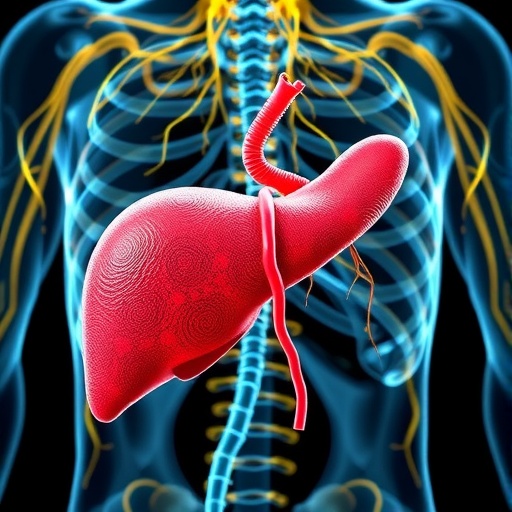
In a groundbreaking study, researchers have turned their attention to the complex innervation of the human liver and pancreas, unveiling the intricacies that intertwine these vital organs. This innovative research, spearheaded by Lee et al., presents a significant leap forward in our understanding of the neuroanatomy that regulates critical functions such as metabolism and digestion. The study not only resolves longstanding challenges in three-dimensional neurohistology but also provides a wealth of insights into the neural networks that govern these organs. The revelations from this work are likely to influence both clinical practices and future research directions in biomedical sciences.
The liver and pancreas serve as paramount organs with crucial roles in various physiological processes. The liver, performing over 500 vital functions, is responsible for detoxifying harmful substances, regulating blood sugar levels, and producing essential proteins. Simultaneously, the pancreas orchestrates the delicate balance of insulin and glucagon to manage glucose levels, manage digestion through enzyme production, and contribute to metabolic health. Understanding the nuanced innervation of these organs can potentially lead to novel therapeutic interventions for metabolic disorders and other liver and pancreatic diseases.
A major focus of the study was the application of advanced neurohistological techniques that allow for high-resolution imaging of the neural networks within the liver and pancreas. Traditional methods have often been limited by their inability to provide a comprehensive view of the three-dimensional configuration of nerve fibers. However, the use of cutting-edge imaging modalities has afforded researchers the opportunity to map these neural structures with unprecedented clarity, thereby revealing the interconnections between nerve fibers and their target cells. This not only enhances our understanding of organ function but also demonstrates how neural pathways interact to support metabolic regulation.
The research team utilized intricate 3D reconstructions of neuronal architecture to discern patterns of innervation across various regions of the liver and pancreas. By employing a combination of immunohistochemistry and high-resolution imaging techniques, they meticulously delineated the distributions of autonomic nerve fibers, including sympathetic and parasympathetic pathways. This endeavor is pivotal as it highlights not only the complexity of the nervous system but also the dynamic interplay between these two branches of the autonomic nervous system in maintaining homeostasis.
Additionally, the study emphasizes the critical role of the enteric nervous system, often referred to as the “second brain.” The enteric nervous system governs gastrointestinal function and interacts significantly with the central nervous system. Understanding its connections to the liver and pancreas opens new avenues for exploring how gut health influences metabolic processes and vice versa. The bidirectional communication between these organs may shed light on the pathophysiology of diabetes, obesity, and liver diseases, pointing researchers toward innovative therapeutic strategies.
One of the standout findings from this research is the discovery of novel nerve fiber populations that were previously overlooked in conventional studies. Through meticulous examination, the researchers identified specialized nerve fibers that appear to play a role in modulating the secretory activities of the pancreas. These findings have profound implications for our understanding of how neural inputs influence hormonal release and metabolic responses, especially in conditions like type 2 diabetes where insulin signaling is disrupted.
As metabolic diseases continue to rise globally, the insights gained from this research are particularly timely. The identification of specific neural circuits involved in metabolic regulation and pancreatic function might guide the development of targeted interventions to restore proper balance in metabolic pathways. Moreover, elucidating the neural circuits may help identify biomarkers for early diagnosis and treatment of diseases related to liver and pancreas dysfunction.
Furthermore, the implications of this research extend beyond individual health. A deeper understanding of the liver and pancreas innervation can illuminate how these organs interact within a broader physiological context, bringing insights relevant for public health strategies. As healthcare systems grapple with the growing burden of metabolic disorders, the need for comprehensive understandings of underlying biological mechanisms becomes increasingly urgent. This study provides a critical foundation for developing future health interventions.
The work by Lee et al. could also inspire further studies aimed at investigating the molecular mechanisms underlying nervous system influences on the liver and pancreas. Understanding the signaling pathways involved, and the potential for neuroprotective or regenerative therapies, could open doors for novel treatments. Researchers may discover pharmacological agents that can selectively target these neural circuits to enhance organ function, improve metabolic health, or combat diseases.
In conclusion, the groundbreaking research into the innervation of the human liver and pancreas not only resolves existing knowledge gaps but also lays the groundwork for future studies. Lee et al. have successfully combined advanced neurohistological techniques with a visionary approach to mapping intricate neural pathways. This comprehensive exploration of nerve fibers within these critical organs represents a significant step forward in biomedical research. As we delve deeper into the interconnected roles of the nervous system and metabolic regulation, the potential for transformative discoveries beckons, promising a future where precision medicine becomes a reality for treating metabolic disorders.
The implications of this study are vast, and as researchers begin to unpack the complexities revealed, we can anticipate a surge of interest in the fields of neurobiology and metabolic health. The road ahead is paved with possibilities, as the intersections between our nervous systems and organ functions continue to be illuminated by ongoing research and technological advancements. Exciting times lie ahead in the quest for new possibilities in treating and understanding human health.
The implications stretch into various domains, including the integration of this knowledge into clinical settings, potentially influencing treatment paradigms for conditions such as diabetes and fatty liver disease. It is not merely an academic exercise; these findings may considerably shift the landscape of patient care. As the research community digs deeper into the neural regulation of organ function, we can expect an evolving narrative that not only informs scientific dialogue but also translates into actionable strategies for improving patient outcomes.
In summary, the newly uncovered intricacies of human liver and pancreas innervation represent a frontier of scientific inquiry with immense potential. As Lee et al. pave the way with their findings, the ripple effects of this research are bound to foster further investigations that bridge gaps, inspire innovation, and ultimately lead to improved healthcare solutions.
Lee, CY., Hsiao, FT., Chen, CC. et al. Human liver and pancreas innervation: resolving 3D neurohistological challenges and advancing insights.
J Biomed Sci 32, 97 (2025). https://doi.org/10.1186/s12929-025-01194-y
Cite Scienmag News
Daisy Hatcher. (November 27, 2025). Unraveling Liver and Pancreas Nerve Connections. Scienmag. https://scienmag.com/unraveling-liver-and-pancreas-nerve-connections/
Daisy Hatcher. "Unraveling Liver and Pancreas Nerve Connections." Scienmag, 27 November 2025, https://scienmag.com/unraveling-liver-and-pancreas-nerve-connections/. Accessed 4 September 2026.
Daisy Hatcher. "Unraveling Liver and Pancreas Nerve Connections." Scienmag. November 27, 2025. https://scienmag.com/unraveling-liver-and-pancreas-nerve-connections/


