


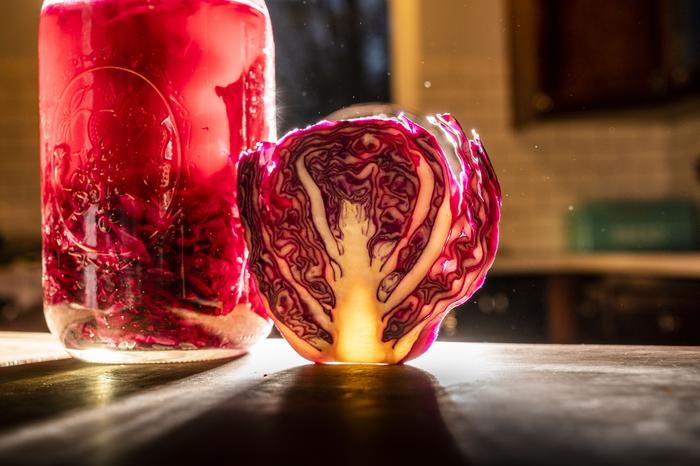
A groundbreaking study from the University of California, Davis, reveals that sauerkraut—a traditional fermented cabbage—may offer significant protective effects on gut health. Published in the prestigious journal Applied and Environmental Microbiology, this research highlights the intricate biochemical transformations that occur during fermentation, suggesting that sauerkraut’s unique metabolite profile supports intestinal integrity and resilience against inflammation-related damage. This insight not only advances our understanding of functional foods but also challenges long-held assumptions about the simple culinary role of fermented vegetables.
The research team, led by Maria Marco, Professor in the Department of Food Science and Technology, alongside postdoctoral researcher Lei Wei, meticulously examined how the fermentation process alters cabbage’s metabolome and the subsequent effects on gut epithelial cells. Their study focused on comparing raw cabbage, traditionally fermented sauerkraut (both lab-made and store-bought), and the associated fermentation brine, to decipher which components confer measurable gut-protective effects. The experimental approach centered on in vitro models using Caco-2 monolayers—a widely accepted cellular model for human intestinal epithelium—to evaluate barrier integrity upon exposure to pro-inflammatory cytokines.
One of the compelling findings of this study is that fermented sauerkraut samples consistently preserved the integrity of the intestinal cell monolayer, effectively mitigating disruption caused by inflammatory stimuli. In contrast, raw cabbage and the fermentation brine did not demonstrate similar protective efficacy. Interestingly, the study found negligible difference in protective capacity between commercially purchased sauerkraut and the laboratory-fermented preparations. This discovery underscores the robustness of the fermentation-induced metabolite profile regardless of production method, highlighting the accessible health benefits of routinely consumed store-bought sauerkraut.
The biochemical mechanisms underlying sauerkraut’s protective role appear rooted in the complex array of metabolites generated during fermentation. Through extensive metabolomic analyses, the team identified hundreds of compounds, including elevated levels of lactic acid, amino acids, and various plant-derived secondary metabolites. These bioactive molecules are known to interface with gut microbiota metabolism and modulate intestinal immune responses, thus contributing to the observed enhancement in barrier function. Marco emphasized that the identification of metabolites mirrored in both fermented food and the native gut microbiome adds credibility to the hypothesis that sauerkraut consumption supports gut homeostasis.
Increasing scientific evidence points to the gut barrier as a critical focal point for maintaining systemic health, as its dysfunction is implicated in a wide range of inflammatory and metabolic disorders. The intestinal epithelium acts as a selective filter, enabling nutrient absorption while restricting the translocation of pathogens and pro-inflammatory molecules. Inflammatory insults can impair this barrier, leading to “leaky gut,” systemic inflammation, and chronic disease development. The UC Davis study’s demonstration that fermented cabbage metabolites bolster this barrier function invites reconsideration of dietary strategies aimed at disease prevention.
From a nutritional biochemistry perspective, fermentation profoundly alters the molecular composition of cabbage. The anaerobic metabolism of lactic acid bacteria not only preserves the food but also enriches it with bioactive metabolites absent or present only at low concentrations in raw cabbage. The metabolic shifts include increased production of organic acids, peptides, and phenolic compounds, many of which exhibit anti-inflammatory and antioxidant properties. These transformations illuminate a biochemical synergy whereby traditional food preservation techniques confer added health benefits beyond nutrient retention.
Further, the research team’s work provides insight into specific molecular pathways potentially modulated by fermented cabbage metabolites. For instance, certain amino acid derivatives and short-chain fatty acids produced during fermentation are hypothesized to interact with signaling cascades governing epithelial tight junction assembly and immune cell crosstalk. By preserving cell-cell adhesion and suppressing pro-inflammatory cytokine signaling, these compounds may directly contribute to enhanced barrier function and immune tolerance within the gut mucosa.
Recognizing the translational relevance of these findings, Marco and Wei advocate for continued investigations through human clinical trials. While the in vitro results are promising, it remains essential to ascertain how dietary sauerkraut intake impacts gut barrier function and inflammatory markers in vivo. These future studies could validate fermented foods as cost-effective, easily accessible interventions targeting gastrointestinal health, potentially complementing or reducing reliance on pharmacological therapies for intestinal inflammation.
This research arrives amid growing public and scientific interest in the gut microbiome–diet axis and the role of fermented foods in modulating both microbial composition and host physiology. Unlike probiotics, which involve live microbial supplementation, sauerkraut’s benefits may stem chiefly from metabolite-mediated mechanisms that do not necessarily rely on viable bacteria reaching the gut. This distinction broadens the conceptual framework for how fermented foods support health, emphasizing their biochemical contributions alongside microbiological factors.
Maria Marco’s team also stresses that incorporating fermented foods like sauerkraut into everyday diets could serve as a practical approach for enhancing resilience against inflammatory disruptions in the gut. Combined with existing dietary recommendations emphasizing fiber-rich fruits and vegetables, fermented cabbage consumption might offer a synergistic boost to digestive health. This integrative dietary model holds promise for widespread public health benefits given the accessibility and cultural familiarity of fermented vegetables worldwide.
Moreover, this study challenges the narrow perception of sauerkraut solely as a condiment or ethnic side dish, elevating it to the status of a functional food with tangible therapeutic potential. By elucidating the molecular underpinnings of its health effects, the research reinvigorates interest in traditional food processing methods and their relevance to modern nutrition science. The researchers’ vision underscores a future where evidence-based dietary guidelines fully incorporate fermented foods as pillars of gut health maintenance.
Funded by the California Department of Food and Agriculture and supported by a Jastro Shields Graduate Research Award from UC Davis’s College of Agricultural and Environmental Sciences, this multidisciplinary study epitomizes the intersection of food science, microbiology, and molecular biology. Its findings open new avenues for mechanistic exploration of diet–host interactions and reinforce the importance of metabolomics in nutrition research. As the scientific community anticipates forthcoming human trials, this work sets an essential foundation for redefining dietary recommendations centered on fermented food consumption.
In conclusion, this UC Davis study provides compelling evidence that sauerkraut’s fermentation-derived metabolites enhance intestinal barrier function and may guard against inflammation-related gut disruption. As both lab-made and retail sauerkraut offer similar benefits, widespread dietary inclusion becomes a feasible and promising strategy for improving digestive health. This research invites consumers and clinicians alike to rethink fermented cabbage not merely as a culinary afterthought but as a scientifically validated ally in maintaining gut integrity and systemic wellness.
Cite Scienmag News
Daisy Hatcher. (April 14, 2025). Unlocking the Science Behind Sauerkraut’s Gut Health Benefits. Scienmag. https://scienmag.com/unlocking-the-science-behind-sauerkrauts-gut-health-benefits/
Daisy Hatcher. "Unlocking the Science Behind Sauerkraut’s Gut Health Benefits." Scienmag, 14 April 2025, https://scienmag.com/unlocking-the-science-behind-sauerkrauts-gut-health-benefits/. Accessed 5 September 2026.
Daisy Hatcher. "Unlocking the Science Behind Sauerkraut’s Gut Health Benefits." Scienmag. April 14, 2025. https://scienmag.com/unlocking-the-science-behind-sauerkrauts-gut-health-benefits/


