


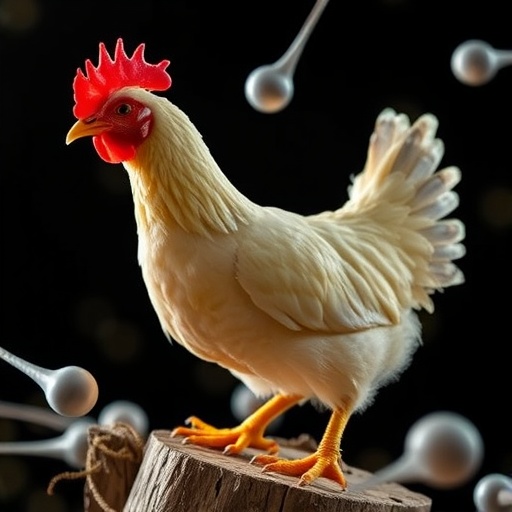
In a groundbreaking study, researchers have uncovered the intricate transcriptional networks that govern sperm motility differences in various Chinese indigenous chicken breeds. This work not only advances our understanding of avian reproductive biology but also has implications for poultry breeding practices and genetic selection. By delving into the molecular underpinnings of sperm function, the findings could potentially lead to improved fertility rates in domesticated birds.
The investigation, spearheaded by a team of researchers led by Li et al., focuses on the epididymal environment, where sperm undergo a significant maturation process. The epididymis plays a crucial role in sperm storage and maturation, which are critical factors influencing overall sperm motility. The research team employed advanced genomic techniques to analyze and characterize the transcriptional profiles of epididymal tissues from selected indigenous chicken breeds, known for their unique and desirable traits.
One of the standout features of this study is the comparative approach taken by the researchers. By selecting multiple indigenous chicken breeds, the team was able to assess the diversity in epididymal transcriptomes and correlate these differences with sperm motility traits. This comparative analysis is essential because it highlights the evolutionary adaptations present in these breeds, driven by natural selection in diverse environments. The unique characteristics of these chickens may also provide insight into the adaptability of domestic poultry under varying conditions.
The study identified several key genes and regulatory pathways that are significantly associated with sperm motility. Among these, specific transcription factors emerged as critical players, regulating gene expression patterns that ultimately influence motility. Understanding these molecular interactions opens up new possibilities for genetic engineering and selective breeding aimed at enhancing reproductive performance in poultry, thereby potentially increasing production efficiency in the industry.
Additionally, the researchers employed high-throughput RNA sequencing techniques to generate a comprehensive transcriptomic profile of the epididymal tissues. This cutting-edge methodology enables the identification of various non-coding RNAs and their roles in sperm biology. Non-coding RNAs have emerged as vital regulators in numerous biological contexts, and their presence in sperm maturation processes may play a crucial role in modulating motility and overall fertility.
Interestingly, the study also explored the role of the epididymal environment in sperm maturation. This environment is rich in nutrients, signaling molecules, and protective factors, all of which are essential for sperm health. The team hypothesized that variations in the epididymal transcriptomes could reflect adaptations to specific breeding strategies and environmental pressures experienced by the indigenous breeds. This perspective is particularly crucial for understanding how domestication may impact genetic diversity and the phenotypic traits of various breeds.
Moreover, the implications of this research extend beyond avian species. The molecular mechanisms identified in chicken sperm dynamics may offer insights applicable to other species, including humans. Comparative biology often reveals conserved pathways across diverse species, and findings from avian models can contribute to a better understanding of mammalian reproduction. The shared genetic and physiological characteristics can facilitate cross-species research efforts aimed at enhancing fertility and addressing reproductive challenges.
The study’s outcomes also resonate with broader agricultural practices, especially in the context of sustainable farming. By utilizing indigenous breeds that are well adapted to local environments, farmers could benefit from enhanced fertility and vigor while reducing reliance on synthetic inputs. This approach aligns with the principles of agroecology, which promotes biodiversity and resilient farming systems capable of withstanding climate variability.
As the research community continues to unravel the complexities of reproductive biology, the integration of advanced genomic tools will likely play an increasingly important role. This study exemplifies the potential of high-throughput sequencing and bioinformatics to revolutionize our understanding of animal physiology. The detailed characterization of gene expression in the epididymis has set a benchmark for future investigations aimed at elucidating the intricate biological processes underlying reproduction.
In conclusion, the work done by Li and colleagues represents a significant step forward in our understanding of the mechanisms that govern sperm motility in chicken breeds. By elucidating the transcriptional networks within the epididymis, the research team opens up new avenues for enhancing reproductive performance through targeted genetic selection. This study serves as a reminder of the vast potential held within the biodiversity of indigenous species and the importance of leveraging this knowledge for both conservation and agricultural advancements.
In summary, the groundbreaking findings regarding epididymal transcriptional networks and sperm motility differences in Chinese indigenous chicken breeds pave the way for future research endeavors. This study underscores the importance of genetic diversity in agricultural species and highlights the necessity of integrating advanced genomic technologies into breeding programs. As we aim to enhance reproductive efficiency in poultry and beyond, the insights gained from such studies will undoubtedly shape the future of agricultural science.
Through understanding the intricate details of reproduction at the molecular level, we can cultivate more sustainable and productive farming practices. As this research unfolds, it promises to ignite further exploration into the fascinating world of animal genetics and reproductive biology.
Li, J., Liu, P., Zhang, J. et al. Epididymal transcriptional networks underlying sperm motility differences in Chinese indigenous chicken breeds.
BMC Genomics (2026). https://doi.org/10.1186/s12864-025-12486-w
Cite Scienmag News
Juliet Wilcox. (January 11, 2026). Unlocking Sperm Motility: Insights from Chicken Genetics. Scienmag. https://scienmag.com/unlocking-sperm-motility-insights-from-chicken-genetics/
Juliet Wilcox. "Unlocking Sperm Motility: Insights from Chicken Genetics." Scienmag, 11 January 2026, https://scienmag.com/unlocking-sperm-motility-insights-from-chicken-genetics/. Accessed 4 September 2026.
Juliet Wilcox. "Unlocking Sperm Motility: Insights from Chicken Genetics." Scienmag. January 11, 2026. https://scienmag.com/unlocking-sperm-motility-insights-from-chicken-genetics/


