


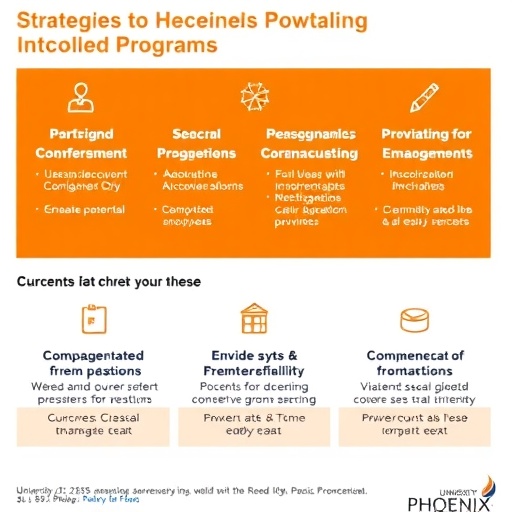
University of Phoenix has released a new white paper describing how it designed, implemented and scaled a competency-based education (CBE) model for working adults, offering a detailed look at the academic structures, digital systems and quality-improvement methods behind an alternative approach to higher education. The publication, “A Holistic Perspective to Creating Successful CBE Programs at Scale,” draws on more than six years of program development and institutional experience supporting more than 5,000 CBE graduates. Its release arrives as colleges and universities worldwide continue searching for ways to make degree programs more flexible, affordable and closely aligned with the skills employers seek.
At the center of the model is a shift away from the traditional assumption that learning must be organized around fixed semesters, seat time and a uniform pace. Instead, competency-based education is structured around what students can demonstrate. Learners progress by showing mastery of defined knowledge and skills, rather than simply completing a predetermined number of classroom hours. University of Phoenix says its framework was created for adult students who may be balancing employment, family responsibilities and academic study, making control over pacing and course progression a critical design consideration.
The white paper explains that the University built its CBE programs within a non-term academic structure. In a conventional academic calendar, students generally begin and end courses on fixed dates, even when their prior knowledge or available study time differs significantly from that of their classmates. A non-term system is intended to provide a more continuous learning environment, allowing students to move through academic requirements according to their readiness and performance. Within this design, learners engage with program content, complete learning activities and submit evidence that they have achieved specific competencies.
This approach requires a substantial redesign of the curriculum. Rather than treating a course primarily as a sequence of lectures, readings and assignments organized by week, the CBE model described by University of Phoenix centers each course on explicit competency statements. These statements define the capabilities students are expected to develop and demonstrate. Assessments can then be aligned with those outcomes, creating a more direct connection between instruction, evaluation and the practical abilities represented by a completed degree. The result is a learning architecture intended to make academic achievement more transparent to students and more legible to employers evaluating candidates’ skills.
The technical challenge of building such a system extends beyond rewriting course materials. A competency-based program must connect curriculum design, assessment practices, student records, faculty workflows and learner support into a coordinated operating model. The white paper describes the use of learning technologies and support systems intended to help students navigate this environment while improving the efficiency of program delivery. These tools are presented not as replacements for faculty or academic guidance, but as components of an infrastructure designed to give learners access to content, feedback and assistance as they progress through their competencies.
For working adults, the timing and usability of those systems can be decisive. A student who studies after a work shift or during irregular hours may need academic resources and support outside the rhythms of a conventional campus. University of Phoenix says its model was developed with these realities in mind, combining flexible progression with services intended to support persistence and completion. The institution also states that the design seeks to reduce the cost of delivering programs, a goal that can become especially important when institutions attempt to serve large numbers of nontraditional learners without sacrificing academic support.
The publication also emphasizes that the model was not treated as a finished product after its initial launch. University of Phoenix describes an iterative process in which student and faculty feedback informed adjustments to both academic and support services. The institution used agile methodologies and continuous-improvement practices to examine how the model was functioning and to respond to emerging learner needs. In practical terms, this means that course structures, communications, technology-enabled services and operational processes could be refined over time rather than remaining fixed after implementation.
Continuous improvement is particularly significant in competency-based education because the model depends on alignment across many moving parts. If competencies are unclear, students may not understand what mastery requires. If assessments do not accurately measure those competencies, progress records may lose meaning. If technology is difficult to use, flexibility can become an additional burden rather than a benefit. And if advising or faculty support is disconnected from the assessment process, students may struggle to interpret feedback and determine what to do next. The University’s account presents feedback loops as a mechanism for identifying these problems and improving the overall learner experience.
According to University of Phoenix, the resulting framework has expanded into selected graduate programs and created a pathway through which qualified students may complete a degree in less than one year for less than $11,000. The institution says this accelerated possibility is paired with continued attention to educational quality, learner support and workforce-relevant skill development. The claim reflects one of the central promises of CBE: students who already possess relevant knowledge may be able to demonstrate it efficiently, while students who need additional preparation can focus more deliberately on the competencies they have not yet mastered. The model therefore attempts to connect time, learning and cost in a way that differs from traditional enrollment structures.
The white paper was produced by a multidisciplinary team that includes leaders and practitioners in student services, academic strategy, change management, faculty training, learning innovation, program implementation and business and information technology education. Its authors include Dan Barker, Marc Booker, Justin Hallock, Niraj Kohli, Leanna Montoya, Mary Elizabeth Smith, Joe Tate, Kari Vorderlwandwehr and Roy Whitmore. Booker, vice provost of Strategy at University of Phoenix and a co-author, said the project was designed to place the needs of working adults at the center of program design and content delivery. The publication is intended for higher education leaders and practitioners seeking operational lessons on how competency-based education can be designed, tested and scaled. The white paper is available through the University of Phoenix website.
News Publication Date: 2026
Web References: https://www.phoenix.edu/media-center/thought-leadership/perspectives-findings/2026/creating-cbe-programs-at-scale.html
References: University of Phoenix white paper, “A Holistic Perspective to Creating Successful CBE Programs at Scale.”
Cite Scienmag News
Courtney Benton. (August 18, 2026). University of Phoenix Details Strategies for Scaling Competency-Based Education Programs. Scienmag. https://scienmag.com/university-of-phoenix-details-strategies-for-scaling-competency-based-education-programs/
Courtney Benton. "University of Phoenix Details Strategies for Scaling Competency-Based Education Programs." Scienmag, 18 August 2026, https://scienmag.com/university-of-phoenix-details-strategies-for-scaling-competency-based-education-programs/. Accessed 3 September 2026.
Courtney Benton. "University of Phoenix Details Strategies for Scaling Competency-Based Education Programs." Scienmag. August 18, 2026. https://scienmag.com/university-of-phoenix-details-strategies-for-scaling-competency-based-education-programs/


