


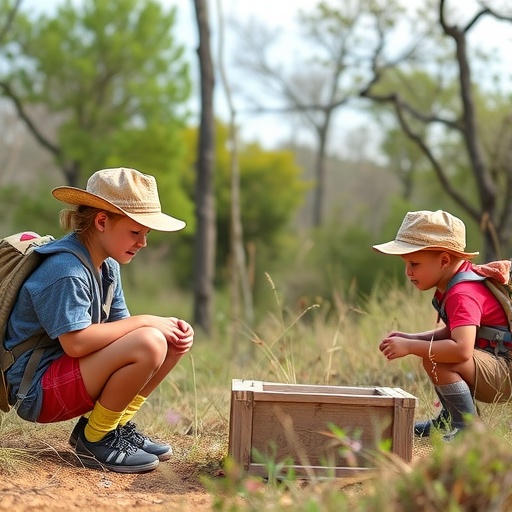
In recent times, the concept of fun has often been dismissed as a mere triviality, a fleeting pleasure with little consequence beyond momentary enjoyment. However, groundbreaking new research from the University of Houston challenges this misconception, revealing that not all fun is created equal. This pioneering study, conducted by Bradley H. Smith, a distinguished professor in the Department of Psychological, Health and Learning Sciences at UH’s College of Education, delves deep into the nuanced dimensions of fun, emphasizing its profound social and emotional benefits, especially when experiences involve outdoor adventure elements.
Smith’s investigation marks a significant advancement in how we perceive and categorize fun by introducing a comprehensive theoretical framework known as the “Four Types of Fun” model. This framework extends beyond the traditionally accepted “three types of fun” frequently referenced in outdoor and adventure-based programming spheres but rarely elaborated in scholarly literature. Smith’s approach provides a systematic categorization that not only clarifies these experiential states but also presents them in a manner conducive to wider application, from educational institutions to workplace environments.
Within this model, the first category, Type 1 or recreational fun, describes activities characterized by ease and relaxation. These are low-effort pursuits such as lying on a beach or casual socializing, where the primary objective is rest and simple enjoyment without mental or physical strain. Although pleasurable, this type of fun is often transient and may lack substantial long-term developmental impact, serving more as a restorative process than a growth facilitator.
Type 2 fun shifts the paradigm significantly. It is defined by activities that present challenge, novelty, and a moderate level of discomfort but yield a rewarding sense of accomplishment post-experience. These activities typically unfold in small-group contexts with guidance from adult mentors who offer intellectual and emotional support. Examples encompass rigorous hikes, rock climbing ventures, or enduring a marathon — scenarios where participants endure struggle but gain resilience and self-efficacy. This form of fun is central to Smith’s research, posited as uniquely beneficial in fostering personal growth and social bonding.
Adrenaline-fueled experiences constitute Type 3 fun, characterized by high-intensity, thrill-seeking activities like bungee jumping or navigating roller coasters. These engagements produce excitement via rapid physiological arousal, instilling sensations of exhilaration and sometimes fear. Though impactful, Smith distinguishes this type for its reliance on intense stimulus rather than prolonged, reflective challenge, placing it apart from the more sustained developmental potential found in Type 2 fun.
The final category, Type 4 or overindulgent fun, denotes activities that bring immediate pleasure but can lead to negative repercussions when taken to excess. Examples might include overeating favorite foods, leading to discomfort afterward. This type highlights the paradox of fun that is self-limiting and potentially detrimental, offering critical insight into the nuanced relationship between enjoyment and well-being.
Central to Smith’s thesis is the emphasis on Type 2 fun’s role in positive youth development. He argues that such challenging yet rewarding experiences cultivate essential psychological assets—resilience, problem-solving skills, and social connectedness—that traditional educational or recreational programs may not adequately provide. Importantly, Smith notes that Type 2 fun inherently involves social contexts where trust and mentorship play pivotal roles. The presence of adult guidance facilitates cognitive framing and emotional processing, enabling participants to integrate experiences meaningfully.
Critically, the research surfaces a cultural dilemma. Societies have historically undervalued the notion of fun, especially within academic or professional settings, perceiving it as an indulgence rather than integral to human thriving. Smith challenges this paradigm by advocating that experiential learning scenarios embedding Type 2 fun can enhance cognitive engagement and character development, thereby bridging pleasure and productivity.
This revelation elucidates why outdoor education programs frequently outperform other youth development initiatives, including service learning and social-emotional curricula. Where the latter may focus narrowly on cognitive or behavioral outcomes, outdoor programs engage the whole person through visceral experience and interpersonal dynamics in unpredictable environments, fostering adaptability and intrinsic motivation.
Additionally, Smith envisions broadening the applicability of his Four Types of Fun model beyond wilderness or adventure contexts. He hypothesizes that cultivating Type 2 fun within conventional settings like classrooms or workplaces could revolutionize approaches to learning and professional development. By strategically incorporating challenge, social interaction, and mentorship into everyday environments, organizations might unlock unprecedented levels of engagement and satisfaction.
Looking ahead, Smith’s ongoing research agenda aims to devise reliable metrics to quantify the presence and impact of Type 2 fun in diverse organizational settings. This involves creating psychometrically sound instruments and conducting surveys that capture subjective experiences and objective outcomes linked to this form of fun. Such empirical tools promise to guide educators, policymakers, and administrators in designing experiences that optimize developmental trajectories.
Through this lens, fun emerges not simply as an escape from responsibility but as a foundational component of human flourishing. Smith’s work invites a reevaluation of leisure and learning paradigms, arguing that when fun incorporates challenge, mentorship, and social collaboration, it transcends mere enjoyment to become a catalyst for growth. This transformative view holds profound implications for educational theory, youth programming, and organizational leadership across domains.
In conclusion, the University of Houston’s research reshapes our understanding of fun by scientifically delineating its multifaceted nature. The Four Types of Fun model provides a robust framework through which educators, psychologists, and practitioners can harness the developmental power of outdoor adventure experiences, particularly Type 2 fun, thereby enhancing social, emotional, and cognitive outcomes for youth. Smith’s findings underscore the necessity of intentional, challenging, and supported engagement as a pathway to meaningful fun and, ultimately, human betterment.
Cite Scienmag News
Courtney Benton. (October 30, 2025). University of Houston Research Reveals Outdoor Challenges Enhance Youth Development. Scienmag. https://scienmag.com/university-of-houston-research-reveals-outdoor-challenges-enhance-youth-development/
Courtney Benton. "University of Houston Research Reveals Outdoor Challenges Enhance Youth Development." Scienmag, 30 October 2025, https://scienmag.com/university-of-houston-research-reveals-outdoor-challenges-enhance-youth-development/. Accessed 6 September 2026.
Courtney Benton. "University of Houston Research Reveals Outdoor Challenges Enhance Youth Development." Scienmag. October 30, 2025. https://scienmag.com/university-of-houston-research-reveals-outdoor-challenges-enhance-youth-development/


