

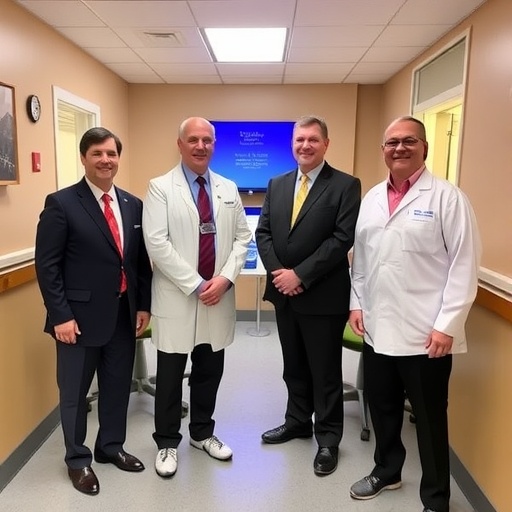
The University of Cincinnati has embarked on a groundbreaking clinical trial aimed at revolutionizing the treatment of prosthetic joint infections (PJI), a prevalent and challenging complication in the field of orthopedic surgery. This investigational drug trial, spearheaded by Dr. T. Toan Le, a distinguished professor in the Department of Orthopaedic Surgery at the College of Medicine, marks a significant advancement in combating the stubborn infections that can jeopardize millions of joint replacement surgeries each year.
Approximately five million joint replacement procedures are performed annually across the United States and Europe, offering patients the promise of restored mobility and pain relief. However, around two to three percent of these implant surgeries encounter a devastating hurdle: infection of the prosthetic joint. These infections are notoriously difficult to treat due to the formation of protective bacterial biofilms on the implant surfaces, which shield the pathogens from conventional antibiotics and the body’s immune defenses.
At the core of this clinical investigation is Peptilogics, a cutting-edge surgical therapeutics company specializing in the development of innovative solutions targeting medical device-related infections (MDRI), including prosthetic joint infections. Unlike any prior therapies, Peptilogics’ investigational drug is specifically designed to penetrate and disrupt biofilms, tackling the root cause of these persistent infections that have long evaded effective treatment.
Current protocols for managing PJI typically involve a two-stage revision surgery, wherein the infected implant is removed, and a temporary spacer is inserted. After a period intended to clear the infection, a new prosthetic joint is implanted. This approach, while sometimes effective, is fraught with risks including surgical complications and a failure rate reaching up to 25%. Moreover, this method often results in extended periods of immobility and pain for patients, underscoring the dire need for more efficacious treatments.
Dr. Le highlights the critical limitation of the standard treatment window for PJI, which is confined to roughly two weeks after symptom onset or within the first month post-surgery. Symptoms such as swelling, warmth, drainage, and pain often herald infection but frequently prompt delayed responses that reduce treatment efficacy. The experimental therapy being tested in the RETAIN clinical trial offers hope to expand this narrow window and avoid invasive revision procedures.
The RETAIN trial is a rigorously designed randomized, double-blind, placebo-controlled, multicenter study investigating an innovative peptide-based solution capable of infiltrating biofilm matrices. This therapeutic is delivered during a procedure known as debridement, antibiotics, and implant retention (DAIR), where the infected site is surgically cleaned but the implant is preserved. The peptide solution is used to irrigate the infected joint, remaining in contact with the prosthesis for approximately fifteen minutes to maximize biofilm penetration and eradication.
Half of the enrolled patients will receive the peptide solution, while the other half will be administered a saline placebo, allowing researchers to definitively assess the treatment’s effectiveness compared to current standards. This elegant trial design ensures that the outcome will provide robust, clinically relevant data that could pave the way for regulatory approval and routine clinical adoption.
If successful, this peptide solution could dramatically change the PJI treatment landscape by reducing the reliance on two-stage revision surgeries, lowering failure rates, and improving patient outcomes. Additionally, by extending the effective treatment window, it may enable earlier intervention, decreasing morbidity and healthcare costs associated with prolonged, complicated infections.
The trial aims to enroll 240 patients across up to 50 clinical sites, underscoring the comprehensive and collaborative effort behind this research. Each participant will be closely monitored for signs of persistent or recurring infection through a yearlong study period involving clinical visits, blood tests, and remote follow-ups via telephone or virtual appointments, ensuring thorough safety and efficacy evaluation.
Dr. Le praises the study’s meticulous structure and the comprehensive support framework provided to clinical sites, which includes extensive training and resources to guarantee protocol adherence and data integrity. This attention to detail enhances both patient safety and the reliability of trial outcomes, offering confidence that the findings will be impactful.
By addressing the fundamental challenge of bacterial biofilms that have so far resisted therapeutic efforts, this trial may herald a new era in orthopedic infection management. Peptilogics’ peptide solution is not just an antimicrobial agent; it represents a paradigm shift in how clinicians can directly target and dismantle biofilms, offering renewed hope to patients suffering from infections related to medical implants.
The stakes of this research extend beyond prosthetics alone, as biofilm-associated infections are a persistent problem across various medical devices and specialties. A successful outcome could pave the way for broader applications, potentially transforming how medical device infections are prevented and treated worldwide.
As the trial progresses, the medical community and patients alike eagerly await evidence that this novel approach will fulfill its promise of safer, more effective infection control in joint replacement surgeries. The potential to preserve prosthetic joints without resorting to highly invasive procedures could significantly enhance quality of life for countless individuals, marking a major milestone in orthopedic medicine.
Subject of Research:
People
Article Title:
University of Cincinnati Launches Pioneering Clinical Trial to Combat Prosthetic Joint Infections with Biofilm-Targeting Peptide Therapy
News Publication Date:
Not specified
Web References:
Peptilogics website – http://www.peptilogics.com/
Keywords:
prosthetic joint infections, PJI, biofilm, orthopedic surgery, peptide therapy, RETAIN trial, medical device-related infections, DAIR procedure, randomized controlled trial, clinical trial, implant infection, antimicrobial peptides


