


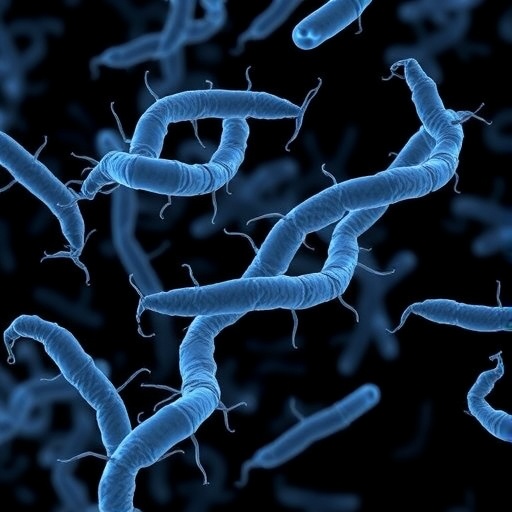
In a groundbreaking advance that could fundamentally reshape our understanding of bacterial pathogenesis and the epidemiology of infectious diseases, researchers Jia, C., Zhou, H., Cao, Q., and colleagues have unveiled a distinct genomic trajectory for invasive Salmonella Typhimurium ST313 strains. Published in Nature Communications in 2026, this study offers an unprecedented glimpse into the evolutionary dynamics that underpin one of the deadliest forms of invasive salmonellosis, illuminating pathways that enable these bacteria to adapt and thrive within human hosts.
Salmonella Typhimurium, a serovar of the genus Salmonella, has long been recognized as a significant cause of gastroenteritis worldwide. However, the ST313 sequence type represents a highly virulent subset responsible for systemic infections, particularly in sub-Saharan Africa where it contributes to high mortality rates among immunocompromised populations, including those with HIV/AIDS. Unlike other Salmonella strains typically linked to self-limiting gastroenteritis, ST313 has evolved traits that facilitate bloodstream invasion, leading to severe, often fatal disease. The new study dives deeply into the genomic adaptations that mark this pathogenic shift.
Utilizing cutting-edge whole-genome sequencing technologies paired with advanced bioinformatic analyses, the research team conducted comprehensive comparative genomics of ST313 isolates collected over several decades. By reconstructing phylogenies and tracking mutational patterns, they discerned a clear evolutionary trajectory that distinguishes invasive ST313 lineages from their non-invasive counterparts and extant Salmonella populations. This trajectory is characterized by discrete genomic rearrangements, loss-of-function mutations, and acquisition of mobile genetic elements that collectively enhance virulence and host adaptation.
Among the most striking findings is the identification of convergent evolutionary events across geographically separated ST313 strains, suggesting parallel adaptation to similar selective pressures in human hosts. The researchers found widespread pseudogenization—a process where genes become inactivated—targeting key metabolic pathways, hallmarking a transition towards an intracellular lifestyle. This genomic streamlining appears to reduce unnecessary metabolic burden, thereby optimizing energy use for survival within macrophages and systemic tissues.
Additionally, the team uncovered acquisition and diversification of specific virulence factors, including type III secretion system effectors that facilitate evasion of host immune responses. These molecular armaments allow ST313 to manipulate host cellular machinery, subvert phagolysosomal killing, and establish persistent systemic infection. Intriguingly, the study also details the expansion of plasmid content encoding antibiotic resistance genes, underscoring the dual threat of heightened virulence coupled with multidrug resistance.
The temporal dimension of this genomic evolution was elegantly mapped, revealing recent emergence and rapid dissemination of novel ST313 sublineages aligned with urbanization and increased antibiotic usage in affected regions. This epidemiological connection not only illuminates the bacterial evolutionary drivers but also carries profound implications for public health strategies. Understanding these genomic adaptations is critical for surveillance, vaccine development, and crafting targeted therapeutics aimed at curbing invasive salmonellosis.
Importantly, the authors contextualize their findings within the broad spectrum of Salmonella evolution, juxtaposing ST313’s invasive phenotype against the largely enteric-focused lifestyle of other serovars. This comparison underscores the plasticity of bacterial genomes and the profound role of host-pathogen coevolution. The concept that a pathogen can carve a novel niche through specific genomic trajectories propels our understanding of microbial pathogenesis beyond static descriptions, emphasizing evolution as a dynamic force shaping disease outcomes.
The methodological rigor exhibited in this study, combining longitudinal sampling with state-of-the-art phylogenomic tools, addresses past limitations where snapshot views failed to capture ongoing evolutionary processes. Their approach sets a new standard for investigating invasive bacterial lineages and offers a blueprint for similar studies on other emerging pathogens. Moreover, by integrating epidemiological data and genomic insights, the research provides a holistic perspective crucial for designing proactive interventions.
Notably, the implications of this research extend beyond Salmonella. It exemplifies how pathogens adapt to selective pressures imposed by human interventions, including antibiotic use and immunological changes in host populations. This evolutionary insight highlights the perpetual arms race between microbes and humans, emphasizing the necessity of integrating evolutionary biology principles into infectious disease control frameworks.
The discovery of distinct genomic hallmarks unique to invasive ST313 also accelerates the potential for diagnostic innovation. Rapid identification of such genomic signatures in clinical isolates could enable precise differentiation between invasive and non-invasive strains, facilitating timely and appropriate clinical management. This capability is particularly valuable in resource-limited settings where invasive salmonellosis remains a critical yet underrecognized threat.
The study also reveals fascinating evolutionary parallels with other intracellular pathogens, suggesting convergent mechanisms that bacteria employ to transition from environmental or gastrointestinal niches to systemic infection. This cross-pathogen comparison enriches our grasp of microbial versatility and could inspire cross-disciplinary approaches to infectious disease research, merging insights from bacteriology, immunology, and evolutionary science.
As the authors emphasize, future research must focus on functional characterization of the mutated genes and virulence factors identified, moving from genomic associations to mechanistic understanding. Such efforts will bridge gaps between genotype and phenotype, elucidating how specific genomic changes translate into clinical presentation and disease severity. Furthermore, dissecting host factors that interact with these bacterial genetic elements promises to deepen insights into pathogenesis and inform host-targeted therapies.
In conclusion, Jia and colleagues’ work on the distinct genomic trajectory of invasive Salmonella Typhimurium ST313 represents a seminal contribution, redefining our perception of bacterial evolution and invasiveness. Their findings resonate with the urgent global health challenge posed by bloodstream infections and multidrug-resistant bacteria, showcasing the power of genomics to unravel complex pathogen behaviors. This landmark study not only advances microbiology but also reinforces the imperative of evolutionary perspectives in combating infectious diseases now and into the future.
Cite Scienmag News
Juliet Wilcox. (March 10, 2026). Unique Genomic Pathways in Invasive Salmonella ST313. Scienmag. https://scienmag.com/unique-genomic-pathways-in-invasive-salmonella-st313/
Juliet Wilcox. "Unique Genomic Pathways in Invasive Salmonella ST313." Scienmag, 10 March 2026, https://scienmag.com/unique-genomic-pathways-in-invasive-salmonella-st313/. Accessed 3 September 2026.
Juliet Wilcox. "Unique Genomic Pathways in Invasive Salmonella ST313." Scienmag. March 10, 2026. https://scienmag.com/unique-genomic-pathways-in-invasive-salmonella-st313/


