

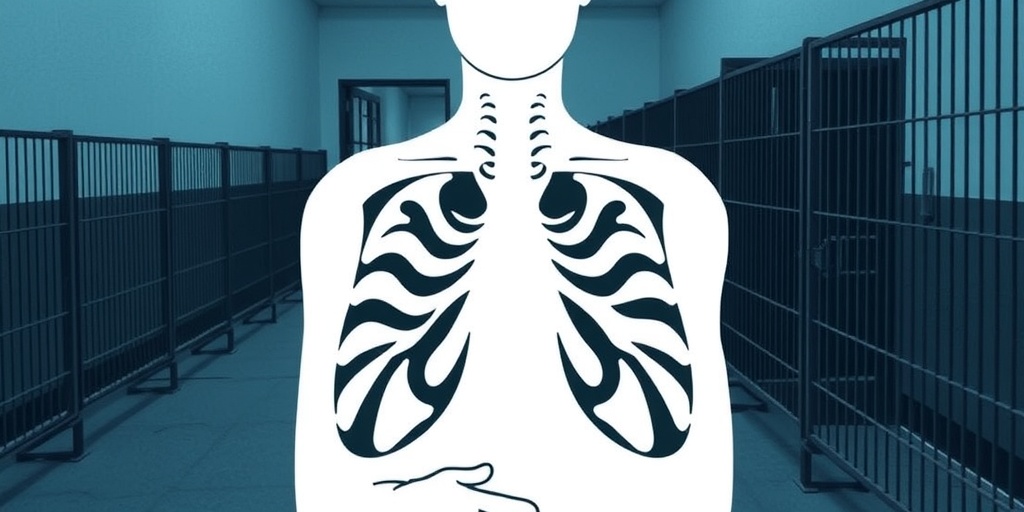
Many Tuberculosis Cases Went Unreported in Prisons in the Americas and Europe During the COVID-19 Pandemic
A new comprehensive study undertaken by esteemed researchers from Boston University School of Public Health (BUSPH) in collaboration with the London School of Hygiene and Tropical Medicine (LSHTM) has unveiled alarming statistics about tuberculosis (TB) diagnoses in incarcerated populations during the COVID-19 pandemic. The research illustrates that numerous TB cases went undetected in prisons across Europe and the Americas, leaving concerns for public health in the wake of existing health disparities. Previously, it had been established that individuals in carceral settings are at a heightened risk of developing tuberculosis, with prior estimates suggesting the risk could be tenfold compared to the general population.
Throughout the pandemic, reported cases of TB among incarcerated individuals were significantly lower than expected. The study reveals a dramatic decline, with TB diagnoses plummeting by nearly 100% in regions such as Central and North America during 2021, and a staggering 87% drop in Western Europe in 2022. This trend was notably different from disease patterns observed in the general population, where TB detection rebounded after an early pandemic lull, emphasizing a worrying gap in the ability to diagnose TB in prison environments.
Despite consistent incarceration rates from 2020 to 2022, reflected data indicate that the dip in reported TB cases likely results from a multitude of external factors rather than changes in the inmate population. The researchers highlighted a substantial reduction in testing capacity and diagnostic functionalities within prison systems, as the COVID-19 pandemic imposed unprecedented challenges on healthcare infrastructure globally.
Undetected and untreated tuberculosis poses a severe public health risk, as it can lead to increased transmission rates among incarcerated individuals as well as around communities when they re-enter society. With over 11 million people incarcerated worldwide each year, the implications of missed TB screening rates are dire. Incarcerated populations are particularly vulnerable, making it essential to focus on TB screening as part of a broader public health initiative.
Lead researcher Amy Zheng, a PhD candidate at BUSPH, emphasized that the inability to detect TB cases among high-risk populations increases the likelihood of spreading the disease both within prison walls and to the larger community post-release. The disheartening trends observed during the pandemic suggest systemic healthcare inequities have deepened, demonstrating a need for increased investment in healthcare accessibility for imprisoned individuals.
The resurgence of tuberculosis underscores a significant public health crisis. After a temporary decline in its global prominence, TB returned to being the deadliest infectious disease worldwide in 2023, claiming approximately 1.25 million lives. This bacterial infection, often residing in the lungs, is treatable but can lead to a grim death rate of nearly 50% without appropriate care. Although the United States currently boasts one of the lowest TB rates globally, rising TB statistics internationally pose a looming threat of increased cases domestically.
This innovative study stands as the first of its kind to analyze the impact of the COVID-19 pandemic on TB detection rates within various penal systems across multiple countries. Researchers utilized a data-driven approach to assess trends in surveillance data, leveraging international TB reporting statistics to provide a clearer picture of how such a critical health issue correlated with the incarceration rates between 2010 and 2022.
The researchers anticipated that incarceration rates would diminish early on due to pandemic-related decarceration efforts, particularly aimed at preventing COVID-19 outbreaks in closed environments. To their surprise, findings indicated that incarceration levels remained steady or even increased in certain nations throughout the pandemic, leading to crucial insights regarding ongoing challenges in TB surveillance.
Countries with the most significant discrepancies in observed versus expected TB diagnoses included Slovakia, El Salvador, and Ukraine, among others. Such statistics underscore a pressing need for renewed efforts in tuberculosis detection, diagnosis, and management, especially as the pandemic’s ripple effects continue to be felt.
This situation has raised eyebrows among health advocates and global health organizations, particularly given recent funding cuts to the U.S. Agency for International Development (USAID), which historically provided vast financial support for addressing TB globally. With already strained resources, the cutting of funds is expected to exacerbate the risk of undetected TB cases, drastically hindering progress made over the past decades to combat this infectious disease.
Dr. Leonardo Martinez from BUSPH, one of the senior authors of the study, articulated that recent federal cuts to USAID have already negatively impacted TB control measures globally. It is paramount for health policymakers to prioritize screening and treatment initiatives in carceral systems, where the risk of TB spreads rapidly and disproportionately, jeopardizing public health at large.
As global health objectives shift in light of funding disruptions, achieving the ambitious goal to end TB by 2030 may no longer remain viable. The urgency for a collaborative global response in addressing these funding shortages cannot be overstated, with the potential for new funding mechanisms being essential for reaching those targets.
The cumulative findings from this study reflect the complex interplay between health system resilience, infectious disease control, and socio-political dynamics, illustrating the need for urgent action and reevaluation in strategies aimed at overcoming the pernicious challenge that tuberculosis continues to pose, particularly in vulnerable populations.
This study serves as a reminder that the fight against tuberculosis cannot be overlooked, especially within the context of imprisoned populations. The urgency to diagnose and provide appropriate healthcare must take center stage, as failing to do so harbors consequences not only for incarcerated individuals but for society as a whole. As health advocates galvanize in response to these findings, a renewed commitment to addressing healthcare disparities becomes imperative for the future health of populations worldwide.
Subject of Research: People
Article Title: Changes in incarceration and tuberculosis notifications from prisons during the COVID-19 pandemic in Europe and the Americas: a time-series analysis of national surveillance data
News Publication Date: March 31, 2025
Web References: N/A
References: N/A
Image Credits: N/A
Keywords: Tuberculosis, Public health, COVID-19, Infectious disease transmission, Healthcare disparities, Prisons, Disease detection, Population health, Global health initiatives, Viral diseases, Bacterial infections, Epidemiology


