

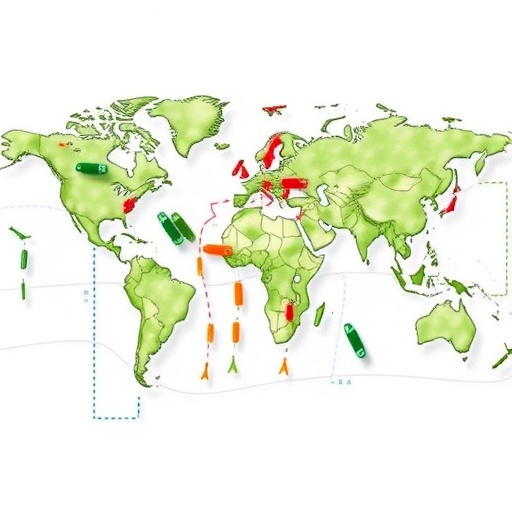
Microplastics have emerged as a significant environmental threat, warranting urgent examination and understanding of their behavior and impact across various ecosystems. The recent study conducted by Feng, Ye, Xiang, and their colleagues provides a comprehensive look at the factors influencing the migration and distribution of these microscopic pollutants.
As plastic waste continues to proliferate globally, the significance of such studies cannot be overstated. The investigation highlights how microplastics can be transported through terrestrial and aquatic environments, ultimately affecting wildlife and potentially entering human food chains. This research critically analyzes the mechanisms by which microplastics disperse in various ecosystems, revealing the complex interactions between physical, chemical, and biological factors.
At the heart of this research lies the understanding that microplastics do not just exist in isolation but are influenced by broader environmental conditions. The researchers explored how factors such as water flow, sediment transport, and atmospheric conditions contribute to the dispersion patterns of microplastics. These elements help shape how these particles distribute across landscapes and waterways, affecting their prevalence in different environments.
The study also emphasizes the role of human activities in exacerbating microplastic pollution. Urban runoff, industrial discharge, and improper waste management are significant contributors to the accumulation of microplastics in natural habitats. The researchers call attention to the fact that these human-induced factors often interact with natural processes, further complicating the distribution of microplastics.
Climate change is another critical factor discussed in the research. As temperatures rise and weather patterns shift, the dynamics of microplastic migration may evolve too. Increased storm intensity, flooding, and changing ocean currents can lead to new patterns of pollution transport, challenging existing models that predict microplastic distribution in stable conditions.
Moreover, the study delves into the role of microplastics’ physical characteristics, such as size, shape, and buoyancy. These inherent properties dictate how microplastics interact with environmental matrices. For instance, smaller particles might remain suspended in the air or water longer than larger ones, increasing their chances of being carried over vast distances. Thus, the physical makeup of microplastics is intrinsically linked to their migration behavior, leading to variable impacts depending on the environment in which they are found.
In terms of ecological impact, the research indicates that microplastics can serve as vectors for toxic substances. For example, pollutants absorbed onto microplastic surfaces can bioaccumulate in the food web, posing risks to aquatic life and, potentially, human health. This interaction between microplastics and harmful chemicals raises alarms regarding the safety of seafood and the health of marine ecosystems.
The scientists also addressed the accumulation of microplastics in soils. Agricultural runoff, urban litter, and composting of plastic-laden organic waste contribute to the infiltration of microplastics into terrestrial systems. This contamination has implications for soil health and crop productivity, highlighting the need for integrating microplastics management within broader environmental policies.
Engaging with local communities is another essential aspect of addressing microplastic pollution. The research advocates for citizen science initiatives that can help track and monitor microplastic levels in local environments. This approach harnesses the power of community involvement, raising awareness and fostering a collective responsibility towards mitigating the microplastic crisis. Empowering individuals to participate in this monitoring effort can lead to more extensive data collection and inform better policymaking.
Legislative measures are crucial in combating microplastics. Policies aimed at reducing plastic production, promoting recycling, and banning single-use plastics can significantly curb the influx of new microplastics into the environment. The study underscores the urgent need for governments to implement regulations that address both prevention and remediation strategies effectively.
As the world grapples with the microplastic menace, collaboration across disciplines is vital. Integrated approaches that bring together environmental scientists, policymakers, industry stakeholders, and community organizations are integral to devising effective solutions. This collaborative effort would enhance understanding and drive innovative strategies to address the challenges posed by microplastics.
Looking ahead, the researchers emphasize the importance of continuous monitoring and future studies to adapt to evolving environmental conditions. As new data emerge regarding the behavior of microplastics under different scenarios, it will be critical to refine existing models to ensure accurate assessments and holistic strategies against pollution.
In conclusion, the investigation led by Feng, Ye, Xiang, and their colleagues presents a pivotal contribution to understanding microplastic dynamics. Their findings underscore the urgent need for a multifaceted approach to tackle microplastic pollution, integrating scientific research, community involvement, policy initiatives, and global cooperation. Only through concerted action can we hope to mitigate the impacts of microplastics on our planet and secure a healthier future for all.
Subject of Research: Factors influencing the migration and distribution of microplastics in the environment.
Article Title: Factors influencing the migration and distribution of microplastics in the environment.
Article References:
Feng, F., Ye, W., Xiang, S. et al. Factors influencing the migration and distribution of microplastics in the environment.
Front. Environ. Sci. Eng. 19, 142 (2025). https://doi.org/10.1007/s11783-025-2062-z
Image Credits: AI Generated
DOI:
Keywords: Microplastics, Environmental Science, Pollution, Ecosystems, Climate Change, Human Impact.


