


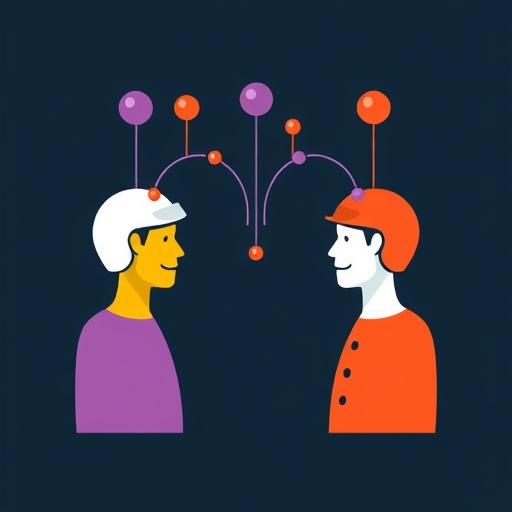
Deliberation, commonly associated with ‘system 2’ thinking in the realm of cognitive psychology, offers a reflective and analytical approach in contrast to the more instinctive and automatic ‘system 1′ processes. While dual-process models, which provide a framework for understanding human reasoning, have gained traction in psychological and decision-making literature, the delineation of deliberation as a distinct cognitive function has not been thoroughly examined. In an insightful approach, the framework proposed by psychologist Wim De Neys provides a comprehensive exploration of deliberation’s multifaceted role in reasoning and decision-making processes.
At the core of De Neys’ perspective is the assertion that deliberation encompasses several crucial functions rather than serving a singular purpose. This nuanced understanding challenges prevailing notions that overly simplify the cognitive mechanisms at play when individuals engage in reflective thought. Instead of viewing deliberation merely as a checkpoint for final decision-making, the proposed framework posits that it plays a dynamic part in shaping responses throughout the entire cognitive process.
One of the primary functions highlighted in this framework is response control. This aspect of deliberation emphasizes the regulation and inhibition of impulsive reactions that often arise from the fast, heuristic-driven processes of system 1. In scenarios where quick thinking may lead to biases or errors, response control allows individuals to pause, reconsider, and intentionally shape their responses. This function, when effectively engaged, serves as a buffer against cognitive pitfalls and enhances the overall quality of judgments made.
Closely related to response control is response generation, which involves the active formulation of ideas and potential solutions. Deliberation facilitates a creative and expansive thinking process where individuals can explore various possibilities before arriving at a conclusion. This function is not merely about assessing options; it encourages the development of innovative responses that may not have surfaced during automatic thinking. Thus, it propels individuals towards a more informed and nuanced understanding of issues at hand.
Deliberation also encompasses response justification, which serves as a critical evaluative phase within cognitive processes. Once a response has been generated, individuals often seek to rationalize their choices and assess the legitimacy of their reasoning. This function is pivotal not only for personal satisfaction but also for the communicative aspect of decision-making, as individuals may need to explain their choices to others. The ability to justify responses effectively adds a layer of accountability to decisions and enhances the robustness of reasoning in interpersonal contexts.
Regulation, the fourth function identified in this framework, refers to the ongoing monitoring and adjustment of one’s cognitive processes throughout deliberation. This constant oversight allows individuals to gauge the effectiveness of their reasoning strategies, enabling them to recognize when a shift in approach might be necessary. Effective regulation ensures that the deliberative process is flexible and responsive to changing circumstances or new information, promoting adaptability in decision-making.
Despite the clarity offered by these delineated functions, the theoretical landscape surrounding deliberation remains fraught with challenges. Current models often struggle to integrate these functions seamlessly into their frameworks. Additionally, misconceptions persist about the nature of deliberation as solely an analytical tool, overlooking its creative and justificatory aspects. De Neys’ call for a more nuanced understanding is urgent; as decision-making becomes increasingly complex, the need for robust deliberative processes cannot be overstated.
Furthermore, the implications of this framework extend beyond theoretical discussions. In applied settings, such as education, law, and organizational decision-making, recognizing the multifaceted nature of deliberation could lead to the development of training programs aimed at enhancing deliberative skills. By fostering an environment that values all functions of deliberation, these fields could witness improvements in critical thinking, creativity, and collaboration.
De Neys provides guiding principles that highlight key aspects of effective deliberation, emphasizing the importance of fostering environments conducive to these processes. Encouraging reflective thinking, valuing diverse perspectives, and providing structured reasoning tasks are vital components of nurturing effective deliberation. Research in this area can inform the design of interventions and educational curricula aimed at enhancing deliberative practices across various contexts.
Outstanding questions related to deliberation remain, paving the way for future research that could catalyze a paradigm shift in the understanding of decision-making. There is a pressing need to investigate the interplay between automatic and deliberative processes under varied contexts, considering different demographic factors such as age, educational background, and cultural influences. Exploring these avenues will further enrich the theoretical landscape, contributing to a deeper comprehension of how individuals engage with complex decision-making scenarios.
Ultimately, the framework proposed by De Neys stands as a pivotal step toward bridging the gap between theoretical explorations of deliberation and practical applications in everyday life. By redefining deliberation as an intricate cognitive function with multiple roles, this perspective promises to inform future inquiries, inspire new educational methodologies, and foster better decision-making in diverse environments.
As society continues to grapple with increasingly complex issues, cultivating effective deliberation skills becomes crucial. The frameworks laid out in De Neys’ work provide a roadmap for this endeavor, allowing scholars, educators, and practitioners to rethink their approaches to reasoning and decision-making. Embracing these complexities ultimately holds the potential to enhance both individual and collective cognitive capacities, positioning deliberation as a fundamental skill for navigating the challenges of a rapidly evolving world.
In conclusion, the renewed emphasis on deliberation as a multifaceted component of human reasoning marks a significant advancement in the field of cognitive psychology. Open questions about its application and impact are ripe for exploration, lending a sense of urgency to the discussion. As deliberation continues to evolve within dual-process models of reasoning, it is clear that recognizing and cultivating its diverse functions will be vital for our understanding of decision-making processes in an increasingly intricate world.
De Neys, W. Defining deliberation for dual-process models of reasoning.
Nat Rev Psychol 4, 544–552 (2025). https://doi.org/10.1038/s44159-025-00466-6
Cite Scienmag News
Glenn Wilkins. (October 14, 2025). Understanding Deliberation in Two-Process Reasoning Models. Scienmag. https://scienmag.com/understanding-deliberation-in-two-process-reasoning-models/
Glenn Wilkins. "Understanding Deliberation in Two-Process Reasoning Models." Scienmag, 14 October 2025, https://scienmag.com/understanding-deliberation-in-two-process-reasoning-models/. Accessed 5 September 2026.
Glenn Wilkins. "Understanding Deliberation in Two-Process Reasoning Models." Scienmag. October 14, 2025. https://scienmag.com/understanding-deliberation-in-two-process-reasoning-models/


