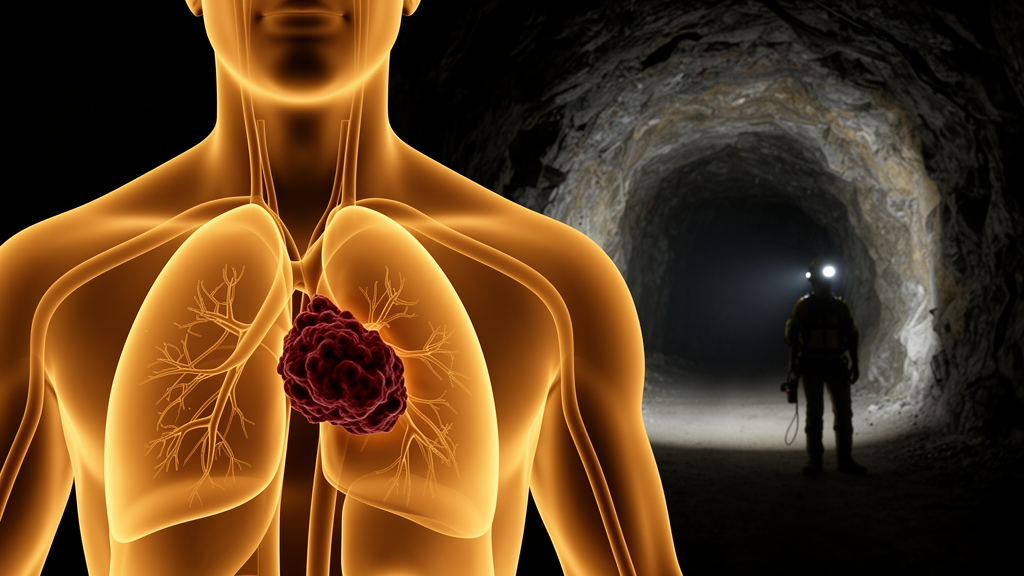
Pulmonary embolism, one of the most dangerous forms of venous thromboembolism, has always been understood through the lens of ground-level medicine: emergency departments, D-dimer tests, CT pulmonary angiography, anticoagulation and, for selected high-risk patients, reperfusion therapy. A new review published in Frontiers in Public Health argues that this well-established toolkit may not translate cleanly to a setting it was never designed for—deep underground workplaces such as mines, tunnel construction sites and subterranean research facilities. Crucially, the authors do not claim that working underground raises pulmonary embolism risk. Instead, they build a hypothesis-driven framework asking whether the underground environment could modify how thrombosis develops, how symptoms are interpreted and how conventional diagnostic pathways perform.
The review, led by researchers at West China Hospital of Sichuan University together with collaborators from Heilongjiang University of Chinese Medicine and Dalian Medical University, is explicit about the state of the evidence. Reliable estimates of venous thromboembolism or pulmonary embolism incidence among deep-underground workers simply do not exist. Although occupational studies of miners have extensively covered respiratory disease, carcinogenic exposures, injury and fatigue, the authors identified no robust cohort data providing incidence or prevalence estimates of these clotting disorders specifically among underground miners, tunnel workers or comparable populations. The absence of such data, they stress, is not evidence of increased risk—it is a central knowledge gap that their framework is intended to define.
What makes the underground setting physiologically interesting is not any single factor but the cumulative interaction of multiple moderate stressors. Deep underground environments combine relative hypoxia or oxygen fluctuation, normobaric to mildly hyperbaric pressure, high humidity and heat, airborne particulates, radon accumulation, restricted ventilation, limited mobility, circadian disruption and enclosed psychosocial stress. The authors emphasize that these settings are not necessarily continuously hypoxic; oxygen concentration may remain close to ground-level values when ventilation is adequate. The relevant question, they argue, is not whether the environment can be labeled hypoxic, but whether oxygen availability and oxygen sensing are disturbed enough to trigger compensatory responses.
The framework organizes these exposures around what the authors call a hypoxia–hemodynamic axis. The pulmonary circulation is particularly sensitive to oxygen availability: hypoxia can raise pulmonary vascular tone through hypoxic pulmonary vasoconstriction and hypoxia-inducible factor signaling. While regional vasoconstriction can help match ventilation to perfusion in the short term, sustained or widespread hypoxic exposure may increase pulmonary vascular resistance, elevate pulmonary arterial pressure and contribute to vascular remodeling and pulmonary hypertension. Experimental large-animal studies further suggest that hypoxia-induced pulmonary hypertension can impose pressure overload on the right ventricle, initiating compensatory remodeling that includes myocardial hypertrophy, inflammatory cell activation and extracellular matrix changes.
Alongside this, the review traces how the body’s compensations can become counterproductive. Relative hypoxia activates peripheral chemoreceptors, driving hyperventilation and tachycardia; the HIF–EPO pathway may stimulate erythropoiesis and raise hemoglobin concentration. But excessive erythrocytosis or hemoconcentration can increase blood viscosity, reduce cardiac output and impair microcirculatory perfusion—a state in which oxygen-carrying capacity rises while delivery efficiency falls. Heat and humidity add ventilatory burden and fluid loss, promoting dehydration and hemoconcentration, while particulates, radon, fatigue and psychosocial stress may intensify inflammatory and sympathetic activation. The result, the authors hypothesize, is a high-compensation, low-efficiency physiological state in susceptible workers.
Indirect evidence from analogous extreme environments supports the plausibility of these pathways without proving them underground. High-altitude and hyperbaric studies show sustained autonomic regulatory demand, with reduced heart rate variability and incomplete return to baseline. Hyperbaric chamber experiments using photoplethysmographic waveform decomposition suggest that increased pressure is associated with peripheral vasoconstriction and raised vascular resistance. Spaceflight and simulated microgravity research indicates that confinement, isolation and psychological stress can disturb autonomic regulation. Notably, the authors cite a counterexample: in the 40-day Deep Time cavern-isolation experiment, participants who maintained regular physical activity showed no detectable structural changes in major organs and vessels on ultrasound. Confinement alone, they conclude, is insufficient to support a generalized adverse-effect hypothesis; any thrombotic effect would more plausibly depend on the combination of restricted mobility, oxygen disturbance, thermal strain, dehydration and host susceptibility.
The mechanistic core of the framework is a remodeling of Virchow’s triad—the classic triad of venous stasis, endothelial activation and hypercoagulability—under compound exposure. Prolonged fixed posture, restricted locomotion, reduced calf muscle-pump activity and heat-related dehydration may jointly impair venous return. Hypoxia may directly shift the coagulation–fibrinolysis balance: experimental and mechanistic studies suggest hypoxia increases plasminogen activator inhibitor-1 expression, inhibiting fibrinolysis, while enhancing tissue factor-mediated coagulation and downregulating anticoagulant factors such as tissue factor pathway inhibitor and protein S. Supporting evidence includes anucleate human platelets translating and stabilizing HIF-2α under hypoxia with subsequent PAI-1 synthesis, accelerated thrombosis in hypoxia-mimetic-treated mice, elevated platelet HIF-2α and PAI-1 in chronic obstructive pulmonary disease patients and high-altitude residents, and transcriptomic enrichment of hypoxia, coagulation and platelet activation pathways in high-altitude deep vein thrombosis. Once thrombosis develops, local hypoxia within the thrombotic microenvironment may sustain HIF activation, creating a potential hypoxia–inflammation–thrombosis loop.
The framework also raises practical questions about recognition and management. Symptoms of pulmonary embolism—dyspnea, chest tightness, tachycardia, fatigue, reduced exercise tolerance, dizziness—overlap heavily with the physiological effects of heat stress, hypoxia adaptation, dehydration and work-related exhaustion, creating what the authors call background symptom noise. Conventional prediction tools such as the Wells and Geneva scores remain the appropriate starting point, and there is currently no evidence that they perform worse underground, because their discrimination and calibration have simply never been evaluated in this setting. The open question is whether exposure-related variables—oxygen availability, temperature, humidity, hydration status, posture duration, activity level, hemoconcentration, inflammatory markers—add incremental predictive value beyond established clinical factors. On treatment, the review is deliberately conservative: no trial has evaluated thrombolysis for pulmonary embolism underground, treatment eligibility should rest on established hemodynamic and bleeding-risk criteria, and underground exposure alone should not lower the threshold for systemic thrombolysis in stable patients.
Prevention recommendations are similarly restrained. General occupational measures—adequate hydration, opportunities for regular movement, periodic interruption of prolonged fixed posture, ergonomic modification of constrained positions—may plausibly reduce dehydration and venous stasis, but their effectiveness against venous thromboembolism in underground workers has not been directly established. Routine medical mechanical prophylaxis with intermittent pneumatic compression or venous pump devices cannot currently be recommended solely on the basis of occupational exposure, and routine lower-limb venous ultrasound screening remains a candidate research strategy rather than a standard occupational recommendation. Likewise, questions about whether hypoxia, inflammation or dehydration alter anticoagulant exposure or bleeding risk are flagged for prospective pharmacokinetic study, not for exposure-based dose adjustment in practice.
The review closes with a staged research pathway. First, prospective, exposure-characterized cohorts of underground workers should record environmental parameters—oxygen availability, temperature, humidity, pressure, particulate exposure, cumulative underground hours—alongside clinically meaningful outcomes including incident deep vein thrombosis, confirmed pulmonary embolism, hospitalization, bleeding and mortality. Only if specific exposure patterns associate with thrombotic outcomes should candidate markers be evaluated for incremental value, and only thereafter should dynamic warning models be developed and externally validated, with priority given to calibration, interpretability, false-alarm burden and operational feasibility. The authors acknowledge substantial implementation hurdles: deep tunnels may limit wireless communication, battery life and sensor durability suffer under heat, dust and vibration, and nonspecific physiological signals could generate alarm fatigue. Until the epidemiological groundwork is done, the deep-underground prothrombotic tendency remains exactly what the authors call it—a testable hypothesis, not an established occupational hazard.
Subject of Research: A hypothesis-driven framework linking deep-underground occupational exposures to pulmonary embolism risk, symptom recognition and prevention research
Article Title: From hypoxia to thrombosis: a hypothesis-driven framework for pulmonary embolism risk in deep underground environments
Article References: Mingjing, Y., Yuxi, H., Wenbo, H., Mingyuan, D., Xiangnan, H., Haixia, Z., & Shuang, Z. (2026). From hypoxia to thrombosis: a hypothesis-driven framework for pulmonary embolism risk in deep underground environments. Frontiers in Public Health, 14, Article 1908653. https://doi.org/10.3389/fpubh.2026.1908653
Image Credits: AI Generated
DOI: 10.3389/fpubh.2026.1908653
Keywords: pulmonary embolism, venous thromboembolism, deep underground environments, hypoxia, occupational health, Virchow's triad, coagulation, hypoxia-inducible factor, miners, tunnel workers, risk prediction, dehydration
Cite Scienmag News
Ophelia Keating. (October 28, 2026). Underground work and pulmonary embolism: a hypothesis-driven framework emerges. Scienmag. https://scienmag.com/underground-work-and-pulmonary-embolism-a-hypothesis-driven-framework-emerges/
Ophelia Keating. "Underground work and pulmonary embolism: a hypothesis-driven framework emerges." Scienmag, 28 October 2026, https://scienmag.com/underground-work-and-pulmonary-embolism-a-hypothesis-driven-framework-emerges/. Accessed 29 October 2026.
Ophelia Keating. "Underground work and pulmonary embolism: a hypothesis-driven framework emerges." Scienmag. October 28, 2026. https://scienmag.com/underground-work-and-pulmonary-embolism-a-hypothesis-driven-framework-emerges/