

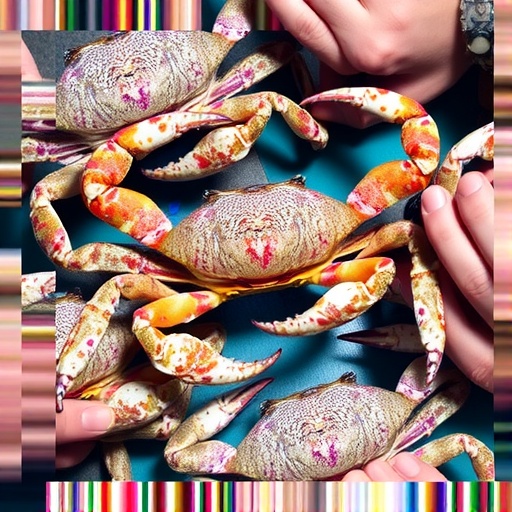
In recent years, the Caribbean King Crab, scientifically known as Maguimithrax spinosissimus, has garnered considerable attention due to its striking ecological importance and its potential contributions to coral reef systems. A groundbreaking study undertaken by researchers, including Whitaker-Allen, Peres, and Butler, delves into the origins of quarry populations of this species, which were previously overlooked in terms of their influence on marine ecosystems. The implications of this research are essential for understanding how these crabs can play a pivotal role in coral reef recovery efforts, particularly in the Florida Keys.
The study’s primary aim was to trace the genetic lineage and distribution of the Caribbean King Crab populations found in quarry environments. Quarry populations are often subjected to distinct environmental conditions, which can significantly influence their genetic makeup and adaptive traits. By investigating these populations, the researchers sought to provide insights that could be used to bolster conservation strategies for coral reefs that are struggling under the pressures of climate change, overfishing, and habitat degradation.
One of the fascinating aspects of this research is how the Caribbean King Crab interacts with its environment. These crabs are known as opportunistic feeders and play an essential role in the benthic community, contributing to ecological balance. They help control algal populations and provide a food source for various predators, thus establishing a vital link in the marine food web. By understanding their population structure and movements, scientists can better gauge their impact on coral reef health.
Utilizing advanced genetic methods and ecological modelling, the research team examined how quarry populations differ from those residing in natural habitats. The genetic analyses revealed substantial variations that were previously understated. It was found that quarry-dwelling crabs exhibit unique adaptations that may allow them to thrive in stressed environments, such as those altered by human activities. This genetic variation not only provides critical insights into adaptability but also offers a potential reservoir for future crab populations on the reefs.
Moreover, the researchers emphasized the importance of collaboration between scientists, policymakers, and local communities in conservation efforts. Engaging local fishermen and stakeholders in the protection of these ecosystems is vital, as their traditional knowledge can complement scientific findings. Through a mutual understanding of the challenges faced by coral reefs and the species that inhabit them, more effective management strategies can be implemented.
The potential role of the Caribbean King Crab in restoring coral reefs is not merely theoretical. The study outlines practical recommendations for integrating these crabs into restoration programs. By leveraging their ecological roles, particularly in nutrient cycling and predation, the crabs could facilitate the recovery of degraded coral areas. This finding opens up a pathway for innovative approaches in rehabilitation efforts that incorporate natural processes.
As the study progresses into implementation phases, challenges will need to be addressed. The researchers stress the necessity of longitudinal studies that can monitor the effects of these initiatives over time. Understanding the long-term impacts will provide valuable feedback that can be used to refine rehabilitation strategies further and ensure the sustainability of these efforts.
In a broader context, the study also raises questions about the influence of climate change on the distribution and viability of Caribbean King Crab populations. As temperatures rise and oceanic conditions shift, the dynamics between species and their habitats may also evolve. This necessitates ongoing research to predict how these changes will affect community structures on coral reefs.
Awareness campaigns are essential in disseminating the findings of the research to the general public. Encouraging community involvement and understanding of the significance of the Caribbean King Crab can foster local stewardship and activism. The future of coral reefs may depend on how well these communities engage with their marine environments and advocate for conservation.
The research project received significant funding and support, which highlights the growing recognition of marine conservation as a global priority. As more scientific studies emerge focusing on the interconnectedness of different marine species, it becomes increasingly clear that comprehensive ecological approaches will be necessary. This study paves the way for further research that examines additional species and their roles within coral ecosystems.
As the findings are shared within the scientific community and beyond, opportunities for interdisciplinary collaboration will arise. Such partnerships can enhance the depth of understanding of marine ecosystems, leading to more innovative conservation strategies. In conclusion, the research on the Caribbean King Crab and its implications for coral reef recovery efforts represents a crucial milestone in marine science, offering hope for the future of these vibrant ecosystems.
Indeed, the collaborative and innovative spirit of this research embodies the essence of modern conservation efforts. With continued dedication and exploration into such ecological relationships, the future may hold promising advancements in restoring our marine environments, ensuring they thrive for generations to come. The compelling evidence uncovered regarding the Caribbean King Crab serves not just as a scientific conclusion but as a clarion call for sustainable marine practices and policies.
Promoting awareness about the importance of every species, including the Caribbean King Crab, encourages a more profound appreciation for marine biodiversity. The interconnected web of life within coral reefs requires attentive research and action, as each species plays a role in maintaining the delicate balance of these complex ecosystems. As discussions expand within the ecological community, the significance of this research will undoubtedly inspire more projects aimed at unraveling the mysteries of our oceans.
With the rapid pace of change facing marine environments, the study serves as a crucial reminder that proactive measures are necessary to safeguard our oceans. By recognizing the strength and resilience of species like the Caribbean King Crab, researchers and conservationists can draw inspiration and knowledge that propel initiatives to protect and restore coral reefs globally. This research heralds a new era in marine science, underlining the urgent need to revisit and reassess our relationship with the ocean, ensuring that future generations inherit vibrant and healthy marine ecosystems.
Subject of Research: The origins of quarry populations of the Caribbean King Crab (Maguimithrax spinosissimus) and their role in coral reef recovery efforts.
Article Title: Investigating the origins of quarry populations of the Caribbean King Crab (Maguimithrax spinosissimus) to inform coral reef recovery efforts in the Florida Keys, Florida (USA).
Article References: Whitaker-Allen, N.A., Peres, P.A., Butler, M.J. et al. Investigating the origins of quarry populations of the Caribbean King Crab (Maguimithrax spinosissimus) to inform coral reef recovery efforts in the Florida Keys, Florida (USA). Coral Reefs (2026). https://doi.org/10.1007/s00338-025-02806-7
Image Credits: AI Generated
DOI: https://doi.org/10.1007/s00338-025-02806-7
Keywords: Caribbean King Crab, Maguimithrax spinosissimus, coral reef recovery, ecological balance, genetic analysis.


