


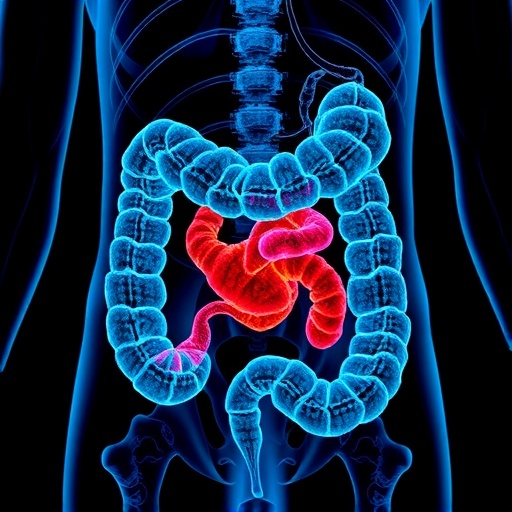
In the intricate battlefield of colorectal cancer (CRC), a revelation at the crossroads of tumor biology and immunology is rewriting how we understand cancer progression. Long considered a disease primarily fueled by mutating tumor cells, CRC’s interaction with its immune surroundings—the tumor microenvironment—has emerged as a decisive factor dictating disease outcome. A groundbreaking study from Tianjin Medical University Cancer Institute & Hospital and collaborators has uncovered a pivotal molecular player, migration and invasion inhibitory protein (MIIP), that not only suppresses tumor growth but also orchestrates immune cell behavior to curb cancer progression.
For decades, the focus in CRC has centered on genetic mutations and signaling aberrations within tumor cells themselves. However, the dense network of immune populations surrounding these malignant cells profoundly influences whether a tumor grows aggressively or succumbs to immune control. Among these immune actors, macrophages—a versatile type of white blood cell—play a dichotomous role. When polarized into the M1 phenotype, macrophages attack tumor cells and promote inflammatory responses. Conversely, the M2-polarized macrophages foster tissue repair but, regrettably, also create an immunosuppressive niche that supports tumor growth, invasion, and metastasis. Understanding what switches macrophages into this tumor-supportive M2 state is crucial for innovative immunotherapies.
The recent research sheds light on MIIP as a master regulator restraining macrophages from adopting the pro-tumor M2 phenotype. Their comprehensive approach combined transcriptomic analyses of large public colorectal cancer datasets, mechanistic studies in cell cultures, and validation in animal models. Intriguingly, they revealed a suppressive loop where loss of MIIP triggers cytoplasmic DNA stress, setting off the stimulator of interferon genes (STING) pathway—a critical innate immune sensor of aberrant DNA. Activation of STING physiologically orchestrates immune responses against pathogens and damaged cells. Yet, in the tumor context, chronic STING activation fuels a detrimental cascade involving the non-canonical NFκB2 signaling pathway, culminating in increased secretion of IL-10, an immunosuppressive cytokine that tilts macrophages towards the M2 phenotype.
This molecular interplay between MIIP repression, STING activation, NFκB2 signaling, and IL-10 production establishes a feedback loop wherein colorectal cancer cells effectively co-opt macrophages to become their unwitting allies. Experimental reduction of MIIP in cancer cell lines induced STING pathway upregulation, elevated NFκB2-driven IL-10 secretion, and resulted in pronounced M2 macrophage polarization when these cells were co-cultured. Macrophages conditioned in this microenvironment exhibited gene expression profiles and surface markers characteristic of M2-type cells, known to facilitate tumor invasion and metastasis.
Crucially, the study provided compelling in vivo evidence using murine models of colorectal cancer. Tumors engineered to express high MIIP levels showed slower growth rates, markedly fewer liver metastases, and reduced infiltration by M2 macrophages compared to MIIP-deficient counterparts. Pharmacological blockade of STING reversed these effects, reinforcing the therapeutic potential of targeting this axis. Analyses of clinical CRC samples corroborated the inverse relationship between MIIP expression and STING activity, IL-10 levels, and the abundance of M2 macrophages, making MIIP a promising biomarker predicting tumor immune landscape and patient prognosis.
The revelations brought forth challenge the traditional view of MIIP solely as a cell-intrinsic tumor suppressor. Instead, MIIP emerges as a critical regulator of tumor-immune crosstalk, dictating whether the microenvironment fosters immune destruction or immune evasion of cancer cells. By modulating macrophage polarization, MIIP influences not only tumor growth but also metastatic potential and immune resistance, phenomena that have long frustrated clinicians and researchers alike.
This study’s deeper insight into the STING-NFκB2-IL10 signaling axis illuminates a novel immune regulatory mechanism exploited by CRC cells. Unlike classical inflammatory NFκB signaling that promotes anti-tumor immunity, non-canonical NFκB2 activation here culminates in immune suppression via IL-10, enabling a pro-cancer environment. Importantly, the persistent activation of STING signaling by DNA stress in MIIP-deficient tumors contrasts with its canonical role in anti-viral defense, revealing how tumors repurpose innate immune pathways to their advantage.
From a therapeutic standpoint, these findings invigorate interest in modulating the tumor microenvironment by targeting macrophage polarization and STING signaling. Given that most colorectal cancers remain “immune-cold”—lacking robust immune infiltration and resisting checkpoint inhibitors—strategies that disrupt the MIIP-STING axis could reactivate effective anti-tumor immunity. This paradigm shift advocates for combinatorial therapies integrating immune microenvironment reprogramming agents with existing immunotherapies to overcome resistance and reduce metastasis.
Moreover, the study suggests measuring MIIP levels in tumors could stratify patients most likely to benefit from STING-targeted agents or macrophage-modulating drugs. Personalized immunotherapy approaches grounded in tumor microenvironment profiling may thus represent the next frontier in improving CRC patient outcomes. As immune checkpoint inhibitors alone fall short in the majority of CRC cases, such integrative strategies provide renewed hope in transforming treatment landscapes.
Beyond colorectal cancer, the mechanistic insights into MIIP’s role highlight a broad principle of tumor progression control: regulating immune cell behavior within the tumor milieu can be as critical as targeting malignant cells directly. Tumors can exploit immune signaling pathways to evade destruction and fuel metastasis, emphasizing the importance of decoding these complex dialogues for future drug development.
In sum, this pioneering investigation charts new territory at the intersection of chromosomal instability, immune signaling, and tumor progression. By elucidating how MIIP controls macrophage polarization via the STING–NFκB2–IL10 axis, the research not only deepens our understanding of colorectal cancer biology but also opens avenues for innovative precision immunotherapies that reshape the immune landscape to fight cancer more effectively.
Cite Scienmag News
Nathaniel Bowman. (March 16, 2026). Uncovering a Hidden Protein that Rewires Tumor Immunity to Stop Colorectal Cancer Spread. Scienmag. https://scienmag.com/uncovering-a-hidden-protein-that-rewires-tumor-immunity-to-stop-colorectal-cancer-spread/
Nathaniel Bowman. "Uncovering a Hidden Protein that Rewires Tumor Immunity to Stop Colorectal Cancer Spread." Scienmag, 16 March 2026, https://scienmag.com/uncovering-a-hidden-protein-that-rewires-tumor-immunity-to-stop-colorectal-cancer-spread/. Accessed 3 September 2026.
Nathaniel Bowman. "Uncovering a Hidden Protein that Rewires Tumor Immunity to Stop Colorectal Cancer Spread." Scienmag. March 16, 2026. https://scienmag.com/uncovering-a-hidden-protein-that-rewires-tumor-immunity-to-stop-colorectal-cancer-spread/


