


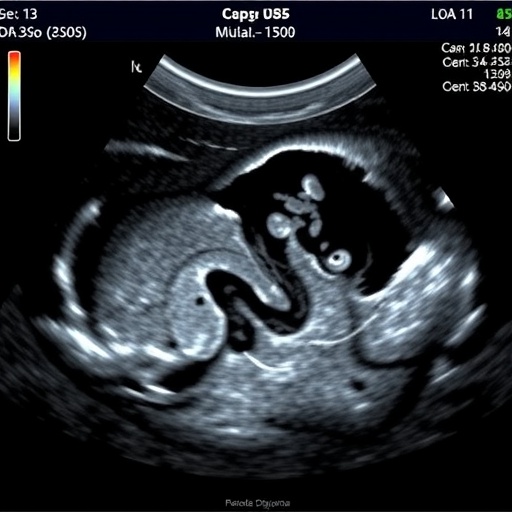
In an era where artificial intelligence has become increasingly integrated into various sectors of healthcare, a recent study has shed light on the innovative use of deep learning architectures for diagnosing gallbladder diseases. Researchers Jayanthi, Kaur, and Lydia have leveraged cutting-edge techniques in their approach, combining the power of squeeze-and-excitation networks with convolutional bidirectional long short-term memory (CBLSTM) to analyze ultrasound images effectively. This groundbreaking study represents a significant advancement in the diagnostic landscape, providing a glimpse into the future of medical imaging and patient care.
Traditional methods of diagnosing gallbladder diseases often entail invasive procedures and extensive manual evaluations of ultrasound images. However, the modern techniques put forth in this study suggest a potential shift towards less invasive and more accurate diagnostic practices. By employing deep learning methodologies, which have proven to be highly effective in image classification tasks, the researchers aimed to create a model that not only diagnoses gallbladder diseases with impressive accuracy but also minimizes the subjectivity involved in human interpretations.
The research utilized an unprecedented dataset of ultrasound images related to gallbladder conditions, meticulously curated to train the proposed machine learning models. This dataset consists of various pathological conditions, including gallstones, cholecystitis, and other gallbladder disorders. By training the model on a diversified dataset, the researchers ensured that their approach could generalize well across different conditions, paving the way for a reliable diagnostic tool that can function in real-world scenarios.
At the heart of this study lies the implementation of the squeeze-and-excitation capsule network, a novel architecture that enhances the model’s capability to focus on crucial features within the ultrasound images. This approach allows the algorithm to emphasize informative parts of the image while suppressing irrelevant background noise, ultimately improving the overall detection accuracy. The use of this architecture indicates a profound shift towards models that not only learn from data quantitatively but also learn to prioritize specific features qualitatively.
Complementing the squeeze-and-excitation network is the convolutional bidirectional long short-term memory (CBLSTM) component. This element introduces a temporal aspect to the analysis, accounting for sequences of ultrasound frames typically required to make a definitive diagnosis. The ability to process sequences not only helps the model retain context over multiple frames but also allows it to learn from the temporal relationships present in gallbladder pathology visualization, enhancing diagnostic performance even further.
The culmination of the training process resulted in a robust model that could outperform traditional ultrasound interpretation methods significantly. Clinical trials conducted with this advanced system demonstrated a remarkable reduction in misdiagnosis rates and increased diagnostic confidence among practitioners. The findings from these trials are critical as they illustrate the tangible benefits of integrating artificial intelligence into routine clinical practice, particularly in a field that has long relied on the precision of human expertise.
Beyond the immediate implications for gallbladder disease diagnosis, this research raises broader questions about the role of artificial intelligence and machine learning in modern medicine. As these technologies advance, they not only augment human capabilities but also propose a future where diagnostic accuracy and efficiency could be significantly improved across multiple medical specialties.
Furthermore, the ethical considerations surrounding the use of AI in healthcare underscore the necessity for comprehensive guidelines and regulations. While the benefits of AI-assisted diagnosis are evident, it is crucial to approach these technologies with caution, ensuring that they are developed and deployed responsibly. Continuous monitoring and validation of AI systems in clinical settings will be necessary to maintain patient safety and build public trust.
The collaborative effort among the study’s authors highlights the importance of interdisciplinary approaches to tackling complex healthcare challenges. Integrating knowledge from computer science, radiology, and clinical practice resulted in a comprehensive framework that addresses various aspects of gallbladder disease diagnosis. This collaborative ethos could serve as a model for future studies seeking to employ technology in addressing medical issues.
As the healthcare sector continues to evolve with technological advancements, studies like this one provide a vital foundation for the potential of AI in diagnostics. In the coming years, it is likely that more institutions will embrace similar methodologies, effectively revolutionizing the way diseases are diagnosed and treated. The potential for improving patient outcomes through faster, more accurate diagnosis is immense.
Ultimately, this innovative research represents a significant step forward in medical imaging and artificial intelligence. By harnessing the power of machine learning, clinicians might soon experience a paradigm shift in how they approach diagnostics—transforming the landscape of gallbladder disease assessment and opening doors to further applications in other medical fields. As more studies emerge, one can envision a future where AI not only complements but also enhances human expertise in the quest for precision medicine.
As we gear towards this promising future, it becomes imperative to continue investing in research and development that bridges the gap between technology and medical science. Encouraging collaborations across disciplines, alongside the ethical considerations of AI deployment, will ensure that the journey towards innovative healthcare solutions remains patient-centric and driven by the goal of improved health outcomes for all.
The trial outcomes from this groundbreaking research not only offer hope for patients suffering from gallbladder conditions but also serve as a beacon for innovation in healthcare. The transition to AI-assisted diagnostics is not merely a technological evolution but a profound cultural shift within medicine. As healthcare professionals increasingly recognize the power of artificial intelligence, the long-term implications for healthcare delivery could be transformative.
With ongoing research and continuous refinement of these advanced diagnostic tools, healthcare may soon look very different than it does today, with a primary focus on precision and personalization powered by artificial intelligence.
Jayanthi, S., Kaur, I., Lydia, E.L. et al. Gallbladder disease diagnosis from ultrasound using squeeze-and-excitation capsule network with convolutional bidirectional long short-term memory.
Sci Rep (2026). https://doi.org/10.1038/s41598-025-32978-9
Cite Scienmag News
Ophelia Keating. (January 4, 2026). Ultrasound Gallbladder Disease Diagnosis Enhanced by AI. Scienmag. https://scienmag.com/ultrasound-gallbladder-disease-diagnosis-enhanced-by-ai/
Ophelia Keating. "Ultrasound Gallbladder Disease Diagnosis Enhanced by AI." Scienmag, 4 January 2026, https://scienmag.com/ultrasound-gallbladder-disease-diagnosis-enhanced-by-ai/. Accessed 5 September 2026.
Ophelia Keating. "Ultrasound Gallbladder Disease Diagnosis Enhanced by AI." Scienmag. January 4, 2026. https://scienmag.com/ultrasound-gallbladder-disease-diagnosis-enhanced-by-ai/


