


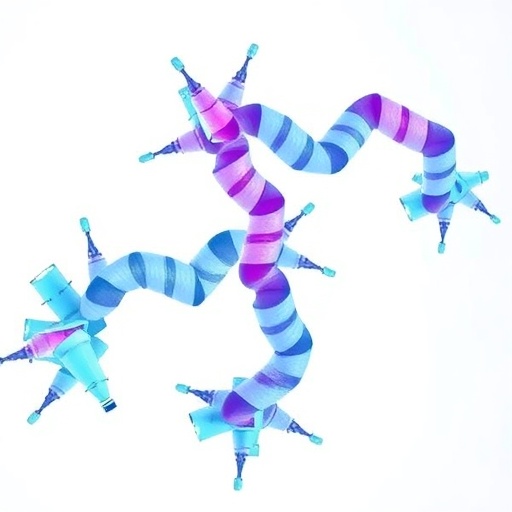
In a groundbreaking advancement poised to redefine the battle against coronaviruses, a team of researchers has unveiled ultrapotent single-domain antibodies capable of neutralizing the SARS coronavirus by targeting a unique and vulnerable region of the viral spike protein. This innovative approach hinges on antibodies that effectively clamp the spike at its base, a strategy that not only stymies the virus’s ability to infect host cells but also surmounts challenges associated with viral mutation-driven escape mechanisms. The implications for this discovery are profound, offering a potential new class of therapeutics tailored for both current and future coronavirus outbreaks.
The SARS coronavirus relies on its spike glycoprotein to bind to host cell receptors, initiating infection. This trimeric spike structure protrudes from the viral envelope and mediates entry by facilitating membrane fusion. Traditional neutralizing antibodies predominantly target the receptor-binding domain (RBD) or N-terminal domain (NTD) exposed on the spike’s surface. However, these domains are highly variable, allowing the virus to evade immune responses through mutation. The newly characterized single-domain antibodies overturn this paradigm by focusing on a conserved locus at the base of the spike, an area hitherto underexploited in neutralization strategies.
Single-domain antibodies, also known as nanobodies, are derived from heavy-chain only antibodies found in camelids. Their small size and unique structural stability enable them to access cryptic epitopes inaccessible to conventional antibodies. The research team has leveraged these properties to engineer antibodies that securely latch onto the spike base, effectively “clamping” it and preventing the large conformational changes required for viral fusion with host membranes. This mechanism not only halts infection but does so with remarkable potency, even at nanomolar concentrations.
Viral evolution often presents a formidable obstacle in therapeutic design due to the high mutation rates of RNA viruses. The spike protein, especially the RBD and NTD, harbors numerous mutations within circulating variants, which can undermine vaccine and antibody efficacy. By contrast, the region at the base of the spike targeted by these single-domain antibodies is markedly more conserved, limiting the viral capacity to mutate without incurring significant fitness costs. This evolutionary constraint makes the ultrapotent antibodies robust candidates for broad-spectrum coronavirus therapeutics.
The study harnesses cutting-edge structural biology techniques including cryo-electron microscopy and X-ray crystallography to pinpoint the precise binding topology of the antibodies on the spike protein. Their detailed maps reveal intricate molecular interactions where the antibodies’ complementarity-determining regions (CDRs) form an almost irreversible engagement with the spike’s helical stalk. This tight binding impedes the spike’s transition from a prefusion to a fusion-active conformation – a critical step in viral entry – thereby neutralizing infectivity at the molecular level.
Beyond structural insights, functional assays involving authentic virus and pseudovirus systems demonstrate remarkable efficacy of the antibodies under in vitro conditions. Notably, the neutralization profiles remain consistent across multiple SARS coronavirus strains, underscoring the antibodies’ broad applicability. Such consistency is unprecedented compared to previously studied antibodies that lose effectiveness as the virus accumulates mutations in the spike’s more variable regions.
The translational potential of these antibodies is equally promising. Their inherent stability and small size facilitate aerosolized delivery, making them prime candidates for inhaled therapeutics targeting the respiratory tract. This mode of administration not only ensures direct deposition at the initial site of infection but may also circumvent issues related to systemic side effects commonly associated with antibody therapies. Moreover, manufacturing scalability is improved due to the simpler structure of nanobodies compared to full-length immunoglobulins.
Preclinical models reveal that prophylactic administration of these antibodies confers potent protection against viral challenge, significantly reducing viral loads in lung tissues and preventing disease progression. Therapeutic administration post-infection also demonstrates efficacy, shortening disease duration and ameliorating symptoms. Such dual functionality enhances their utility as both preventive and treatment modalities in pandemic scenarios.
The implications of this discovery extend well beyond SARS coronavirus. Given the conserved nature of the targeted spike base region across diverse betacoronaviruses, these antibodies might serve as a foundational platform for pan-coronavirus therapeutics. This is especially salient given the ongoing threat of zoonotic coronavirus spillovers and the recurrent emergence of variants that challenge current medical countermeasures.
Despite the breakthrough, challenges remain in translating these findings to widespread clinical use. Humanization of the camelid-derived antibodies to minimize immunogenicity and extensive safety profiling in diverse populations will be critical steps forward. Furthermore, combination therapies incorporating these ultrapotent antibodies alongside vaccines or antiviral agents could offer synergistic benefits, reducing the likelihood of resistance development while maximizing clinical outcomes.
In tandem with therapeutic deployment, these antibodies present intriguing diagnostic potential. Their specificity and high-affinity binding to a conserved spike epitope enable their use as sensitive molecular probes in detecting coronaviruses in clinical samples. This could improve surveillance and early detection efforts, particularly in outbreak hotspots or for emerging novel coronaviruses.
The study opens new frontiers in antibody engineering, demonstrating how structural illumination of viral machinery can guide the design of ultrapotent agents that exploit vulnerabilities previously overlooked. By clamping the spike at its base, these single-domain antibodies disarm the virus’s fusogenic apparatus, offering a powerful modality in the ongoing quest to neutralize pandemic threats.
As the scientific and medical communities strive to stay ahead of viral pathogens, innovations like these are a testament to multidisciplinary collaboration. This work integrates immunology, structural biology, virology, and bioengineering to deliver a paradigm shift in targeting viral entry. The prospect of a versatile, durable, and highly potent neutralizing antibody heralds optimism for a future where coronavirus infections can be swiftly contained and conquered.
Future investigations will undoubtedly delve deeper into the pharmacodynamics, optimization of delivery platforms, and clinical translation pathways. Simultaneously, monitoring viral evolution in response to pressures induced by such therapeutics will be essential to preserving their long-term effectiveness.
Ultimately, the ultrapotent single-domain antibodies represent not merely a scientific curiosity but a formidable weapon in the antiviral arsenal that may tilt the balance decisively in humanity’s favor during viral pandemics. This milestone underscores the critical importance of fundamental research in yielding practical solutions with transformative health impacts.
Cite Scienmag News
Kristina Jarvis. (May 30, 2025). Ultrapotent Single-Domain Antibodies Clamp SARS Spike. Scienmag. https://scienmag.com/ultrapotent-single-domain-antibodies-clamp-sars-spike/
Kristina Jarvis. "Ultrapotent Single-Domain Antibodies Clamp SARS Spike." Scienmag, 30 May 2025, https://scienmag.com/ultrapotent-single-domain-antibodies-clamp-sars-spike/. Accessed 7 September 2026.
Kristina Jarvis. "Ultrapotent Single-Domain Antibodies Clamp SARS Spike." Scienmag. May 30, 2025. https://scienmag.com/ultrapotent-single-domain-antibodies-clamp-sars-spike/


